

How Stats and Metrics Reflect Amorim’s Success
Like in previous seasons, Manchester United are struggling again this year. Yet, the numbers tell a different story. Through data and statistics, we can trace the idea behind Rúben Amorim’s football, uncovering both the progress his side has made and the areas where they continue to fall short.

Manchester United continues to seek a breakthrough. Last winter, when Rúben Amorim arrived at Old Trafford, he outlined his vision to tackle the club’s on-field issues. While he remains committed to his words, he is working to develop a consistent playing culture within the team.
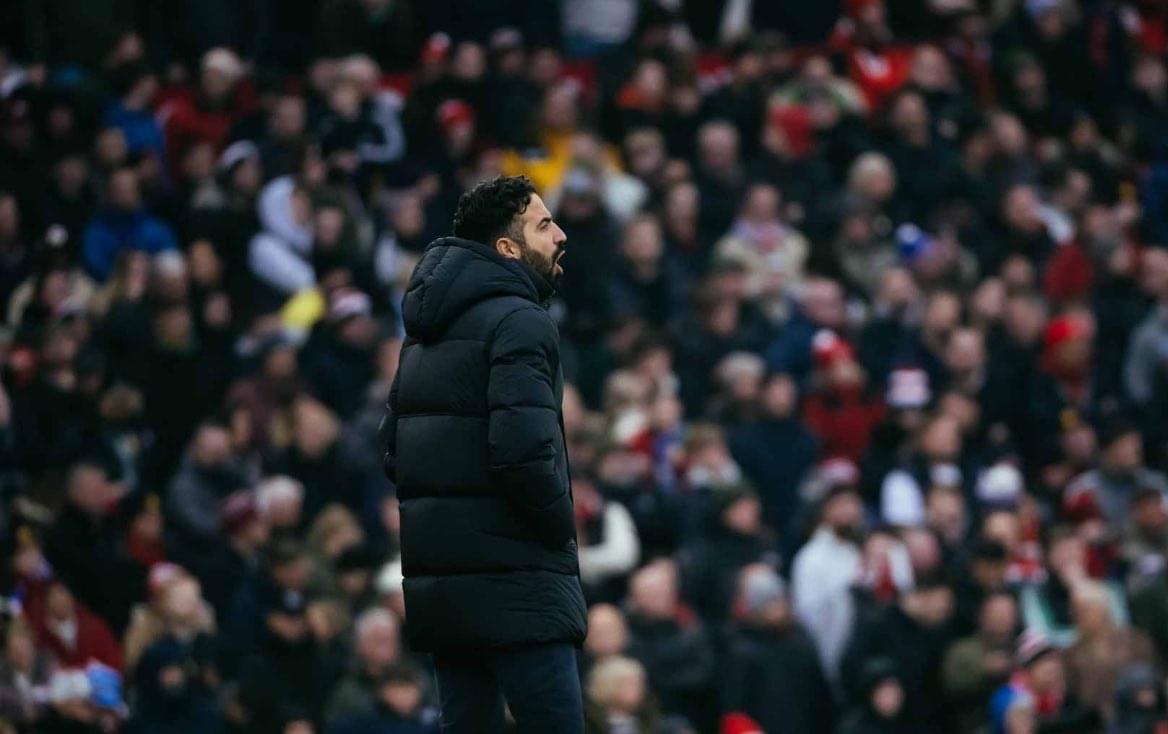
Sitting 10th in the table, the club has managed only three wins, along with three losses and one draw. Despite that, it seems the team is struggling to adapt to Amorim’s system — but the numbers don’t necessarily back that up.
Stats and Metrics Reflect Amorim’s Success
Manchester United have been exposed on several occasions while invading opponents’ territory, yet they still show superiority in many key metrics. In terms of Expected Goals (xG), shots on target, positional attacks, counter-attacks, and passes per defensive action (PPDA), the Red Devils rank among the top sides.
Yet there are also metrics that go straight against them. But beneath those setbacks, it seems the foundational work has been done well.
Peak Pressing Efficiency
Rúben Amorim’s side led the PPDA rankings until last week and now sit 4th after Matchday 7. PPDA (passes per defensive action) is one of the most widely used metrics in football analytics to measure pressing intensity — how aggressively and how high up the pitch a team tries to win the ball.
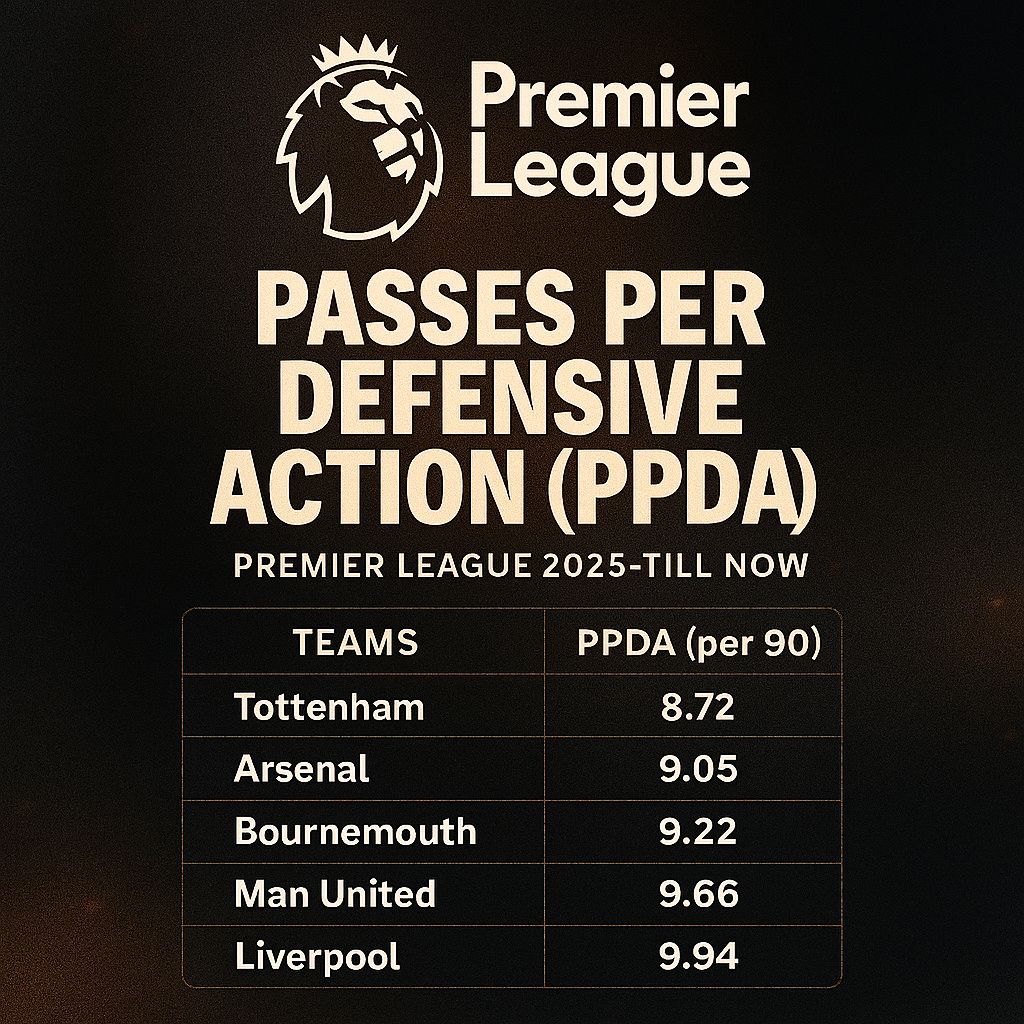
A low PPDA value denotes intense pressing, as the team allows very few passes before engaging, while a high PPDA value signifies a team that allows more passes before pressing. United currently rank 4th with a PPDA of 9.66, behind Tottenham Hotspur (8.72), Arsenal (9.05), and Bournemouth (9.22).
While this is one reason the Reds concede more, it is also part of Amorim’s approach — a philosophy that accepts higher defensive risks to regain possession quickly.
Counter Play with Positional Attacks
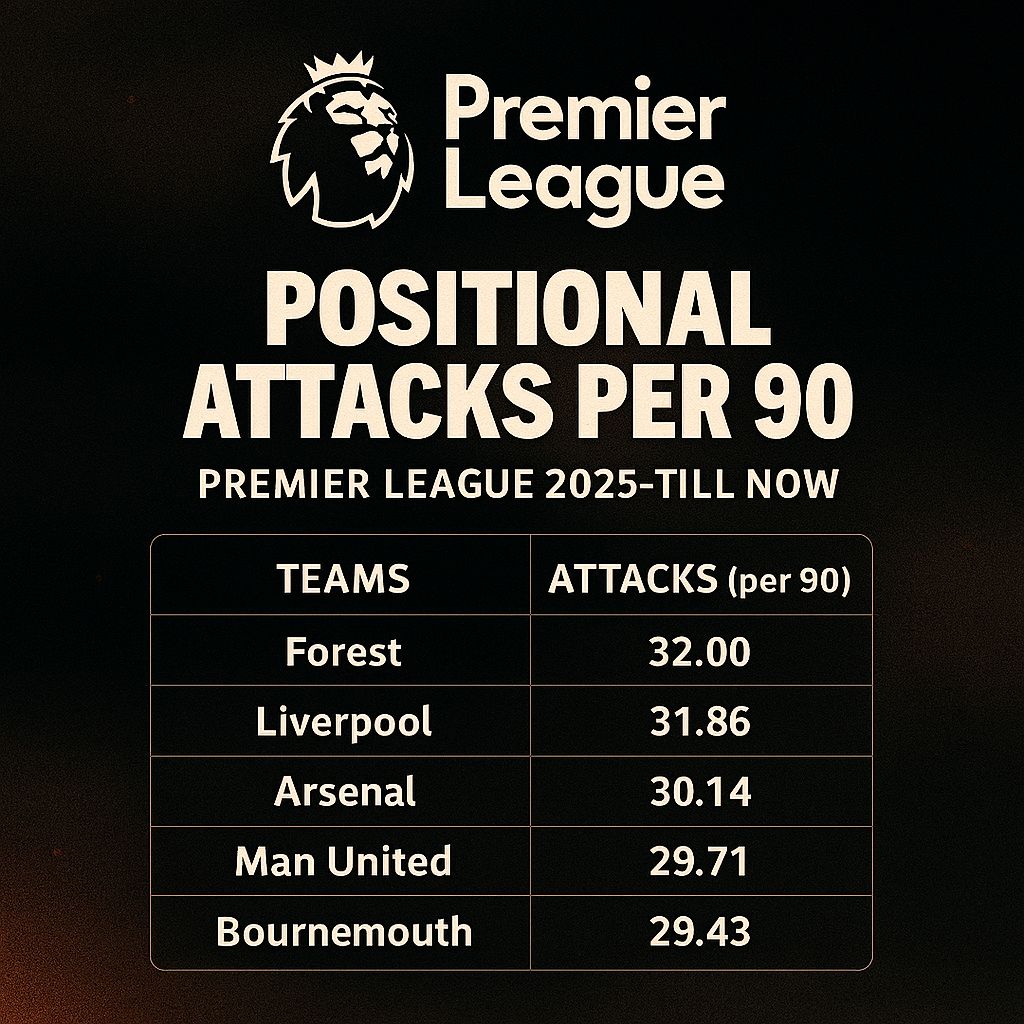
After winning possession higher up the pitch, United build their attacks by looking for space to progress the ball. On average, they register 29.71 positional attacks per 90 minutes, ranking 4th behind Forest (32), Liverpool (31.86), and Arsenal (30.14).
So far, the definition of a positional attack differs for every team in the Premier League. Pep Guardiola’s version is based on build-up, control, and slow progression through overloads, while Eddie Howe relies on vertical and diagonal passes for faster progression, which also counts as positional play.
As soon as a team needs at least one goal to tilt the match in their favour, the frequency of positional attacks becomes crucial. There are several ways to execute them, but the most effective ones are those that bring the team closer to the opponent’s goal and create strong scoring opportunities.
Utilising positional attacks, Manchester United have recorded the highest xG per 90 so far. Their 1.99 xG per 90 suggests they’re creating chances worth nearly two goals per match, while also leading the shots-per-90 chart with 4.86.
Areas Where United Fall Short
While the data often portrays United as a dominant side, in other areas, they continue to underperform. The conversion rate remains below the expected minimum, and they have conceded more goals than they’ve scored. On average, they allow 1.57 goals per match.
Although Amorim is known for his high-risk, high-reward football, his side frequently lacks balance and compactness at the back, which often leaves them exposed. This issue isn’t unique to Amorim — dealing with counter-attacks on counters often poses similar challenges. Most errors occur during the attack-to-defence transition phase. For example, losing 3-1 against Brendfort, they conceded 2 goals while preventing counterattacks.
Almost two weeks ago, before the match against Sunderland, United’s management decided that the result would determine the manager’s future. Despite inconsistent results and performances, the club seems to have reinforced Rúben Amorim’s job security. His imprint on United’s playing style is now visible on the field, but he still needs to address defensive issues — particularly during transitions from attack to defence.
Discover more from
Subscribe to get the latest posts sent to your email.