
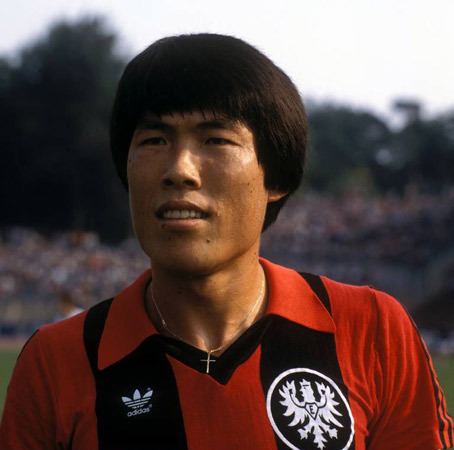
When Son Heung Min played his last game for Tottenham in a friendly game at Seoul, there were widespread discussions surrounding the proper place of Son in the pantheon of Asian footballers who have excelled in European club football. That’s when I was alerted to the similarities between Son and his much older compatriot who, like Son, also started his European adventures in Germany, had a successful stint at Bayer Leverkusen and won the Europa league, what was then known as the UEFA cup. Unlike Son he won it twice.
The story of Cha Bum-kun is one of trailblazing. He was the first South Korean to play in Bundesliga and one of the first Asian footballers to have such a successful career at a prominent European league. Born in 1953, his talent at football was evident from his school days. He was first called up for South Korea’s U-20 national team when he was just seventeen. By 1972, he had joined the football team of Korea University and was fast developing into a very capable striker. He earned a place in the Best XI of Korean Football Association for the first time in 1972, a feat that he would repeat for seven straight years until his last full season playing domestic football in Korea. In 1973, he was voted the best player in the country when he was barely out of his teens. In 1974, he won the country’s major domestic cup competition for Korean University.
Cha Bum-kun also received the call up for South Korea’s senior national team and debuted just about two weeks before his 19th birthday. In the opening match of 1972 AFC Asian cup, he scored his first international goal. South Korea played well but his first international tournament would end in a heartbreak as South Korea lost to Iran in the final match that went into extra time. Luckily for Cha, another international competition, Pestabola Merdeka, was just around the corner. While such tournaments do not hold much prestige today, Asian football was at a very different stage five decades ago and these tournaments were approached with some sincerity. South Korea remained undefeated in the tournament, while Cha turned in a few memorable displays including arguably his best performance to date against the hosts Malaysia in the final, where he scored once to help his side to a 2-1 victory. He had already become a household name in South Korea.
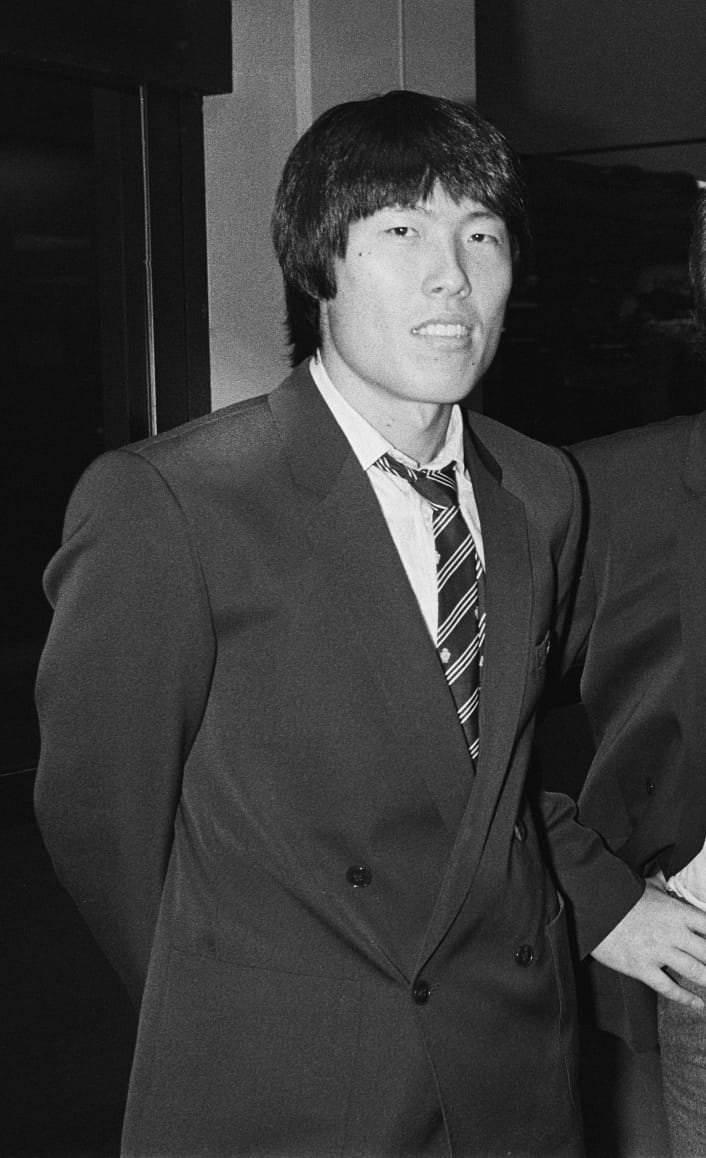
Having completed his University education, Cha joined Korea Trust Bank in 1976. These were days long before professionalisation of football in South Korea and their top-flight was contested by military and company teams. It was held twice a year. In his first season for the side, he helped Korean Trust Bank to the title and was awarded the trophy for best player in the league. But he soon had to leave for the ROK Air Force side because he had to serve his mandatory military service.
Approaching 23 by this time, Cha had become a talismanic presence in his national team. In the opening game of President Park’s Cup (better known as the Korea cup) in Seoul, Cha again became Malaysia’s tormentor-in-chief. Malaysia were leading by 4-1 up until the 83rd minute when Cha scored to reduce the deficit. He scored twice more, in the 87th and 89th minutes, to snatch a draw by leading his side’s fabulous comeback. Cha, the outright star in the tournament, was also its top-scorer, a feat that he would go on to repeat in the next iteration of the yearly Korea Cup.
South Korea battled hard to qualify for the 1978 FIFA World Cup, but narrowly missed out. While Cha Bum-kun’s five goals in the qualifying rounds were not enough to propel him into a tournament that could have brought him global recognition, his exploits in the 1978 Korea Cup was closely observed by Eintracht Frankfurt who had sent their reserve team to play the competition. Eintracht’s assistant manager was, for the lack of a better alternative, smitten by Cha’s displays. He wrote to the Korean FA to let Cha leave for Germany but his period of mandatory military training was not over yet.
Cha was phenomenal again as the South Korean football team claimed gold medals in the 1978 Asian Games in December. After the tournament, Cha, who had been quite enticed by the prospect of playing in Europe, left for Germany just as he was entering his peak. But this decision was not well accepted by the authorities in Korea. Despite being the superstar of the national team, he would not play a single international match, until almost eight years later. Still, in only six years of playing for his national side, he already held the record of making most appearances and scoring most goals for the South Korean national team.
His trials in Germany were satisfactory. Even though it was Eintracht Frankfurt’s insistence that brought Cha to Germany, his signature was secured by Darmstadt 98, playing their first ever top-flight season. Despite acquiring his services for the last six months of the 1978/79 campaign, Darmstadt had to let him leave after only a solitary appearance against VfL Bochum on 30th December. Cha returned to Korea by 5th of January and remained a part of the ROK Air Force side till 31st May when his military service finally concluded. Darmstadt 98, on the other hand, were relegated. Still, Cha would return to play in Germany as soon as he could and this time he finally signed for the club that had scouted him a year back, Eintracht Frankfurt.
Discover more from
Subscribe to get the latest posts sent to your email.