

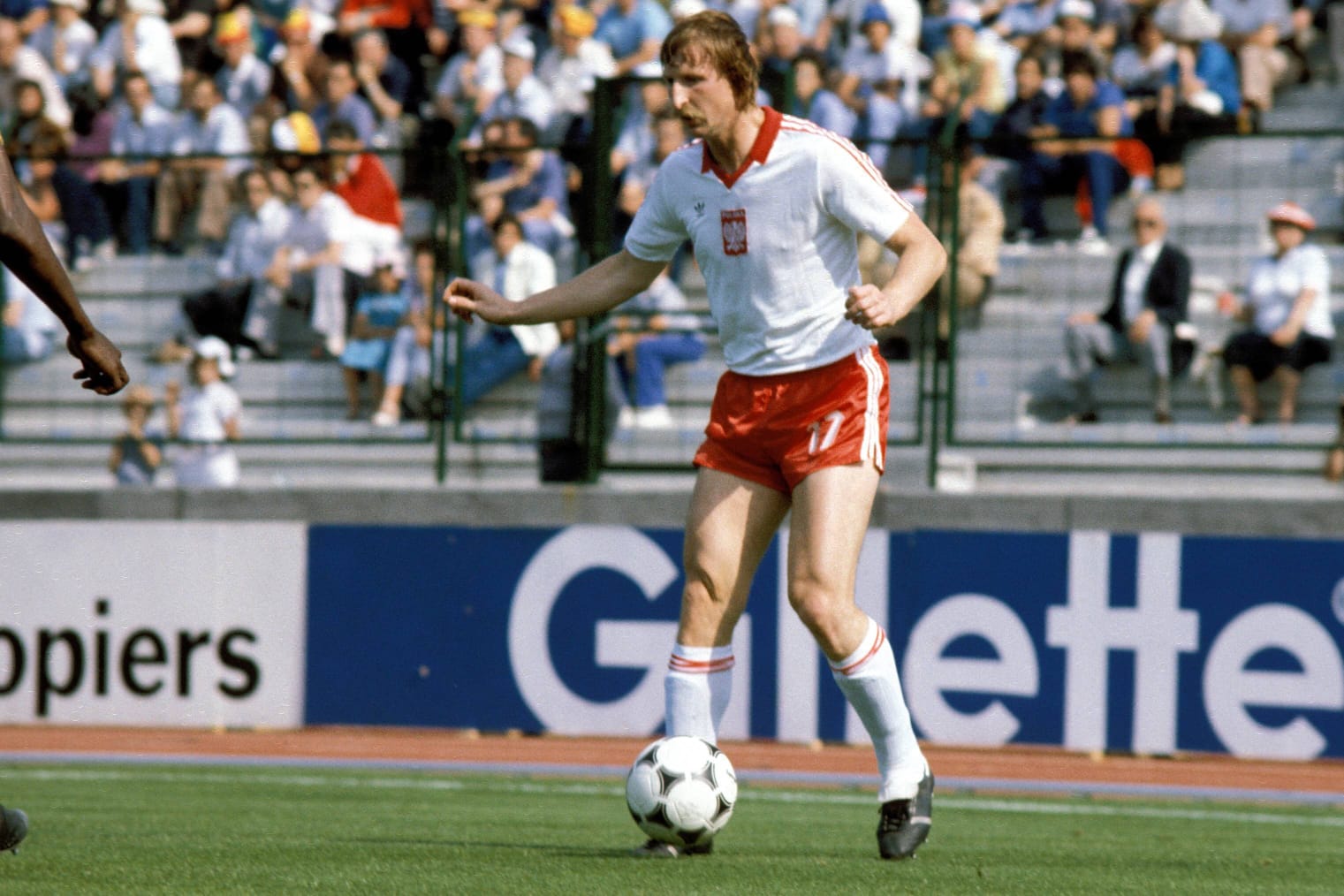

The FIFA World Cup was held in West Germany in 1974. It is a tournament remembered for the Johan Cruyff-led contingent, hailing from what had been considered relatively footballing backwaters, dazzling the world with their dynamic and fluid style of play, evocatively called “Total Football”. The Dutch had to be satisfied with being fan-favourites as a superbly gifted West Germany side defeated them at the final hurdle. The spotlight falls much less frequently on an unfancied Poland side that had eliminated England to qualify for the World Cup, fought neck and neck with the world’s top sides and eventually returned with a podium finish. A star of their side was the outright top scorer of the tournament, Lato. But it was, in no way, a one-man show. One of the most impactful players in the World Cup campaign was Andrzej Szarmach, who had not played a single World Cup qualifier and was effectively unknown to the wider footballing world. His rise to stardom from near-obscurity was powered by as many as five goals in the World Cup, which made him the joint second-highest scorer of the tournament, level with Neskeens and higher than the likes of Gerd Müller, Cruyff, and Johnny Rep.
FIFA, despite an overall positive assessment of the established format, decided to tinker with something not broken and introduced a second group stage that would replace the quarter-finals and semifinals. Lowering jeopardy for established sides and increasing matches were good news for FIFA, as they carried financial benefits. In the 1974 World Cup, the top two teams from each of the four groups of the first group stage would form two groups of four played out in a round-robin format. Then, both group winners would contest the final, while the two group runners-up would contest the third-place match.
In this series, which will run through all twenty-two FIFA World Cup tournaments, we will try to tell the story of a player who had some important role to play in the tournament but hardly features among the first few names that jump out once you hear the tournament being mentioned. Today, in the tenth iteration of the series, we will look at Poland’s Andrzej Szarmach.
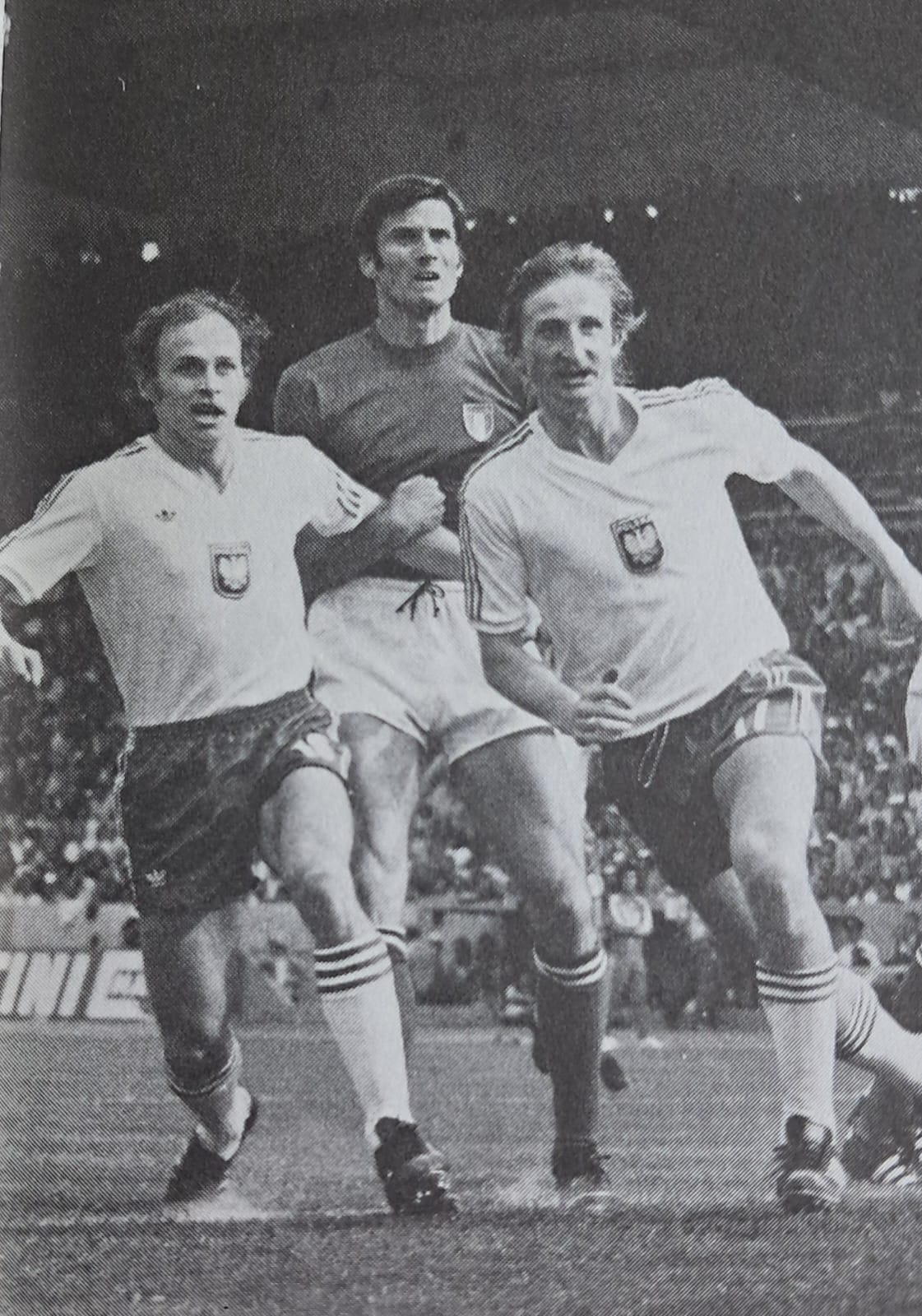
Poland had played a single World Cup match before, having been knocked out in the opening round fixture against Brazil in 1938. It was a thrilling goal-fest, as Brazil won 6-5 after extra time. In their first FIFA World Cup game in 36 years, Poland was set to face an Argentina side that was subpar relative to its usual standards but still sufficiently formidable. Even as the Poles scored the first goal when Lato took advantage of some shambolic goalkeeping, it seemed like a freak incident. However, the Polish side scored again only a minute later with a confident goal that began to foster the collective realisation that this Polish side had in them a lot more than it had been credited for. This goal was scored by Szarmach. Robert Gadocha, the left-sided forward, carried the ball upfield with a potent and quick sprint before finding Szarmach on the edge of the Argentine box with an inch-perfect pass that tore apart the Argentine defence. Szamach adjusted his run to meet the ball with his left foot and finished past the onrushing keeper with an immaculate and confident first-time shot. He made it look too easy.
All through the Polish World Cup campaign, Szarmach displayed his undoubted abilities by seizing the grand stage even though his place in the squad, let alone in the starting eleven, had been secured at the very last moment. He was still playing for Poland’s U-23 side in early 1974, even after his senior team debut. In April, the Polish side played against Haiti in a preparatory international-friendly/”>international friendly, marking the first meeting between the two sides, who were now drawn into the same group at the World Cup. Szarmach was initially given duties like taking notes and analysing the opponents during the first match. However, he was substituted in during the second half and scored the only goal for his side, which ultimately led to a loss. In a rematch two days later, Szarmach started and scored twice as Poland won 3-1. This alone might not have earned him a call-up in the World Cup, but when Lubanski (whose goal tally for Poland is only bettered by Lewandowski) had to pull out because of an injury, Szarmach joined the World Cup squad.
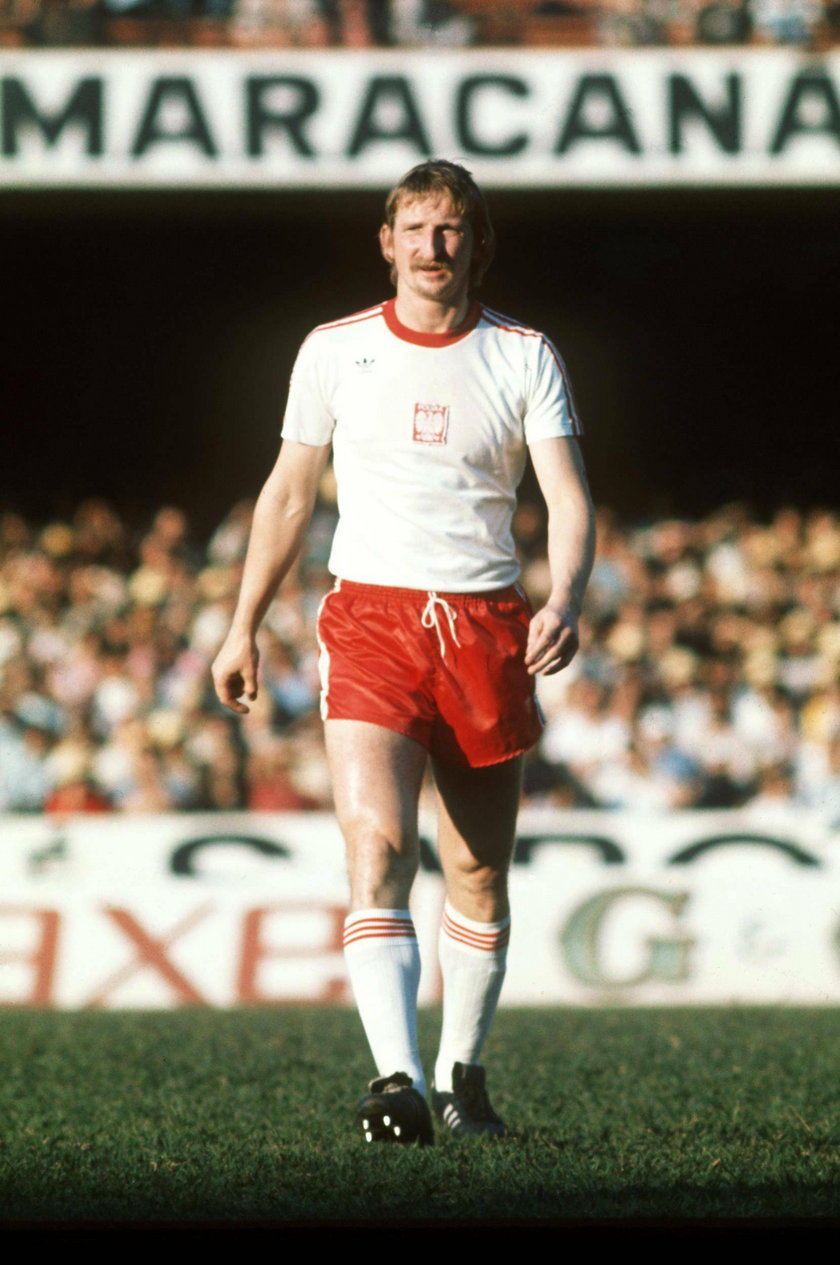
Even though Argentina would score twice in the second half, they would also concede another Lato finish in between. Szarmach should have scored more, with one of his shots cleared at the line and another hitting the post when he should have easily scored. Poland won 3-2 and moved on to play their dress-rehearsal partners, Haiti, in Munich. This time, Poland squarely outplayed them. Bringing a fatal edge to their attacking play with well-executed set-pieces, the Polish side scored seven times without reply. Szarmach bagged a hat-trick. His first and third goals came from two well-taken headers from corner kicks, and his second, quite similar to his goal against Argentina, resulted from an attacking move initiated on the left. Again, it was Gadocha whose well-executed chipped pass was met superbly by an onrushing Szamarch, who cushioned the ball with his left foot on the edge of the box and finished with his right foot, showing great poise as the keeper tried unsuccessfully to close him down.
Poland had played three World Cup matches to this point and scored fifteen goals. However, their attacking unit was to battle it out against a strong Italian team featuring players like Zoff, Burgnich, and Facchetti in defence. The Polish outfit, though, was ready to deliver another surprise. Poland was fighting toe-to-toe with Italy, and they broke the deadlock at the 38th minute. Henryk Kasperczak was allowed some time on the ball, and he provided a neat cross that was met by Szarmach as he ran in from the left. Despite being marked closely, Szarmach’s perfectly guided and spectacularly satisfying header from just inside the box was basically unstoppable as it sailed past Zoff into the top right corner. He converted an effective half-chance with consummate swagger. The Poles scored once more before the first half drew to a close, and despite having to endure great pressure in the second half, Poland ultimately won the game despite conceding a Fabio Capello goal five minutes from time. A rather unfancied Polish side became the only side in the tournament to end the first group stages with a perfect record of three wins in three.
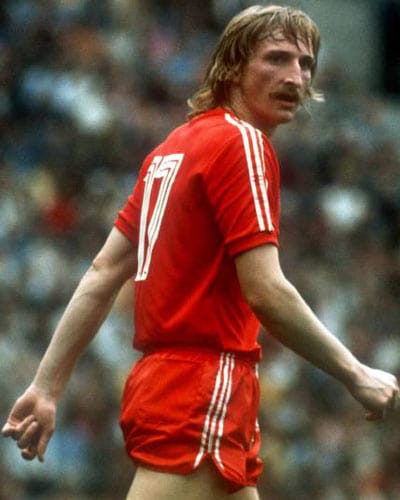
In the second group round, Poland was drawn in an all-European group alongside West Germany, Sweden and Yugoslavia. In their first match in the second group stage, it was yet another looping cross from Gadocha from the right that Szarmach met with a downward header, out-jumping his marker to guide it towards Lato and score. Lato made no mistakes. Even though Szarmach was subbed off in the second half, his side racked up a fourth straight victory at the tournament thanks to the solitary goal that he assisted. He would again be substituted off against Yugoslavia, this time with scores tied at 1-1, only because of an injury caused by a nasty challenge that would rule him out of what was a de facto semifinal match against the mighty West Germany. Szarmach had been brilliant before his departure, and it was a foul on him that earned his side the penalty kick that Deyna converted. Lato scored the winning goal for Poland in the 62nd minute.
Poland, even after a remarkable five-game winning streak, would have found life difficult against this generational West German side, more so because a draw would be enough for West Germany to reach the final. The services of Szarmach were sorely missed as the Polish crossing became wayward in the absence of its focal point. Still, it was a tightly contested game that the Germans won courtesy of a Gerd Müller goal about fifteen minutes from time.
Szarmach put in a strong, if less notable, performance to secure the third-place finish against reigning champions Brazil in the tournament’s final match. Lato scored the only goal of the game shortly after Szarmach had been subbed off. Poland had deservedly claimed the second runner-up place, as it was quite certainly the best side in the tournament, apart from the two all-time worthy outfits, the Netherlands and West Germany. Szarmach, an unwavering and often deceptive presence in the opposition box, had displayed some outstanding finishing and great positional awareness. Strong in the air despite his relatively small stature, he was also quite two-footed. His well-timed late runs into the box were crucial to Poland’s attacking play.
While his parents always wanted him to take his academics seriously, a young Szarmach went against their wishes to pursue the sport of football. He featured in the next two World Cups as well, scoring once in each. His last World Cup match was also his last international match, where he scored the equalising goal against a talented French team in the third-place match of the 1982 FIFA World Cup and helped Poland match their best World Cup showing from eight years ago.
Discover more from Footy Times
Subscribe to get the latest posts sent to your email.