

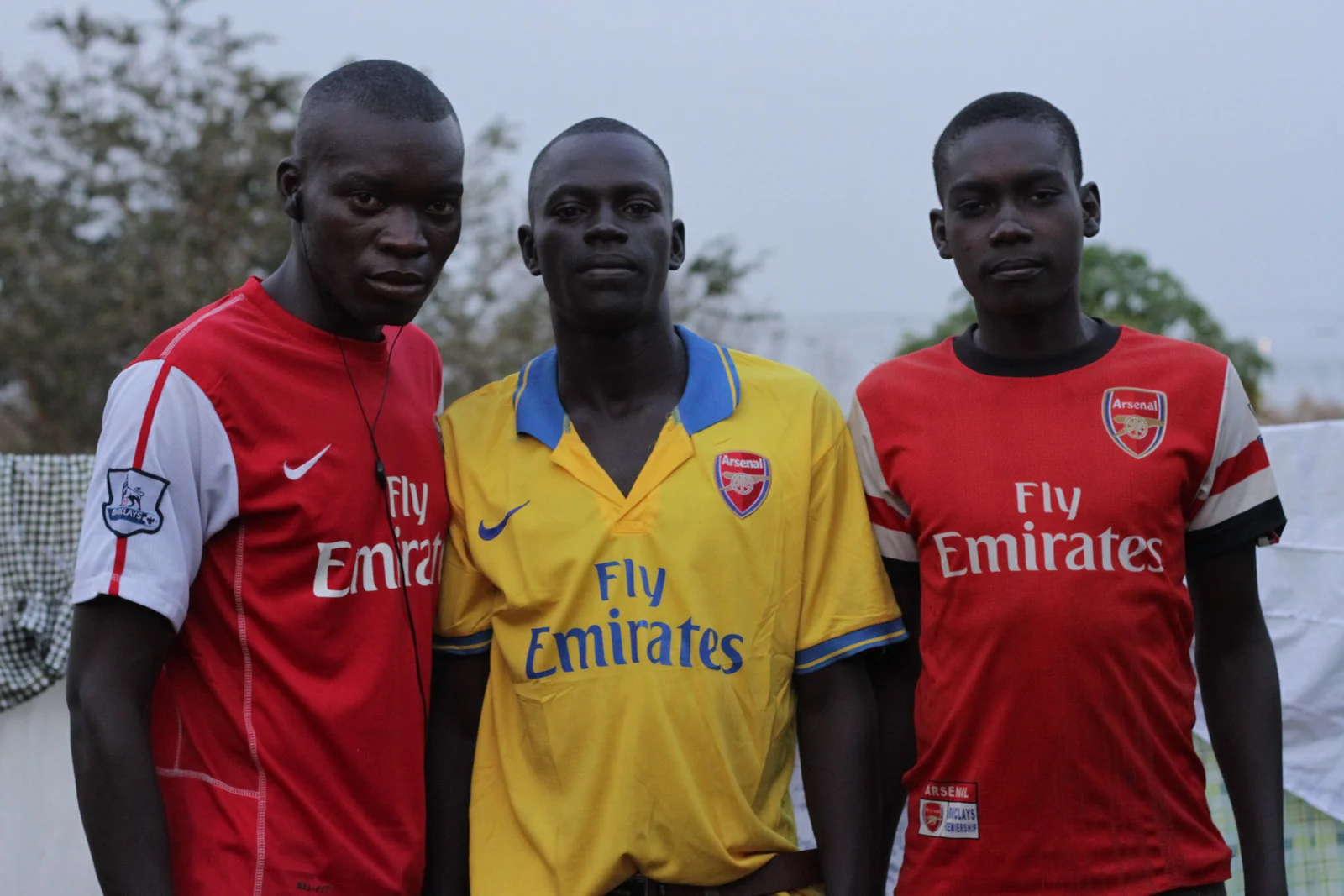

Arsenal won the Premier League this week after a 22-year wait. In London, the wait felt eternal. Across most of Africa, it did not really matter. The continent had decided long ago that Arsenal was its club. The Tuesday-night title only confirmed what BBC research had measured a decade earlier.
The numbers are striking. In 2015, BBC research found Arsenal were the most popular football club in nine African nations. The list spanned Algeria, Ethiopia, Kenya, Malawi, Morocco, Nigeria, Tanzania, Tunisia, and Uganda. In every one of those countries, Arsenal beat every other club on the planet. The numbers have only grown since.
DailyAFC’s recent analysis of its own X audience showed Nigeria accounting for 23.3 per cent of engagement, ahead of the United Kingdom at 18.9 per cent. African fans together account for nearly 45 per cent of the platform’s total audience. Arsenal themselves maintain 25 officially recognised supporter clubs across Africa — more than on almost any other continent.
They looked like the fans
The roots run deeper than a list of trophies. In September 2002, Arsenal beat Leeds 4-1 with nine black players in their starting eleven — the first club ever to do so in Premier League history. For African viewers watching on grainy satellite feeds, the image stuck. The Kenyan influencer Nana Owiti, who runs Arsenal-focused feeds followed by millions, recalls it in a single line: “(they) looked like me… that was why I chose Arsenal”. The same identification surfaces in interview after interview across the continent.
The man behind that selection was Arsène Wenger. He managed the club from 1996 to 2018. Emeka Cyriacus Onyenuforo, founder and president of Arsenal’s official Nigeria supporters club, credits Wenger with looking past skin colour to find brilliance in obscure places. In Ethiopia, the head of the country’s official supporters club gave the same reading. Wenger built squads where being African was not a token presence. It was a backbone.
The list of names is long. Nwankwo Kanu arrived from Inter Milan in 1999. For Nigerian fans of that generation, his arrival was a cultural event in its own right. Lauren, the Cameroonian right-back, and Kolo Touré of Ivory Coast started in the 2003-04 Invincibles side. That team went 49 league matches unbeaten. Emmanuel Eboué from Ivory Coast played in the 2006 Champions League final against Barcelona. Emmanuel Adebayor of Togo scored 30 goals across the 2007-08 campaign. The line continued through Alex Song, Marouane Chamakh, Gervinho, Mohamed Elneny, Alex Iwobi, Pierre-Emerick Aubameyang, Nicolas Pépé, and Thomas Partey. Each new signing tightened a knot that was already cultural.
The Invincibles arrive on satellite
The Invincibles season was the conversion event. Arsenal won three Premier League titles under Wenger — 1998, 2002, and 2004. The unbeaten 2003-04 campaign became their defining myth. By then, the Premier League was streaming into African homes through SuperSport, the South African satellite service. An African audience that had grown up watching German football in the 1980s suddenly had English football across the continent. As Kenyan broadcaster Carol Radull has described it, the broadcast shift was wholesale and decisive. The first English club that many African viewers truly fell for was the one that played without losing.
What grew from there was not just informal fandom but a continent of organised institutions. Arsenal’s 25 official African supporter clubs operate with elected officials, hold annual general meetings, have registered membership, and maintain websites. The Rwanda club alone has 1,200 registered members in Kigali. The Nigeria club was founded in 2004 — the Invincibles year — and officially recognised by Arsenal in 2005. Arsenal Malawi rotates its annual general meeting between Mzuzu, Lilongwe, and Blantyre. Arsenal Ghana maintains a chairman and a postal address. These are civic structures built around a foreign football club, and they outlasted the trophy drought without flinching.
The relationship runs upward through politics, too. Rwanda’s government sponsors Arsenal through the “Visit Rwanda” campaign. President Paul Kagame posts about the club on X. Raila Odinga, Kenya’s dominant political figure for decades until his death last year, was a passionate Arsenal supporter. President William Ruto’s congratulatory message on Tuesday night was the latest entry in a long Kenyan political tradition.
What about Chelsea and United?
It would be incomplete to write any of this without acknowledging the rivals. The Roman Abramovich takeover in 2003 redrew the West African map. Chelsea then signed Didier Drogba, Michael Essien, and John Obi Mikel — three of the continent’s biggest stars. That trio built a deep following among Chelsea fans, especially in Nigeria and Ghana. The honest geography is regional. Chelsea commands West Africa from the Drogba-Essien years; Arsenal’s roots run deeper across East and North Africa, planted earlier and tended for longer. Both clubs dominate Premier League fandom on the continent. Only one, though, can claim 25 official supporter clubs.
Manchester United are the other heavy African presence, but the route they took was very different. Their global brand power built a vast African audience independently of squad representation. Twenty league titles, the Busby Babes-to-Ferguson narrative, and the Ronaldo-Rooney years did the work. In 2008, then-chief executive David Gill described Nigeria as United’s fourth-largest fan base worldwide. But the contrast with Arsenal is telling.
While Arsenal, Chelsea, and even Liverpool built sides around African talent, United have rarely had a genuine African hero. Quinton Fortune of africa/”>South Africa and Cameroon’s Eric Djemba-Djemba were the two African internationals at Old Trafford through the dominant decade, and neither was a great success. The first Nigerian player in United’s history, Odion Ighalo, arrived only in 2020 on loan from Shanghai Shenhua. United won African fandom through brand and trophies. Arsenal won it through a starting eleven.
The drought that didn’t loosen the grip
What is most striking about the African affinity is that the trophy drought did not damage it. Arsenal won no league title for 22 years. They lost a Champions League final, finished second three years running, and earned a reputation for collapsing at decisive moments. None of that loosened the grip. Loyalty had become an inheritance. Fathers passed the club down to sons and daughters. Identity calcified around the shirt rather than around the standings. Robbie Lyle, who founded Arsenal Fan TV and has visited supporters across five continents, has said the Arsenal shirt is impossible to escape anywhere in Africa.
This week, twenty-two years on, the wait ended. The scenes of Nairobi, Lagos, and Addis Ababa erupting at the final whistle were not the beginning of something. They were the long-deferred punctuation mark on a relationship built, sustained, and renewed across two decades of disappointment. Arsenal returned to where Africa had always insisted they belonged.
Read more – South Korea Ready to Challenge the World’s Best at FIFA World Cup 2026
Also see – Arsenal Crowned Premier League Champions After Man City Draw
Follow Footy Times on Social Media:
Facebook | Instagram | Twitter | YouTube
Discover more from Footy Times
Subscribe to get the latest posts sent to your email.