

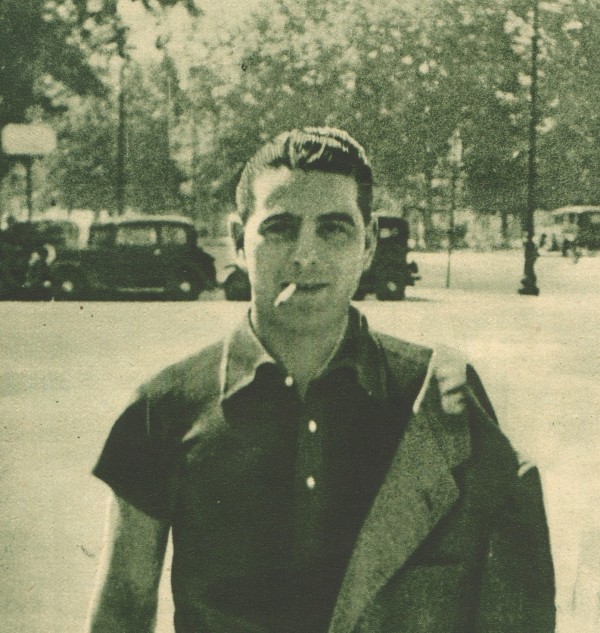

The 1934 FIFA World Cup was held under the auspices of the Fascist regime in Mussolini’s Italy. I would love to point out the differences which the 1934 World Cup and the recent ones, but I can’t help but be inundated by the similarities. Ticking all the familiar boxes that FIFA has long been complicit in, including sportswashing, rigged hosting rights and propaganda, the 1934 World Cup marks the beginning of FIFA’s cherished bond with non-democratic governments. It was the consummation of the World Cup’s marriage with non-transparency.
In this series, which will run through all twenty-two FIFA World Cup tournaments, we will try to tell the story of a player who had an important role to play in the tournament but hardly features among the first few names that jump out once you hear the tournament being mentioned. Today, in the second iteration of the series, we will look at Italy’s Attilio Ferraris.
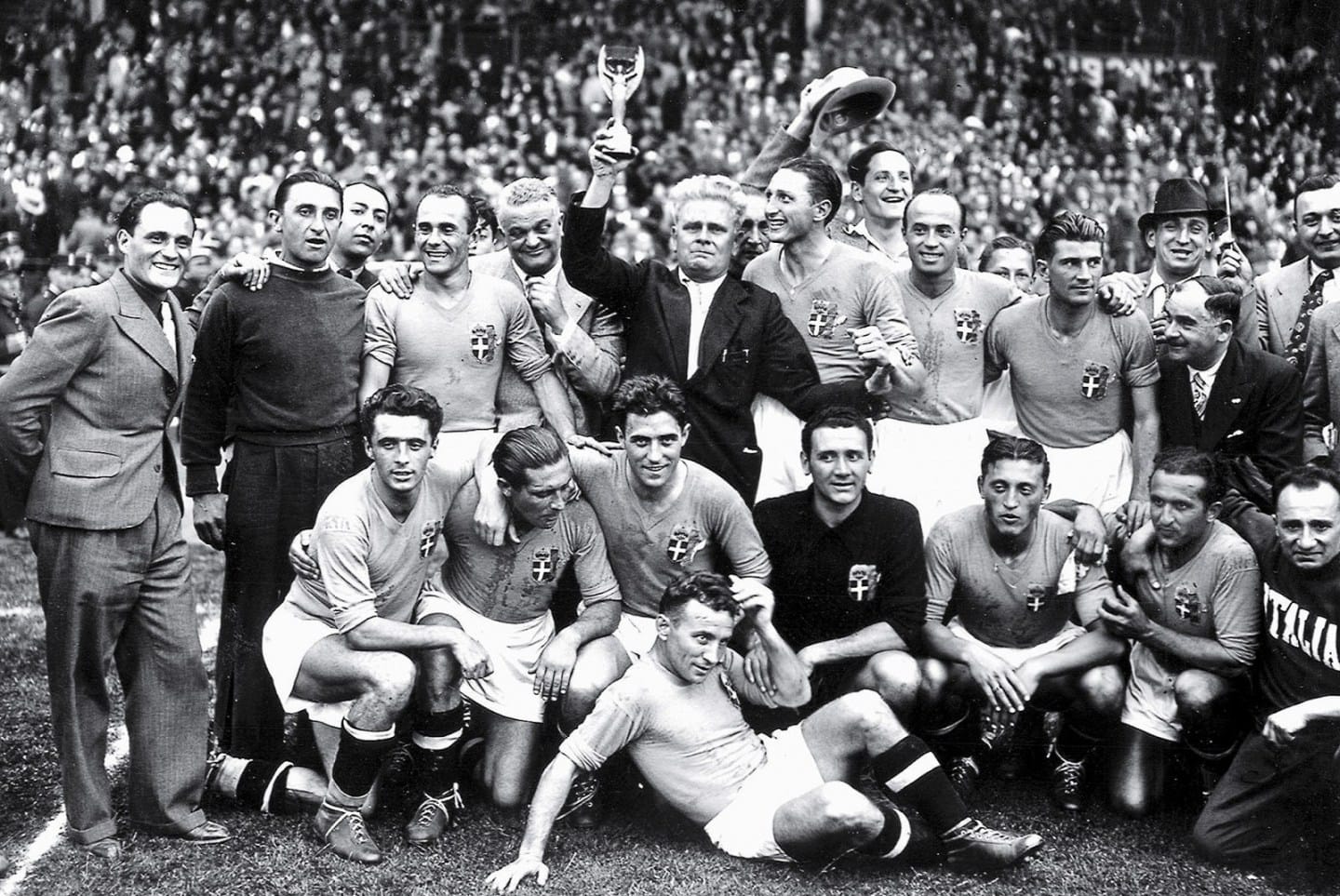
Attilio Ferrari would not have been a professional footballer if he had been born just about half a century later. He was addicted to gambling, partying, smoking and drinking. He was almost always absent from training. His stories may make one think that he was a luxury flair player with magic in his close-control, but no, he was, in modern parlance, a sort of right-sided defensive midfielder. While the formerly Latin American contingent that represented Italy in the 1934 World Cup, including the likes of Orsi, Guaita and Monti, are well remembered alongside the likes of Meazza and Combi, there is an overall lack of appreciation for Attilio outside Rome and Italy.
Born in 1904, Attilio was the youngest of four brothers, all of them footballers. While he spent his formative years in Rome, due to his family’s connection to Piedmont, Juventus tried to get him on their team when he was a very young and talented prospect. But his father turned down a lucrative offer because he wanted Atillio to play in his hometown, one that Atillio loved to represent. He started his career at Fortitudo, which later merged with two other local clubs to form AS Roma in 1927. Attilio was Roma’s first captain.
He was a master of the no-nonsense defending that Italians so love, alongside being a very intelligent passer and an anchoring presence in the centre of the pitch. His commanding presence in the field on the match days was complemented by a rather careless attitude off the pitch, and that had rubbed the manager of Roma the wrong way. Even though the club President backed Attilio, it was becoming really difficult for Attilio to remain a starter by 1932. His reluctance to change his lifestyle and the damning impact that had on his gameplay meant by the early months of 1934, he had effectively retired and set up a bar with a billiards table, where he spent most of his days.
Enter, Vittorio Pozzo, the man who pioneered the famous 2-3-2-3 Metodo system that required his three half-backs to push-up and play more like a trio of two wing-midfielders and a central defensive midfielder. The role in the centre was taken up by Monti, but Pozzo knew the man whom he needed to step up and claim the right half-back position. Pozzo paid a visit to a retired Attilio, who, unsurprisingly, was smoking alone at his billiards table. Pozzo and Attilio had a long conversation where Pozzo kept insisting that Attilio train seriously with wholehearted focus. It took a lot to convince Attilio to quit smoking four packs of cigarettes every day and stop his frequent nightouts, but Attilio made sure that he was in better shape than ever for a World Cup on home soil.
Why was Pozzo so insistent on Attilio when he had a tremendous pool of active players to choose from? Well, it was because he wanted his side to exert control by dominating the midfield. In order to bridge the gap between the back-line and the forwards, the half-backs in the Metedo system needed to control a vast space. For this, physicality was as important as the ability to make long passes and crosses accurately, something that Attilio was specially capable of in an era when such attributes were far more common only among the attacking players.
The 1934 World Cup was a sixteen-team tournament with a straight knock-out format. While Attilio wasn’t deemed a starter from the get-go, he left his mark when he started the replay of a drawn quarter-final tie against Spain. The quarter-final game against a spirited but limited Spain team was much more difficult than what Italians had expected. When morale was low, it was Attilio’s spirited performance in the replay that breathed encouragement back into the Italian team. The Metodo system clicked. The solitary goal of the game came through the legendary Meazza. Attilio started the semifinals against a veteran but skilful Austrian side and helped his team spatially and physically dominate the opponents in San Siro. The hosts won the game 1-0 in San Siro courtesy of a goal by Guaita in the first half, while some helpful refereeing decisions smoothed the way for Italy further. Attilio had established himself as the cornerstone of Italian midfield play.
The final was staged in his beloved Rome. The situation was very tense. To lose a final as Mussolini was watching from the stands would be of catastrophic ramifications, and the players knew that. Their nerves intervened, and their football was much less effective. The opponents, Czechoslovakia, weren’t easy push-overs either. An industrious and talented side powered by a free-scoring Nejedly, they heavily threatened to spoil the Italian party. A goalless first half did little to calm the Italian nerves. Czechoslovakia grew into the match and finally breached the resistance of the Italian defence to take a lead through Puc just after the 70th-minute mark. With time running out, it was Orsi, with a fantastic solo goal, who equalised in the 81st minute to revive hope.
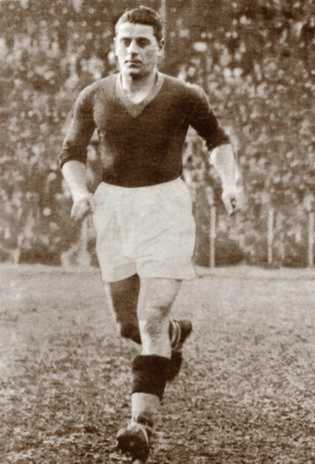
The match went into extra time. Meazza, who had been injured in the course of the game(these were days long before substitutions, hence he had to carry on unless he wanted his team to play the final with ten men), somehow was able to exploit the fact that he wasn’t so closely marked. Despite his pain and exhaustion, he provided a pass for Schiavio, who expertly finished to turn the scoreline in Italy’s favour. The hosts held on for the rest of the match. Any further threat from Puc was neutralised by one of Atillio’s strong tackles that left Puc gravely hurt. Attilio and his teammates had to make a number of crucial defensive interventions in the dying minutes of the contest. Italy held on to win the World Cup.
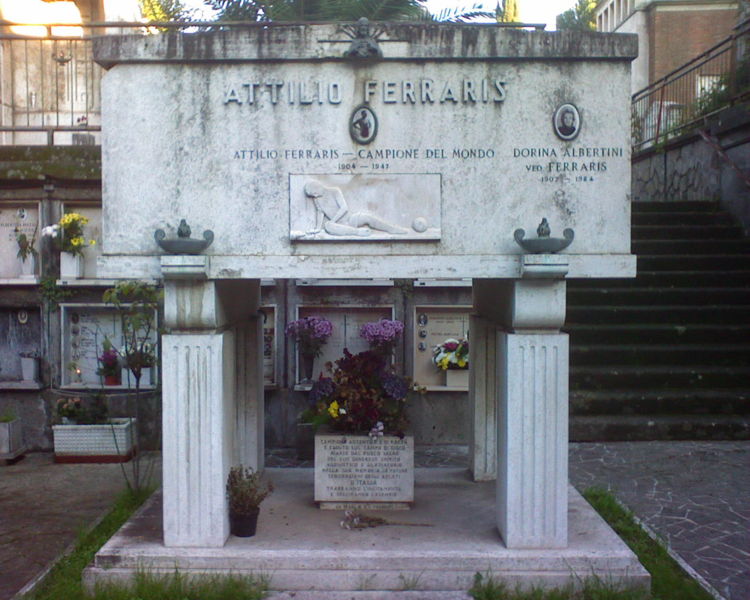
Despite his love for gambling, smoking and merrymaking, Atillio loved the game. After the World Cup, he reignited his playing career. He continued to regularly participate in football matches long after his retirement, but his love for excess finally caught up with him. He died, presumably of a heart attack, while playing in an old-timers’ match when he was only 43. The engraving on his tombstone reads “Attilio Ferraris – World Champion”.
Discover more from Footy Times
Subscribe to get the latest posts sent to your email.