


The 2026 World Cup will not belong to one country. For the first time, three nations share it.
The United States, Mexico and Canada will stage the tournament across 16 cities. Eleven sit in the USA, three in Mexico and two in Canada. Together they hold 104 matches over 39 days, from the opener on June 11 to the final on July 19.
The spread is vast. Roughly 4,500 kilometres separate Vancouver in the northwest from Miami in the southeast. To limit travel, FIFA grouped the venues into three regions: west, central and east. Here is every host city, region by region.
The Western region
Vancouver, Canada — BC Place. A downtown stadium with a retractable roof, hosting World Cup football for the first time. One of only two Canadian venues.
Seattle, USA — Lumen Field. Known for ferocious home crowds in club football. The United States will play group matches here.
San Francisco Bay Area, USA — Levi’s Stadium. Home to the NFL’s 49ers, sitting in Santa Clara, south of the city itself.
Los Angeles, USA — SoFi Stadium. The most expensive stadium ever built when it opened. LA’s older Rose Bowl, which staged the 1994 final, was passed over for this newer venue.
Guadalajara, Mexico — Estadio Akron. Mexico’s second city, hosting the World Cup for a third time across the decades.
The Central region
Kansas City, USA — Arrowhead Stadium. Famous for being among the loudest stadiums in American sport.
Dallas, USA — AT&T Stadium. A vast domed arena in Arlington, expected to host a heavy share of matches, including knockout fixtures.
Houston, USA — NRG Stadium. A climate-controlled venue with a roof, valuable in the Texas summer heat.
Monterrey, Mexico — Estadio BBVA. A modern stadium framed by the Cerro de la Silla mountain, hosting for the second time.
Mexico City, Mexico — Estadio Azteca. The spiritual home of the tournament. It staged the finals of 1970 and 1986, and now becomes the first stadium to host matches at three World Cups. The 2026 opener is here.
The Eastern region
Atlanta, USA — Mercedes-Benz Stadium. A striking retractable-roof arena, in line for knockout matches.
Toronto, Canada — BMO Field. Canada’s other host, an open-air ground expanded for the occasion.
Boston, USA — Gillette Stadium. Sits in Foxborough, between Boston and Providence rather than in the city centre.
Philadelphia, USA — Lincoln Financial Field. Host in a city dense with American history and sport.
Miami, USA — Hard Rock Stadium. A summer venue where heat and humidity will test players, in line for a knockout role.
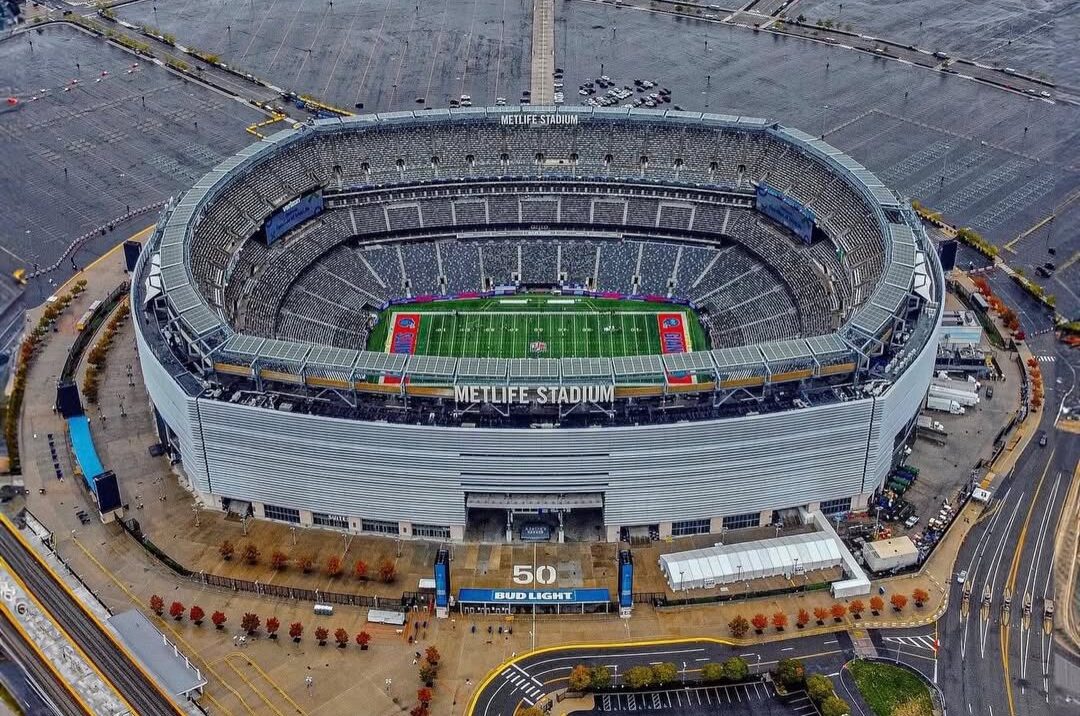
New York / New Jersey, USA — MetLife Stadium. The biggest prize. This is where the final will be played on July 19. It sits in East Rutherford, New Jersey, across the river from Manhattan.
A note on stadium names
You may see unfamiliar names during the tournament. FIFA bars commercial sponsorship from non-partners, so several stadiums drop their corporate titles for the Cup. AT&T Stadium becomes Dallas Stadium. MetLife Stadium becomes New York New Jersey Stadium. The venues are the same. Only the signage changes.
Why the spread matters
The three-nation footprint is more than a logistical quirk. It shapes the football. Teams based in one region travel less, an advantage in a long tournament. A side bouncing between coasts faces jet lag and fatigue that a regionally settled rival avoids.
The conditions differ sharply too. Mexico City sits at over 2,200 metres of altitude, where the thin air punishes the unprepared. Miami and Houston bring tropical heat. Vancouver and Seattle offer milder northern summers. Where a team plays will matter almost as much as who it plays.
Read more – Best Third-Placed Teams: The 2026 Rule Explained
Also see – 8 New Rules Coming to the FIFA World Cup: Everything You Need to Know
Follow Footy Times on Social Media:
Facebook | Instagram | Twitter | YouTube
Discover more from Footy Times
Subscribe to get the latest posts sent to your email.