

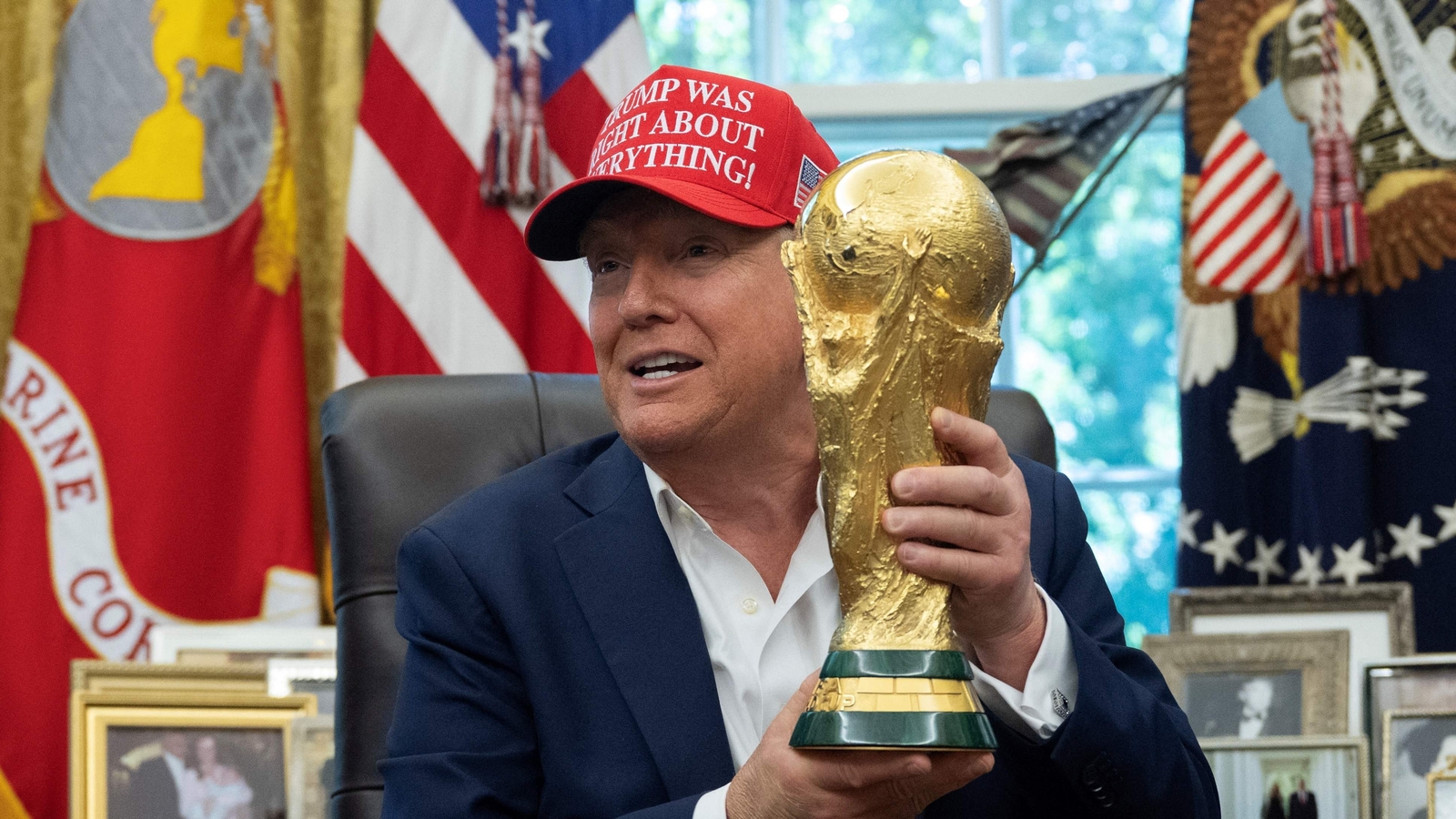

It was a long summer afternoon I remember like yesterday. The latest issue of the bi-weekly Bangla magazine, which had satiated most of my growing appetite for reading when I was eight, had arrived. That summer afternoon, about a month before the nineteenth iteration of the grand tournament was set to kick off in africa/”>africa/”>South Africa, I fell in love with the football World Cup.
I enjoyed playing football, but not as much as I enjoyed cricket. But that issue, full of detailed previews of the upcoming World Cup and fascinating tidbits from in and around the past events, had pumped me up with an entirely novel sense of excited anticipation, tantamount to glee, that, as I grew older, has become a sort of hyper-fixation.
Owing to that, I have dragged myself down through the rabbit hole that unsurprisingly unpacks and demystifies the mythic aura that surrounds the supposed greatest show on earth. I still feel the anticipation and even some excitement, but it is increasingly difficult to be happy about it. This World Cup, for reasons both similar to and very different from other World Cups, feels like a sad one.
Sad not because of the state of sport as an apologist for criminal geopolitical conduct, but because it had tried so long and so hard not to seem sad. The innocence of top-level football had died countless times before, but now, it seems, football has fundamentally moved on from trying to look innocent. It has become a tool of revelling at, and not merely sheltering, cruelty.
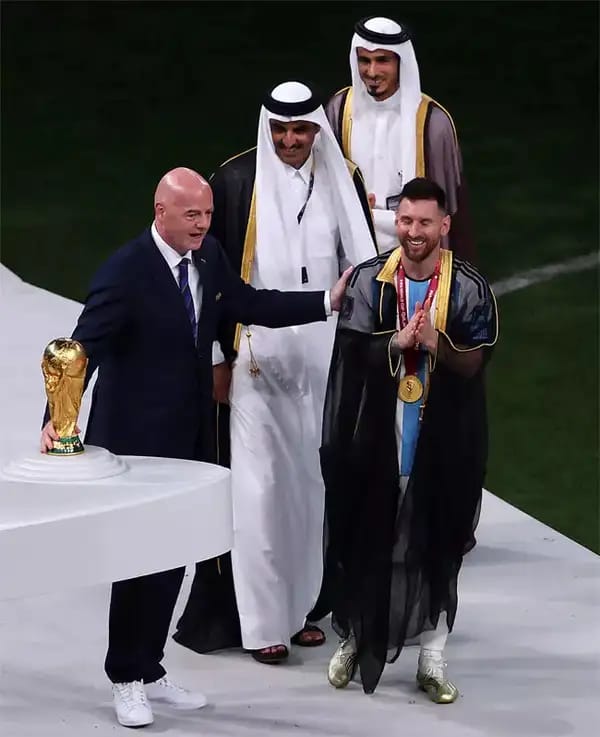
As with nearly every successive edition of the World Cup, we hope to access the spectacle of the FIFA World Cup 2026 through more efficient, ostensibly smarter, and more intrusive technologies. The sheen will be immaculate, and the lines will be crisp, but in a tense group-stage match, that might end up throwing the empty over-priced seats, which absolutely can go unsold, under sharper scrutiny. This is a sad World Cup for fans.
Outrageous ticket prices and an overcomplicated, and frankly corrupt, system FIFA built around buying tickets, including such shams as “right to buy” packages, had already been enough to put off a fairly substantial portion of travelling fanbases. Moreover, the only sanctioned platform for reselling tickets is controlled by FIFA, and it takes a 15% cut on both sides of the transaction. Instead of checking on ticket-touting, FIFA has decided to preside over and profit from it.
Even if one secures tickets, transportation is a massive headache and unsurprisingly expensive. Most soccer stadiums in the USA are located far outside cities. Most of them are accessible via expressways, and only a few have public transport access, with sharp fare hikes for the World Cup already announced.
And the parking costs hundreds of dollars in these stadiums. Moreover, unlike in Euro2024 and the recent World Cup tournaments, the tickets don’t guarantee free transportation in and around the host cities. The uneasy relationship among the federal, municipal, and central governments in the USA has already threatened to weaken security and create a less splendid occasion. The fan zones are being ticketed.
The host cities have very little funding to prepare for such an occasion, and FIFA takes moral high ground as Infantino justifies FIFA’s profits in the name of global good. Then comes the “nothing is off limits” approach of the ICE and the megalomaniac xenophobe behind it. The primary host nation has been actively hostile to both of its immediate neighbours, North and South, and to the co-hosts of the tournament. Locked deep in a war it initiated with Iran, the USA also facilitates genocide in the Middle East. The Greenland farce has turned erstwhile allies into uneasy tactical partners or worse.
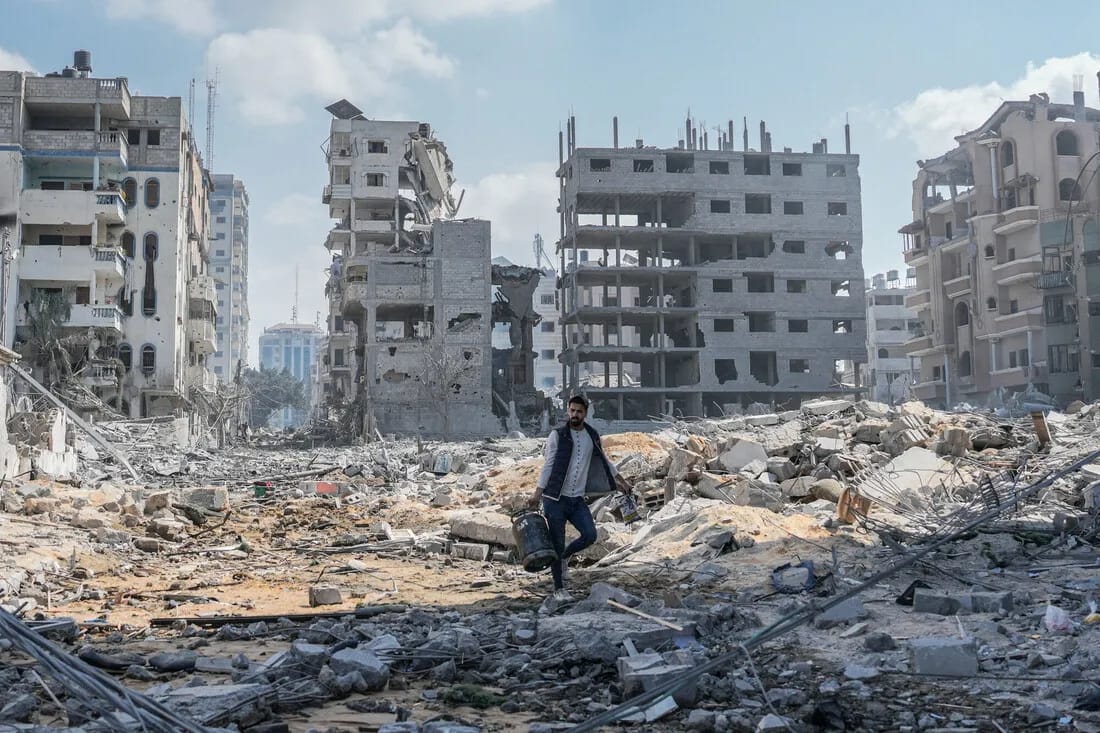
And all this, and a lot else, is going on in the foreground of a racist, anti-immigrant policy of forced detention and state-backed terrorism. It is not difficult to see why most fans will feel unwelcome. Rather than obscuring such tendencies, the MAGA ecosystem has seemed intent on amping the rhetoric up some notches. The handling of the visas for players, support staff, and media personnel from many qualified countries has been another mess that sends warning signs of humiliation.
As one of my favourite commentators regarding the state of football has put it, this is not sports-washing anymore, it is sports-staining. The poor of the land almost always gain nothing, as FIFA, as is customary, pockets the entire profit and leaves white elephants and losses for the host.
The ruling elite get to show off and cleanse their reputations by painstakingly projecting a more benevolent, to some extent, tolerant, and overall happy image. The goal for autocracies has always been to seem more democratic. And when the World Cup returns, after quite some time, to a country boasting a robust democratic tradition, the goal seems to be to show off as much authoritarian villainy as possible.
As the world slips deeper into a widening gulf of inequality and heightened militarism, the World Cup, which used to pose as a smoke-screen extolling normalcy, has become the ultimate platform for autocratic abnormality. That it is technically a democracy where such a tournament is being played, gives the organising nexus all the more reasons to flout norms of fairness and engage in discrimination and violence.
This is no longer about hiding the excesses of power. It is about a triumphant announcement of the success of such brute power over socio-political and civic ethics. This World Cup is sad because its boastful pomp is not borne out of the delights it promises; it is borne out of a schadenfreude that revels in exclusion and is unrepentant about amoral greed.
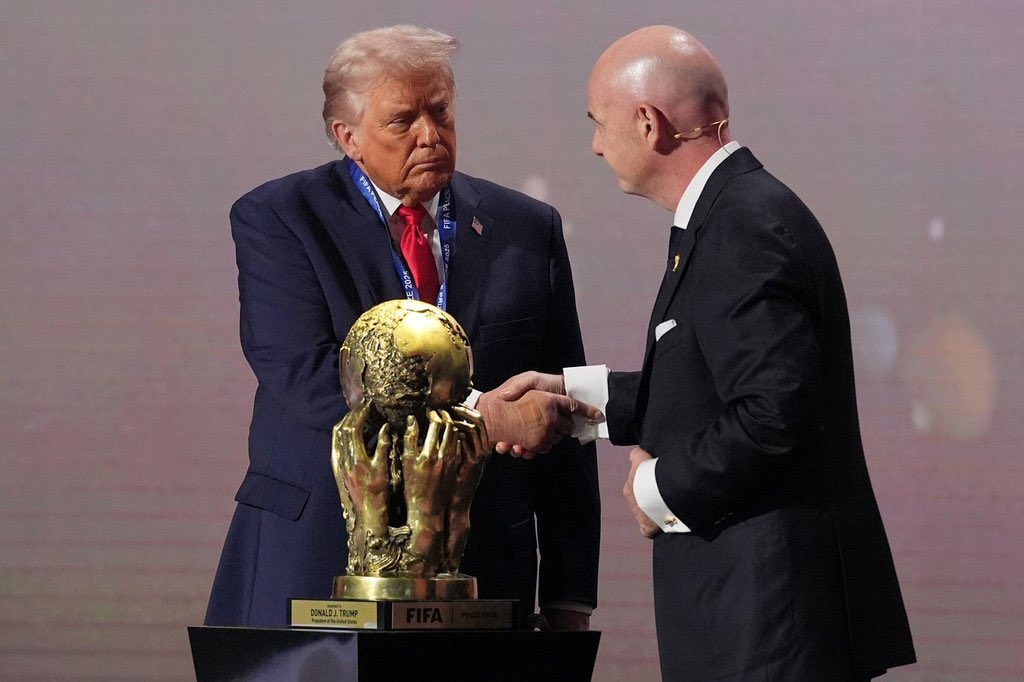
The discourse in the coverage going into this massive tournament is similarly unconventional. The human rights record and pitiful treatment of dissent in autocracies like Qatar and Russia, in the last two tournaments, seemed to take up a rather minuscule fraction of the media attention. The discussions around the boycott in the 2022 FIFA World Cup were dismissed as misplaced over-enthusiasm of the apparently radical fringes of football fandom.
In this World Cup, the boycott talk was making headlines persistently across the football media ecosystem, including the established, comparatively conservative media platforms, where stories used to keep mum about anything other than on-field matters. The anticipation around this World Cup, from the perspective of a content consumer, has been markedly more cynical and gloomy. Played at a time when the doomsday clock is the closest ever to an event of global catastrophe, it is a sad World Cup. It is the World Cup of our times.
The spectacle will soon begin, and the sport, and its stars will, in all probability, start seeming engaging as ever. Dopamine spikes from five-goal thrillers or giant-killings will be punctuated by multifarious psycho-dramas of hurt and VAR calls. Football writes its stories. And only rarely are they fairy tales. But this time, there is not even the comfort of pretence. Welcome to the World Cup of reality checks in a world high on absurdity.
Read more – 2026 FIFA World Cup Fixture Schedule and Kick-Off Times
Also see – The 48-Team World Cup Explained: How 2026 Actually Works
Follow Footy Times on Social Media:
Facebook | Instagram | Twitter | YouTube
Discover more from Footy Times
Subscribe to get the latest posts sent to your email.