
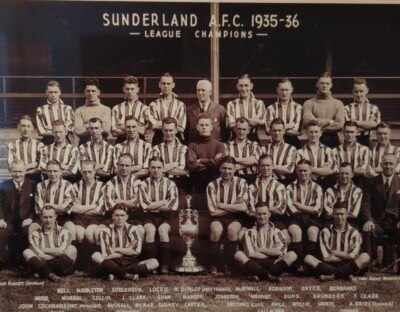

After a weak season by their standards in 1893/94 when they finished second, six points behind Aston Villa, Sunderland returned strongly for the 1894/95 season. Their first game of the season against Derby County at home is a famous one in the folklore of English football, as it was a “game of three halves”. The FA-appointed referee R. Kirkham missed a connecting train and therefore was running late. After some confusion, both sides decided to start the game by mutually agreeing on an unofficial referee. The first half saw Sunderland score three goals against an uninspiring Derby side. Before the second half could commence, Kirkham had reached the ground. He was adamant that a full ninety minute match under his watch had to be played in order to count the fixture as an official league game. Following some altercation, the clubs relented. The second ‘first’ half saw another three goals against Derby, in effect recreating the ‘first’ first half scoreline that stood before Kirkham’s arrival. The second (third?) half of the game saw Sunderland score five more to win 8-0 officially and 11-0 unofficially.
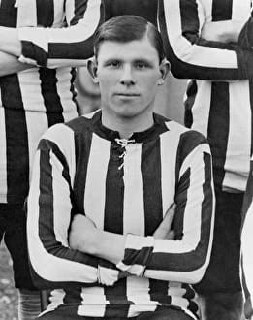
Sunderland were not ready to slip up this season. They were not as free-scoring as their first or second title winning campaigns, but they won 12 of their opening 15 and 8 of their final 10 games. They managed a 10 game and an 8 game unbeaten streak to become the first club to win three League Championships. It was the last hurrah for the fabled “team of talents”. By 1896, Tom Watson had joined Liverpool and Campbell had left the club in 1897. Sunderland were going through a rather rough patch for the rest of the 1890s.
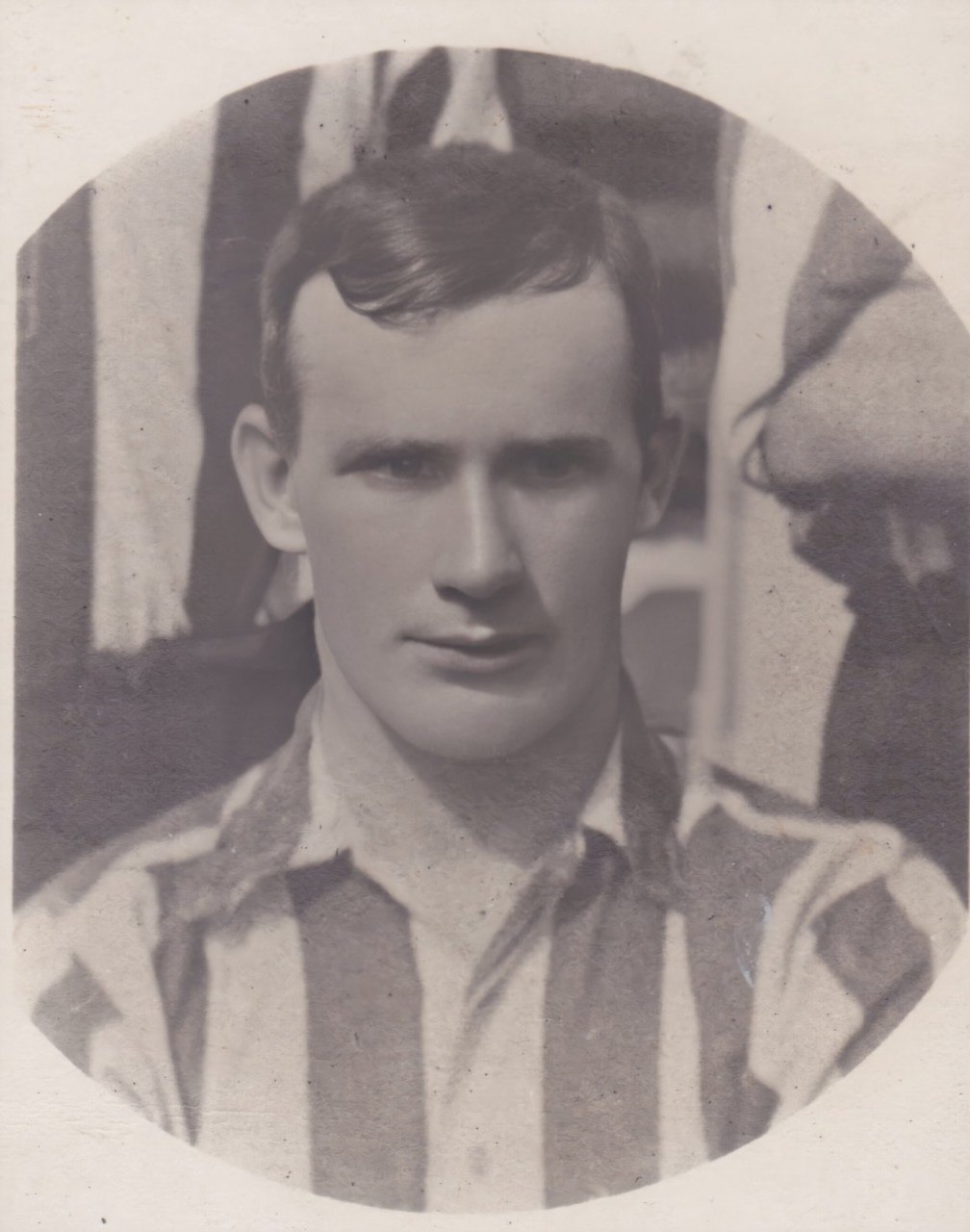
Sunderland went toe to toe with Liverpool in the first league season of the twentieth century. They had the best goal difference but lost out to Liverpool by just two points. The next season, that is 1901/02 saw Sunderland wrest back the league title. It wasn’t as spectacular as their earlier successes. Under the stewardship of Alex Mackie, Sunderland managed only 50 goals in 34 matches, conceding 35. They lost as many as 9 games but crucially enjoyed a ten match unbeaten streak between late November and early February. They lost both matches against title-rivals Everton. Jimmy Gemmell and Billy Hogg were the only Sunderland players to reach double figures as they netted ten times each. Only the keeper Ned Doig and striker Jimmy Miller (who scored 9 goals in the league) had remained from their “team of talents”. Defender Sandy McAllister had been an indispensable stalwart of what was certainly the strongest defensive unit in England at the time. McAllister’s heroics prompted fans to present him with a Piano at the end of the season.
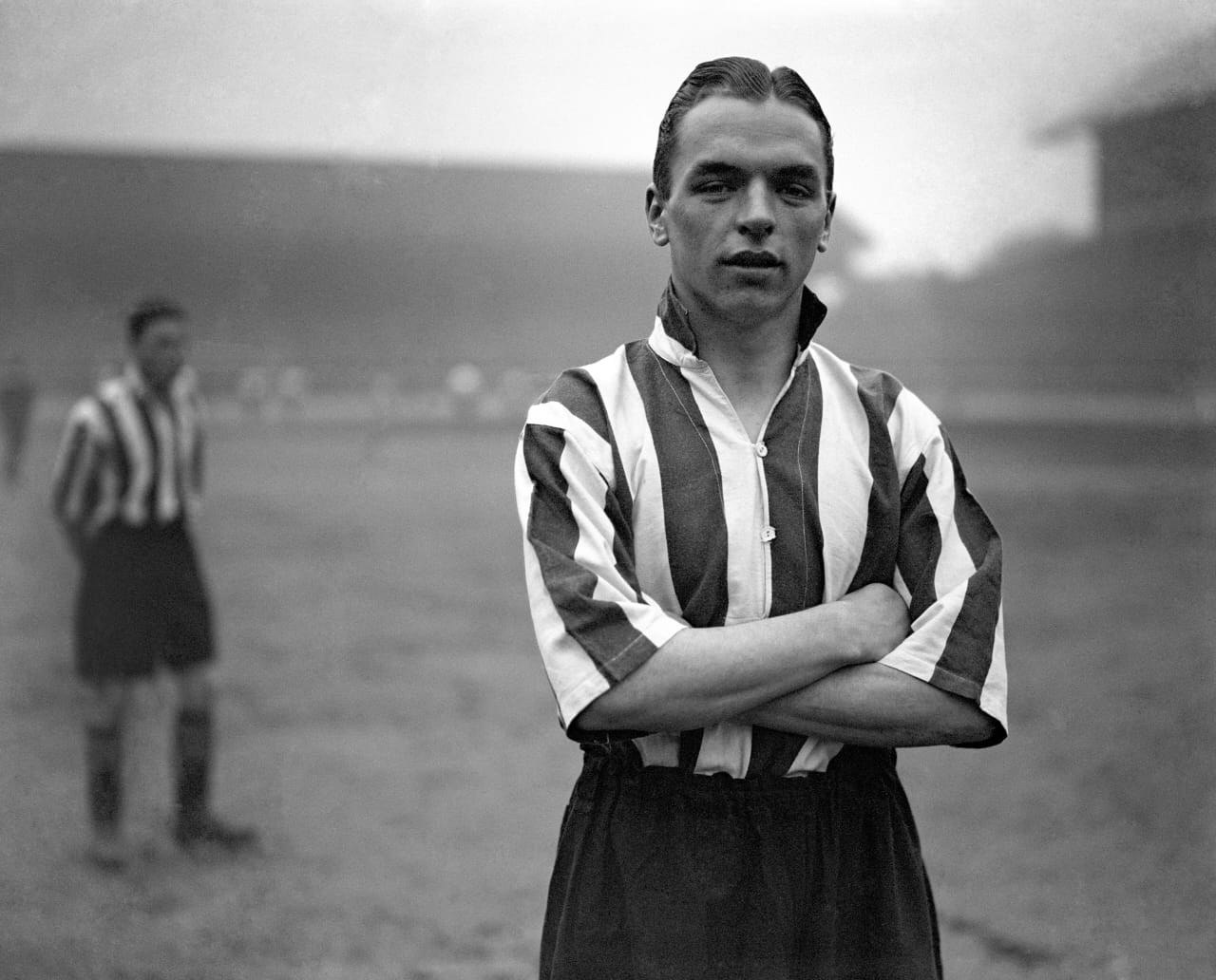
Sunderland did not win another title for more than a decade. In the 1902/03 season, as reigning champions they had been strong contenders for the titles right till the end, but they were denied glory by their rivals Newcastle United at St. James’ Park in the final game of the season. A win would have seen them pip eventual winners Sheffield Wednesday, but Sunderland were condemned to a 1-0 defeat which meant they finished third. For the next ten years they had multiple lower-half finishes. Their best campaigns saw them being third twice.
Sunderland did not start the 1912/13 season well. They had lost five of their first seven games and were seemingly heading towards a relegation battle. But the manager Bob Kyle reinforced the defence with a big no-nonsense right back signed from Blackpool, Charlie Gladwin. He famously ordered his teammates to vacate the box to deal with corner kicks virtually by himself and to great effect. The new goalkeeper Joe Butler, signed from Glossom, had also been a success. Again, it was a resilient defence that provided the solid foundations to Sunderland’s successful campaign. They won 10 of the next 12 games. Charlie Buchan, one of the best English attackers of his era, had scored 27 goals in the league as an inside forward. Aston Villa had rivalled Sunderland for both the league and Cup trophies. Villa secured the latter by defeating Sunderland in the FA Cup final but the league title went to Sunderland. They had amassed 54 points in the season, which was the highest point-tally to date. Sunderland won their fifth league title by a 4 point margin in the end.
While Sunderland remained mainstays at the top division, for the next two decades they weren’t quite that successful. They had finished third thrice in the 1920s but they did not improve on it until the 1934/35 season when they finished second, four points behind champions Arsenal. Under Johnny Cochrane, they were slowly building up a strong team.
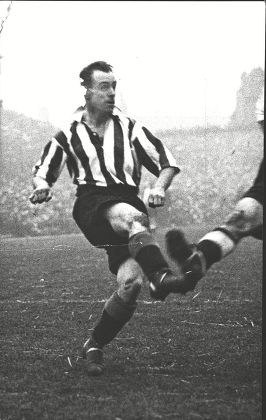
In the 1935/36 season Sunderland were defeated in their opening game against three times champions Arsenal. But they bounced back and went undefeated in their next six. They had a brilliant home record in this campaign that saw them win 17, draw 2 and lose 2 in Roker Park. They scored five against the reigning champions in a result that culminated their eleven match winning streak at home. Raich Carter, the playmaker, had been their most important player, constantly barking instructions to his teammates and dictating proceedings as much with his voice as his feet. By the end of the year, Sunderland had established a massive seven point lead at the top of the league table. Both Raich Carter and Bobby Gurney, the all-time top-scorer in Sunderland’s storied history, scored 31 goals each for Sunderland in the league that season. Sunderland did not boast a strong defence this time out, conceding 74 goals, only three less than a Sheffield United side that finished 20th in a 22-team league, but Sunderland’s blistering attack more than made up for it. They scored an awe-inspiring 109 goals in the season. The second highest goal-getters of the season, Brentford, managed just 81. Sunderland won their sixth title with a comfortable six point margin.
Except for a third place finish in 1949/50, Sunderland have remained a long way away from the summit of the top flight table for the rest of their history. After recently returning to top-flight they will deem a top-half finish to be a staggering success and if they can somehow conserve their form, they will be firmly in contention for a long-awaited return to European football.
Discover more from
Subscribe to get the latest posts sent to your email.