

Steve Herbots on Indian Football, Player Development, Khep Culture and Structural Setbacks
Inside the Mind of a European Coach in Indian Football- Challenges, Observations, and Hope

“In Football, earning a good money is only possible at the top level”
Says Steve Herbots, a 41-year-old Belgian coach currently managing Kolkata-based club United SC, who is playing in the I League 2. In a virtual interview, Steve spoke about his journey, coaching experiences, and Indian football. Most of his answers are extremely straightforward, revealing the blind spots in our footballing system. Collaborated with clubs like Arsenal, Leicester City, and SK Liers, he spent 15 years in the coaching industry while touring four different continents.
“I came here on my own.” He answered my first question- having many options in your hand, why did you come to India? Where he added, “It was not the club that invited me. It was me coming because I need a new challenge.”

Player Development Holds the Highest Priority
For Steve, player development has precedence over all else. Every season, many good players move to ISL and I League clubs. But the youth teams are crafting the main team.
“Every year, top players come through the youth,” he said. “If I go from the first year I was here, players like Prasanta Das came through, Sanjeev Mondal came through. In the beginning, Dipesh Murmu and Tarak Hembram were only bench players. So, step by step, they came to the main team.”
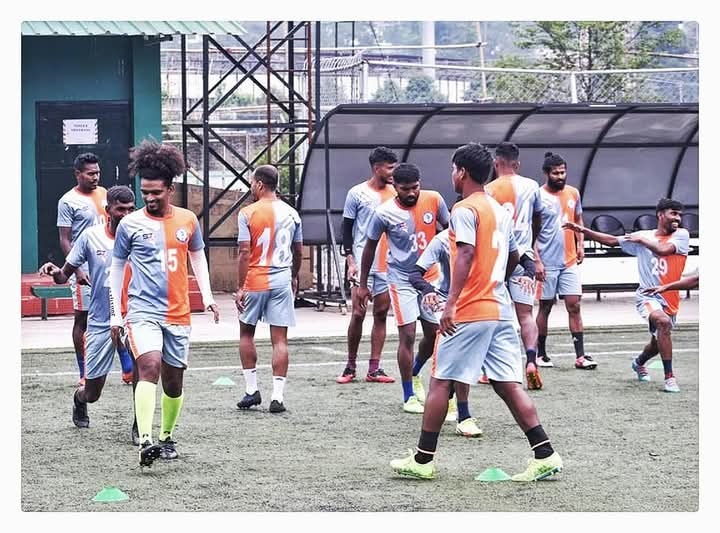
Steve also plays a dual role at United SC and works with the junior teams. Currently, they are in the I League 2 and have three players from the U-17 squad. He told me that they had not participated yet, but they are training with the first team. That means next season they may have their breakthrough.
Ingrained Game Model, Less Systematic Shifts
Based on their academy, most clubs primarily use an established game model built on either the manager’s or the club’s principles. Asking about fixed or flexible game models, he stated,
“If players are already within the club, they already know the system. Players who come from outside, they need to fit in the game model we want to play.”
He added more, “Like last year, Aditya Thapa, who came on trial from Dalsingpara, he has to fit within the system. We don’t really turn around the system and the tactics too much, we try to find players who can play our game.”
Choosing Players Who Justify with The System
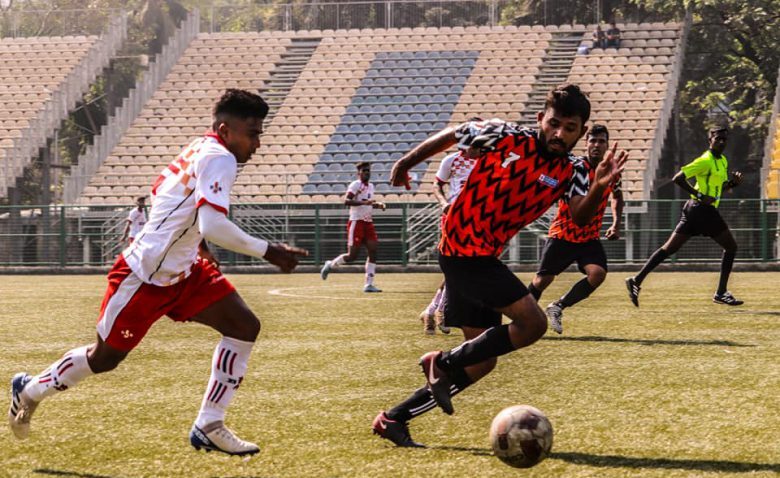
When talking about the game model, Steve Harbot told me the player had to suit his system. He said, “Our way of playing is very technical, very tactical. So, when a player doesn’t fit in there, I will not pick him; he should go to a club where he fits much more into the system.”
Indian Players Struggle to Grasp Pressing Due to Short-term Leagues
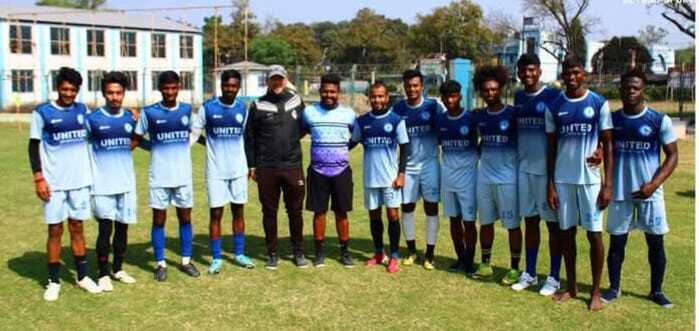
Indian players are never ever good at pressing. In modern-day football, teams are systematically good at counterpressing, but native players hardly adopt the skill. Steve mentioned,
“Because we don’t teach our players pressing”.
“Pressing, you can’t learn in a two-month competition. The Calcutta league is two months old. How can someone expect us to teach this ?”
“ Players come one month before the tournament, they play two months. Then they go to another coach, another club, another league”.
Using Manchester United’s example, he continued explaining the problem: “Amorim wants to play a certain system, wants to play a certain formation. Which, as a moment, he can not do because players can not do what he wants to do.”
Lack of Continuity
“Way of working a whole year, clubs in the Calcutta league always moving up. They start with a team and build it gradually, but they skip working, training, and moving.”
The lack of continuity in the league and the teams, as well as the changing coaches every season, led to a football development error. As he named clubs like “one year Bhawanipore use one coach, another year another coach, another year Peerless hire another coach, then again Sothern Samity hire another coach. So, there is no continuity. That’s why players can not get ready for that.”
“Another reason is Khep, because players don’t rest. Players have to play every two to three days. In Europe, Liverpool and Real Madrid play every three days, but they have the best medical departments and facilities, and they still complain that we need to play every three days at 40 degrees.
If the Calcutta League were to have one match every weekend like Europe, then the level would be much higher, and if they don’t play Khep, the level will be much higher.
Khep Is Ruining Indian Football
Most of the players belong to poor socio-economic families. Having just a limited amount of money from mainstream football, have to play Khep to manage their expenses. But the format is destroying professionalism.
He elaborated,
“Khep destroys Bengal football, there is nothing good about Khep that helps players. The only thing Khep does, gives money.”
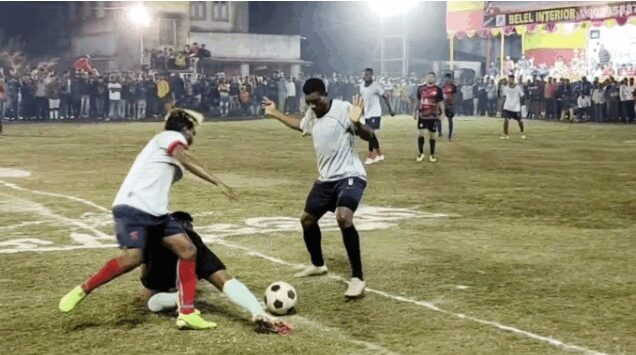
“Why are Indian players not fit and ready yet, if they’re going to play Khep at night. They come back home at 1 o’clock or 2 a.m. They need to come to training at 8.30 in the morning.”
Harbots guessed I would ask him about their financial situation, so they had to play Khep. He added, “In football, earning good money is only possible at the top level. I know players in the Ghana Premier League, which is much higher than here, and they don’t earn any money at all.”
“I know players, even my players are earning much more money here than in the Belgian Second Division.”
“Though Khep earns its own, all its earnings go to the clubs. That should be the sponsor for the club. That’s the only way clubs can provide a 12-month contract, for the 9 months of league, 2 months of pre-season, and 1 month off. Then can see the difference.”
“For now, one player needs to play on Saturday in the CFL, and on Friday night, he is playing Khep somewhere.”
On Managing the Communication Gap
The maximum players at the academy comes from the vast rural area of Bengal. The only language they know is Bengali. Whilst understanding a European man isn’t an easy matter for them. To meet my curiosity about how he filled the communication gap, Steve added, “English is indeed a problem for them. Now, the players who have been with me for three to four years, they mostly understand the tactical explanation I do.”
For new players, I always need to depend on my assistant coaches and the people who help me in the club. Because they need to be able to translate.”
Absence of Leadership on the pitch
Steve brings off his experience of visiting nations where English wasn’t the main language. But it’s the responsibility of a good leader to lead the team on the pitch. He said,
“one of the biggest problem is that there are less leadership on the pitch in Kolkata. So, what I mean is if you are working in some other Asian countries compere to here, there are many leaders who carry a coach’s words to pitch and that doesn’t happen in Kolkata.”
“In Kolkata, everyone is very quiet. There are not many leaders on the pitch. And that’s the biggest problem.”
“At the end, I am very much depending on my assistant coaches to translate for them. And then it needs to hopefully be the same translations because I can be saying something, and the translations can be wrong.”
“That’s why I am always with the players. And I tried to guide them a lot. Where they need to be positioned, where they need to turn, where they need to look, that is what I do every day.”
On His Best Experience
Doing coaching in different continents, Steve Harbots meets the different socio-economic and cultural landscapes. While I asked about his best experience outside Europe, he shared,
Outside of Europe, for me, the best experience was in Mali. I was there for a short period, working with the academy. And they were the most professional players I worked with.”
Players from Mali, Sekou Kone is playing for Man Utd, Amadou Haidara for RB Leipzig, and players are playing for Tottenham and Crystal Palace. All these players come from Mali.”
“Mali was a nation where football is not that strong, through the academy, I worked for many years, which changed the football there.”
Expressing his joy for the African nation’s youth side, he said,
“Last year, they played the U17 World Cup semi-final and beat Argentina for third place 3-0. Five times in a row, they qualified for the U-17 WC. So, Mali was the best experience for me out of Europe.”
Talking About Four Corners
A popular proverb among the scouts in England known as “Four Corner” contains Tactical, Technical, Physical, and Psychological; These four aspects of football. Discussing with Steve which aspect a scout should prioritize most, he clarified,
“At the end there are three basics for me. First what I look at and most of the scouts look at (work with me), there are three basics and all of these must be focused on the technical part.”
He added, “Because if you can not control the ball right, if you can not pass the ball right, and if you can not point out the space when you don’t have the ball, then all the rest will not help you.”
Someone can be psychologically strong, tactically understand everything, and physically strong, but if every ball goes way from his foot, it will not be helpful for him.
So first, you built a technicality. After you build your technicality, you build your tactical and physical skills and become the best; then, it’s your mental power.
He added some of the points: “So if you have the technicality, you understand tactics, you become strong, then it’s how much you want it.”
Views On Indian Coaches And Coaching Education
He praised Indian coaches when he was asked about his views. He advised,
“There are good Indian coaches but they need o dare to make the step outside India. There is a huge world in front of them, so they can even improve.”
While talking about coaching education, he said,
“The education program has changed 3 times since I’ve been here. Every time a new responsible comes, things change again.”
He manifested his views on the current head of coaches’ development, Vivek Nagul, as,
“Mr. Nagul has now started working, and if the right minds put their head together on long-term development, things can certainly change in India.”
Cultivating Reliance Foundation Development League
We discussed a lot of things, but when I reached the point, Steve gave me a fixed reaction, saying, “It is good but not good.” I also got a little confused, but he explained,
“RFDL is a good step, but in my eyes, having another 21s squad with players who are 23 and not being the best thing done. I even watched players who were 26 and 27 also playing.”
“Now, what does it help when you’re playing with the teens? It doesn’t help anyone.”
“So the set-up is okay, but it is too short again. RFDL, we played five matches last year. You will ask me what helps our players.”
The participation of over-age players is nothing new in Indian football. But he highlighted that these things can never help footballers to groom themselves. And the lack of structure in the tournament format will never produce the highest level of players. He thinks RFDL can help us, but we need a proper foundation.
“RFDL should be a nine-month competition with different levels, promotion, and relegation. There should be a second and third division, whatever it may help.”
“Same with the final, that is being done in England. Most of the English clubs do not bring the U-23. Last year, they brought U-18 players. And the best players are in pre-season or do not even play. There is no real level check. So, against a good set-up, it can be done much better.”
Hence, if we sum up the interview, a 41-year-old Belgian coach illustrated his views on Players’ development, His experience in India, technical things, and what setbacks are pulling us back.
Apart from these, he also talked about African football and the success of academies. I present his manifestation as uncut as possible.
Discover more from
Subscribe to get the latest posts sent to your email.