


Let us be precise about what happened at Atlanta Stadium, because precision matters when the subject is refereeing and the temptation toward conspiracy is always stronger than the argument warrants.
Argentina were 2-0 down. They had missed a penalty through Messi. Egypt, in the most significant match in their footballing history, were playing with the kind of structural discipline and counter-attacking clarity that had carried them further than any Egyptian side had gone before. Then, in the 58th minute, Mostafa Ziko scored a goal of breathtaking quality — Salah slipping him through on a long counter, Ziko finishing with precision past Emiliano Martínez. The Egyptian bench erupted. The Egyptian fans erupted. Argentina’s players immediately surrounded the referee.
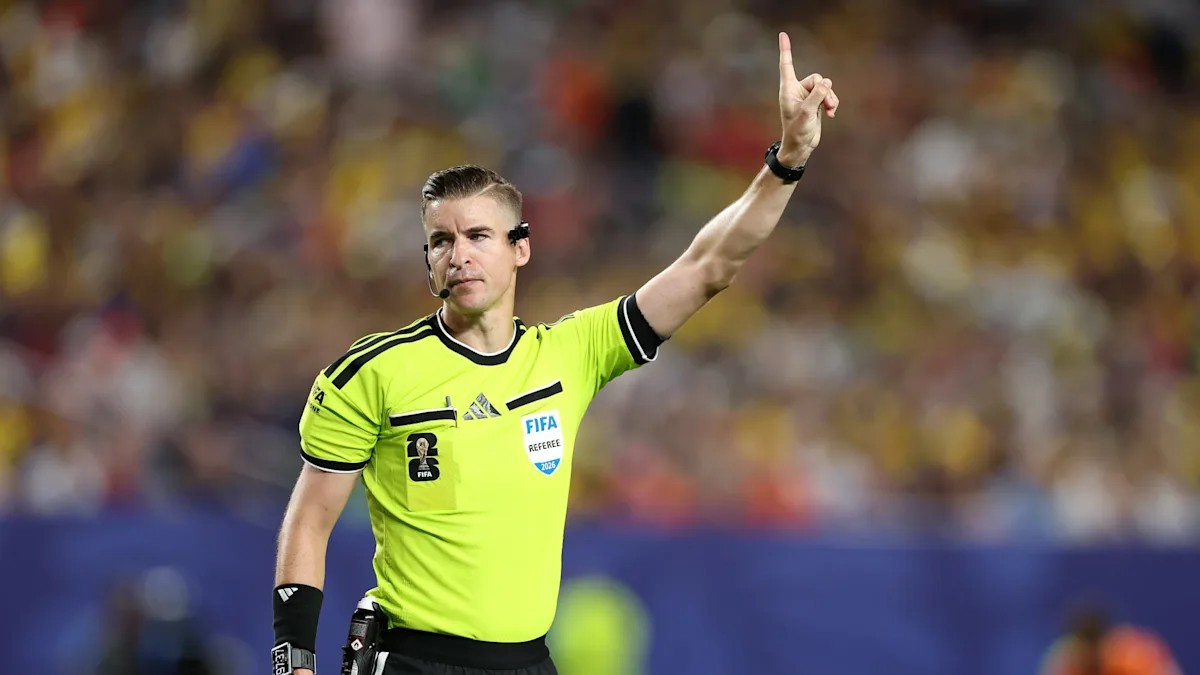
VAR intervened. Referee François Letexier was called to the monitor. Marwan Attia, VAR determined, had committed a foul on Lisandro Martínez at the start of the counter-attack — a minimal step on the foot, at a distance of approximately 100 yards from the goal, over 20 seconds before the finish. The referee had not called it in real time. He had seen it, assessed it, and let play continue. VAR reversed his decision.
Fox Sports analyst Rob Green, a former professional goalkeeper, said what many were thinking in real time: “Surely this is not within VAR’s remit to review this. It’s a full pitch away. 100 yards away — someone stepping on someone’s toe is not why VAR was brought into the game. We’ve got to a point now where it’s reaching far beyond the powers it should have. The referee saw the tackle, decided not to give it, and then Egypt, with a brilliant breakaway goal, was denied a two-goal cushion.”
He was right. And Egypt were not finished being wronged.
The Distance Between Decisions
Egypt ultimately did go 2-0 ahead — Ziko scored again legitimately at 67 minutes. But the psychological impact of the disallowed goal, and the precedent it established for how the evening was being officiated, mattered enormously to what followed.
Argentina scored at 79 to make it 2-1. Messi equalised at 83. And then, in the closing stages, with the match poised at 2-2 and Egypt needing one more defensive act to force extra time, Salah went down in the area claiming a foul. The referee waved it away. VAR, which had found time to crawl the length of a football pitch to locate a barely-perceptible step on Lisandro Martínez in the build-up to Ziko’s goal, did not recommend an on-field review. Argentina broke downfield. They scored the winner. Final score: 3-2 to Argentina.
BBC reporter Dale Johnson noted the structural contradiction precisely: “Egypt’s disallowed goal was completely against how this tournament has been refereed. You can’t have a light touch where you don’t give fouls for minimal contact and then rule out a goal through VAR for a very minimal hold of the shirt.” Ahmad Yousef, an Egyptian football expert speaking on BBC Radio 5 Live, added: “There is so much inconsistency at the moment with VAR and decisions and how far you go back to pull a decision. The referee made the wrong decision disallowing Egypt’s second goal.”
The inconsistency is the point. It is always the inconsistency that makes these conversations unavoidable. Had VAR applied the same standard to every counter-attack in the match — scrutinising the build-up to each goal with the same forensic distance — the result might have been the same. Possibly Argentina still win. They have Messi, and Messi found two goals from two opportunities in the final ten minutes. But Egypt would have had a fairer chance to make the result stick. Instead, they led 2-0 and ended up going home.
A Pattern Argentina’s Opponents Know Too Well
This is not the first time in this tournament that officiating decisions have surrounded Argentina with controversy. Against Cape Verde in the Round of 32, multiple incidents involving Cape Verde’s appeals for fouls and possible infringements were noted as receiving less scrutiny than comparable Argentine claims. A social media analysis, circulated widely and not contradicted by the factual record, observed that three goals involving Argentine fouls in the build-up had not been reviewed by VAR across the tournament, while Egypt’s disallowed goal involved VAR overruling the referee for an incident barely distinguishable from contact that elsewhere went uncalled.
None of this proves bias. Referee bias, in the conspiratorial sense, is almost never what is actually happening when officiating decisions accumulate against one side. What is actually happening is something more mundane and more structural: VAR without consistent, clearly communicated protocols produces decisions that look different depending on which side they fall against. When those decisions fall consistently against the same opponents, the optics become impossible to manage regardless of the technical justifications.
Henry Winter, writing for the BBC, found the only appropriate tone: “If VAR had gone any further back in that Egyptian move, Tutankhamun would be involved.” The joke lands because it describes something real. The standard applied to Ziko’s disallowed goal was not the standard that has been applied anywhere else at this tournament.
Egypt are out. Argentina are in the quarter-finals. They are the better side in the tournament and deserve to be there — Messi’s two late goals were the work of a player who simply refuses to accept the situation a match has placed him in. That is real and it should be said.
But Egypt, in the most significant match in their history, deserved to play the second half without having a legitimate 2-0 lead taken from them for a contact so marginal that the on-field referee had looked at it and chosen to let play continue. They deserved Salah’s penalty claim in the closing moments to receive the same microscopic attention as Attia’s step on Lisandro Martínez. They deserved a chance to make Argentina earn it on even terms.
They did not get that chance. The better team, perhaps, still won. But the fairest contest, certainly, was never played.
Read more – Messi Sparks Extraordinary World Cup Comeback Against Egypt
Follow Footy Times on Social Media:
Facebook | Instagram | Twitter | YouTube
Discover more from Footy Times
Subscribe to get the latest posts sent to your email.