

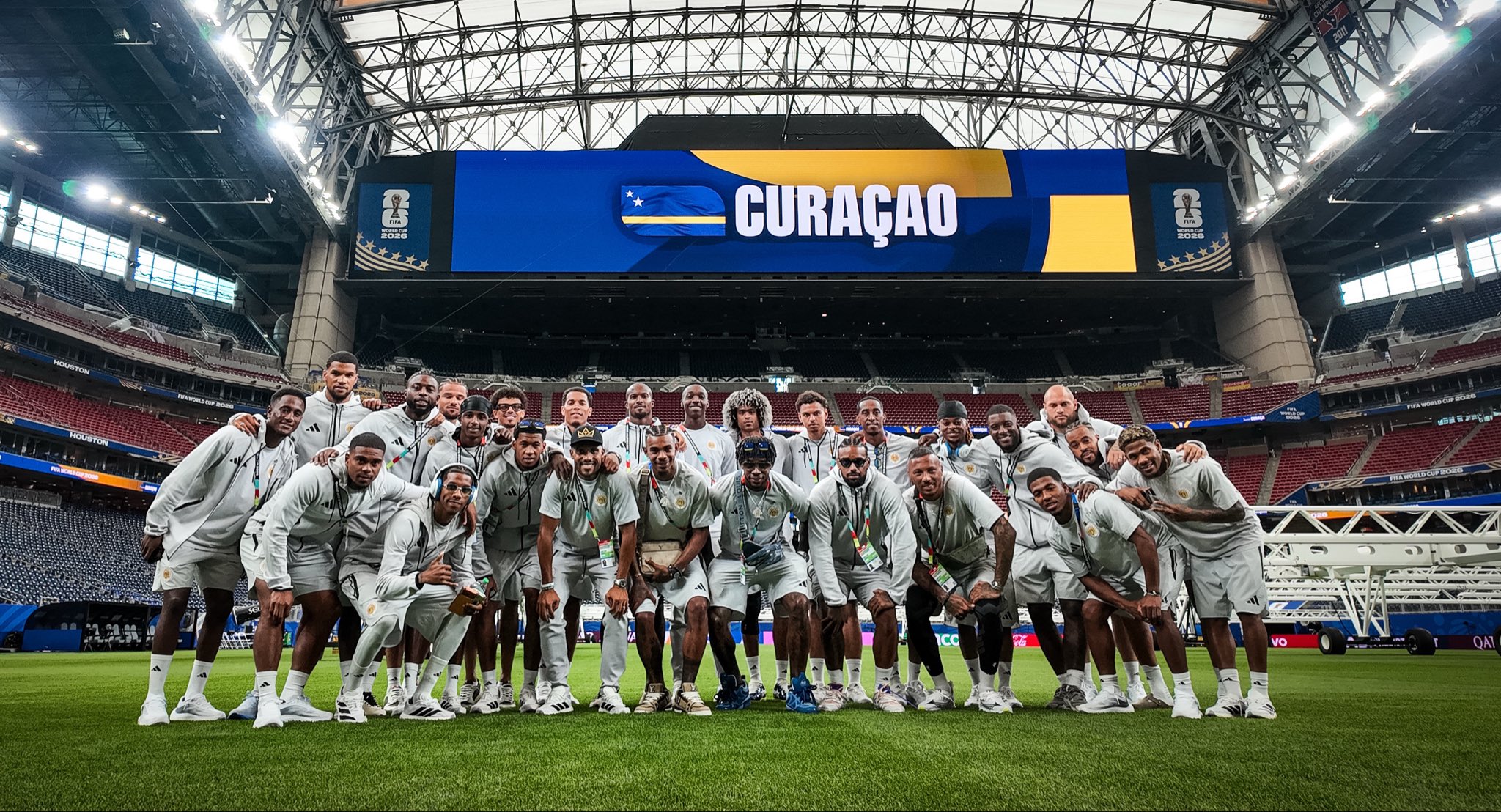

On the evening of 18 November 2025, in Kingston, Jamaica, eleven players from an island of 156,000 people held on for a 0-0 draw and made history. No one from the coaching staff lifted them over the line in the final minutes. No tactical mastermind steadied them from the bench. Their head coach, Dick Advocaat, was in the Netherlands. His daughter had been unwell. Football could wait.
It did wait. And when the final whistle went in Kingston, Curaçao became the smallest nation by population ever to qualify for a World Cup — smaller than Iceland’s 352,000 when they arrived at Russia 2018, smaller than Trinidad and Tobago, smaller than any island, peninsula or city-state that had ever done this before. The players celebrated on a pitch in Jamaica without their coach. Somewhere in the Netherlands, Advocaat heard the news.
He came back. Of course he came back. He is 78 years old and this is his third World Cup as a manager — he took the Netherlands to the quarter-finals at USA 1994 and South Korea to the round of sixteen at Germany 2006. There are coaches who attend one World Cup and consider it the summit of everything. Advocaat is attending his third, at an age when most men are watching football from armchairs, for a country of 156,000 people that didn’t qualify by conquering its region but by grinding through it — unbeaten across the entire Concacaf campaign, top of their group, 28 goals scored, the most of any Concacaf nation in qualifying.
He will be, when he takes his seat in the technical area for Curaçao’s opening match, the oldest head coach in the history of the World Cup tournament. That fact sits alongside another: across the group, Ronald Koeman will be managing the Netherlands. Two Dutch coaches, one tournament. One managing the country they both grew up in, the other managing the island that gave that country some of its most interesting footballers and asked for something back.
That exchange of talent is the real story behind Curaçao’s squad. The island is an autonomous territory within the Kingdom of the Netherlands, and its diaspora runs deep through Dutch football culture. Several players in Advocaat’s squad once represented the Netherlands at youth level before switching allegiance — FIFA rules permitted it, and one by one they arrived, drawn by the idea of representing somewhere smaller, more personal, more theirs. Joshua Brenet played a World Cup qualifier for the Netherlands in 2016. He is here now in a different shirt. Tahith Chong, the former Manchester United youth player, was actually born in Curaçao — one of the few in the squad for whom the flag on the chest is the flag of the place where they first drew breath.
Together they form a team called The Blue Wave, and they play with the attacking energy that name suggests. Juninho and Leandro Bacuna give them a brotherly pair in midfield with genuine European pedigree. Tahith Chong offers pace and creativity from wide positions. Jurgen Locadia and Jearl Margaritha lead the line with experience, while Gervane Kastaneer and Kenji Gorre combined for eight qualifying goals between them. Rangelo Janga, the island’s all-time leading scorer with 21 goals in 43 appearances, represents continuity — the thread between where this team started and where it has arrived.
Group E does not offer gentle opponents: Germany, Ecuador, Côte d’Ivoire. Pre-tournament friendlies — a 5-1 defeat to Australia, a 4-1 loss to Scotland — suggest the gap between qualifying for a World Cup and competing at one remains significant. Curaçao know this. Their aim is not to win the group. It is something quieter and more durable: to be here, to play well, to show the island that 156,000 people is not a ceiling.
Costa Rica were the last Concacaf debutants to advance from the group stage — at Italy 1990. Panama, the most recent first-timers from the region, went home early from Russia 2018. History is not encouraging. But history did not expect Curaçao to be here at all.
A 78-year-old coach came back from his daughter’s sickbed for this. The least football can do is pay attention.
Discover more from Footy Times
Subscribe to get the latest posts sent to your email.