

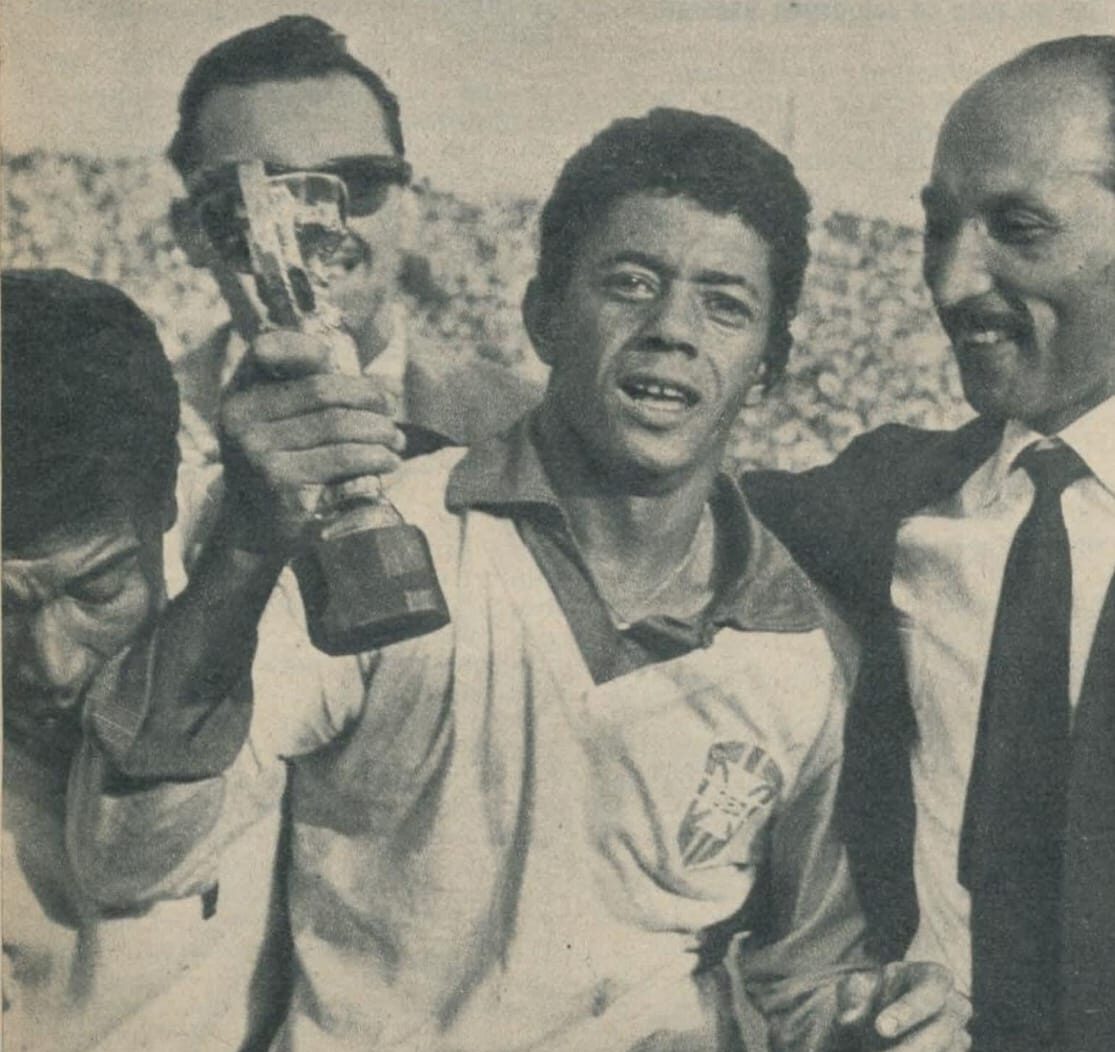
Unsung Heroes in World Cups: Amarildo | 1962 Chile
Very Simple Game #19

The 1962 World Cup in Chile is one of the least fondly remembered tournaments in the history of the World Cup. The lack of infrastructure, widespread poverty, and unemployment issues, in addition to the poorly addressed Valvadia Earthquake, were already reasons enough for poor press, but the football in the World Cup did little to distract either. Contests were constantly marred by violence, and for the first time in FIFA World Cup history, the number of goals in the tournament dipped, well below 3 per game. The format remained the same as the preceding tournament in Sweden, which, in its festive exuberance, had little in common with the next tournament.
But certain things remained the same. Brazil won the competition, becoming the last side to successfully defend the World Cup, just as they had four years ago. Garrincha shone in the latter stages, just like four years ago. But Pele couldn’t. He was brilliant in the opening game, but in the second group game against Czechoslovakia, he suffered an injury that forced him to sit out the rest of the tournament. Czechoslovakia held on against a 10-man Brazil to grind out a 0-0 draw. The same ten men would play the final against the same opponents, joined by Amarildo, the man who replaced Pelé in a World Cup-winning campaign. Replacing Pele is as difficult a job as they come in football, but Amardilo could make the place his own in Pele’s absence. While players like Garrincha and Florian Albert are sometimes mentioned alongside Vava and Masopust, Amardilo’s successful handling of what was effectively an impossible task in the 1962 fifa.com/tournaments/mens/worldcup” target=”_blank” rel=”noopener noreferrer”>FIFA World Cup does not receive quite as much attention.
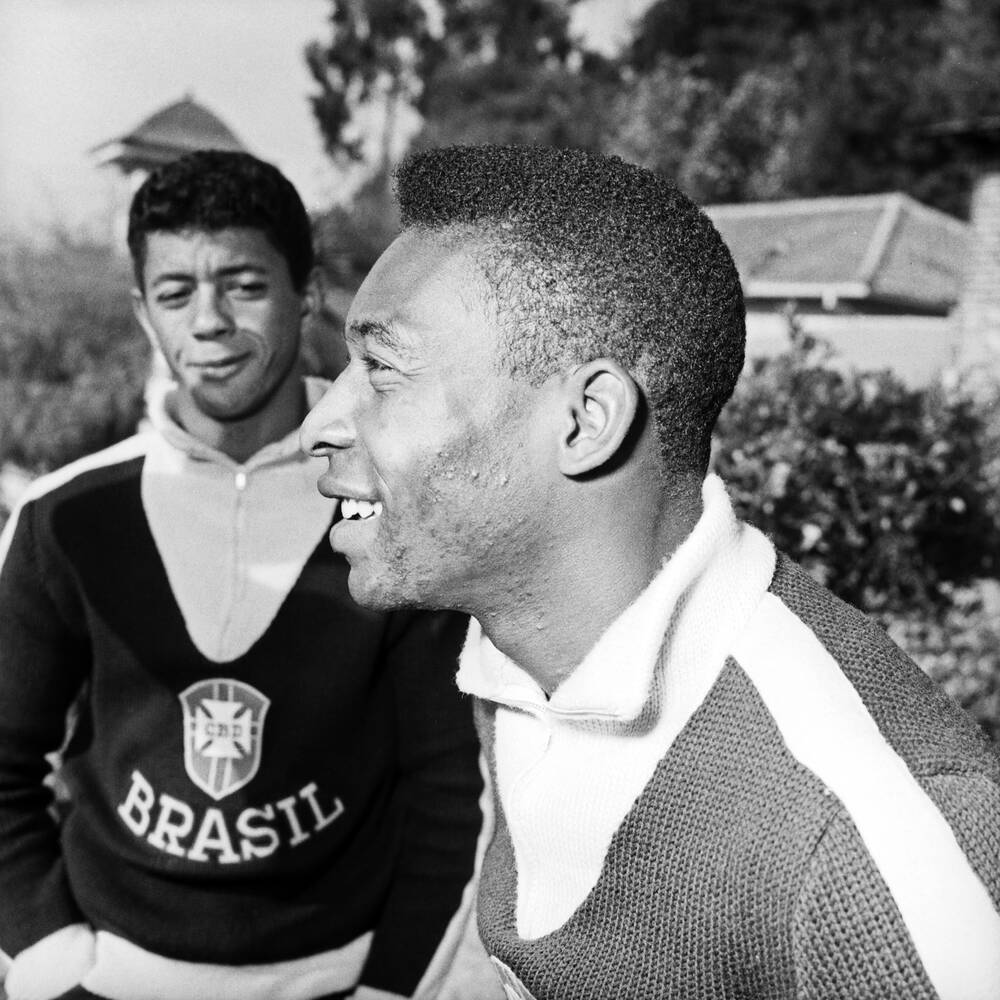
In this series, which will run through all twenty-two FIFA World Cup tournaments, we will try to tell the story of a player who had an important role to play in the tournament but hardly features among the first few names that jump out once you hear the tournament being mentioned. Today, in the seventh iteration of the series, we will look at Brazil’s Amarildo.
When Amarildo, a capable but not so prolific striker, had to play his first World Cup match against a Spain side quite capable of inflicting upsets, he knew that his team at least had to secure a draw to qualify for the quarter-finals. Brazil hadn’t had the most comfortable of starts in the tournament, and they returned to the dressing room at half-time 1-0 down. Spain performed with dominance. The scoreline seemed merciful to the Brazilians because of some very decisive mistakes by the referee that favoured the Latin Americans.
As the second half progressed, the Brazilian side, desperate, launched attack after attack. Zagallo beat his marker and provided a sharp low cross that was turned in at the near-post by an onrushing Amardilo from close range in the 72nd minute. About fifteen minutes later, it was Garrincha who took the ball from Didi to dribble past multiple defenders and tear apart the Spanish defensive organisation. Garrincha, getting better as the tournament progressed, then provided a looping pass that was effortlessly nudged in by an Amarildo header. It was a gentle and satisfying headed goal that looks textbook in an old-school way and feels scarcely possible in modern-day football. Brazil won the match, securing the top spot in the group table with a 2-1 victory.
Amarildo had a comparatively quieter afternoon in the quarter-final against England, where a near-unstoppable Garrincha ran the show, scoring twice and assisting once against a good English side. The semifinal game against a weak host team saw an inspired Brazilian attack that silenced the fiery home crowd. Deflected from an attempted overhead kick by Amarildo, the ball reached Garrincha, who converted with a beautiful long-range top-corner finish that handed Brazil the lead in the 9th minute. Brazil had another goal, finished by Vava and created by quick interchanges between Vava and Amarildo, but this one was inexplicably disallowed. Garrincha soon scored a second, with a header. Only a well-taken free kick that caught the Brazilian keeper off guard kept Chile in the game as the half-time came. In the second half, Vava scored twice from passes by Garrincha and Zagallo, and though the Chilean side, aided by a few fortunate refereeing calls, scored from a penalty, Brazil authoritatively prevailed 4-2. Brazil went on to play a second successive World Cup final.
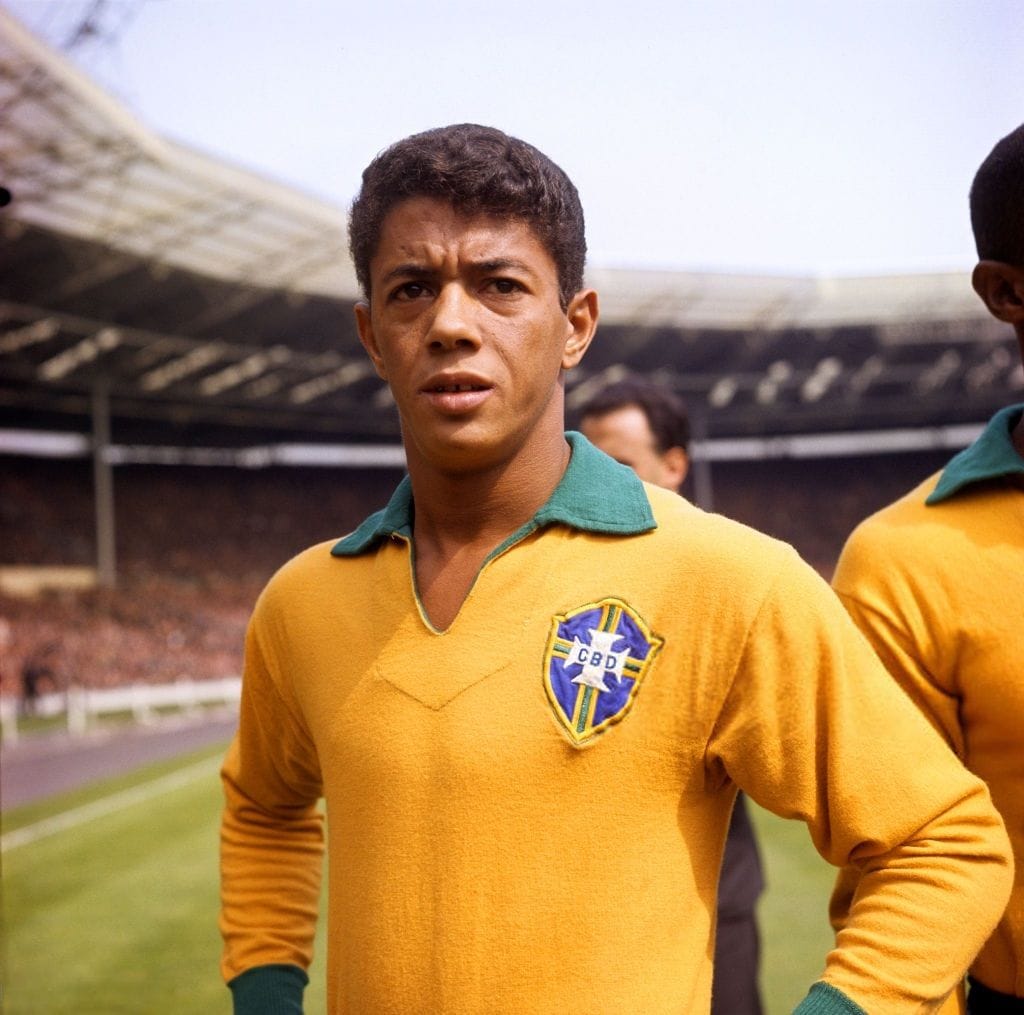
Despite taking a lead in the 15th minute by a Masopust strike, it was evident that the Czechoslovak outfit was nothing special. They boasted a brilliant goalkeeper who wasn’t having one of his better days in the final match against Brazil. While Schrojf’s sharp saves and brave interceptions had helped the Czech side to reach the ultimate stage, he made two high-profile mistakes that directly led to Brazil scoring. The first of the two, coming right after the Czech had scored, was a positioning error, which was not quite as easy to exploit as Amarildo makes it look. He dribbled away from three defenders after receiving a throw-in and hit a well-calculated shot from an acute angle into an under-guarded near post. Amarildo had equalised in the World Cup final.
As Amarildo was having a great game, Garrincha was rather quiet. The scores remained 1-1 up until around the 70th minute when a slaloming run by Zito culminated with a pass for Amarildo running down the left side. He played a delightful cutback that completely disarrayed the Czech defence. Making time and space for himself to look up and find Zito with a teasing lobbed cross, Amarildo instinctively knew that Zito just had to put it in, which Zito did. Brazil went ahead. Within ten minutes, they were 3-1 up and cruising through a Vava finish that had come after the keeper had mishandled a cross. Brazil and Amarildo had won the World Cup even after Pelé was forced to the bench.
Amarildo earned the epithet “the possessed” from the Brazilian press through his performances in the World Cup. His career overlapped with that of several supremely gifted Brazilian forwards, and as a result, he managed only a few more than twenty caps and scored seven goals, three of which came in the 1962 FIFA World Cup. He had his most successful club stint at Botafogo, later also playing in Italy. No players from the 1962 final match between Brazil and Czechoslovakia are still alive, except for Amarildo, who delivered effectively when his team lost its talisman.
Discover more from Footy Times
Subscribe to get the latest posts sent to your email.