

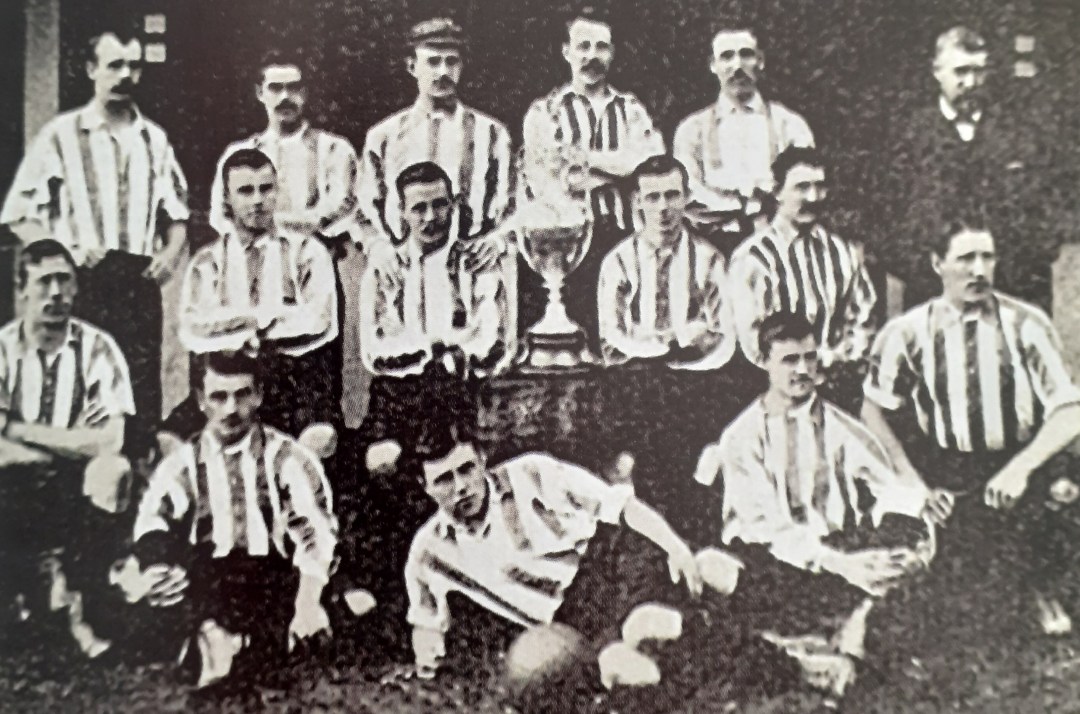

To most football fans of our times, Sunderland has always been an average, if not categorically weak, football club that, despite its huge support base, has had no notable successes in the modern era. The club’s biggest claim to fame in the 21st century was a Netflix documentary series that ended up showcasing their all-around organisational incompetence to the watching world. Yet, Sunderland is one of the most successful clubs in the history of English league football, with only two Merseyside clubs, two Manchester clubs, Arsenal, and Aston Villa having won more top-flight league titles.
Sunderland have made their long-awaited return to the Premier League this season. They have started the campaign in style, sitting fourth after 9 games, as they keep quelling the suggestion that their early-season form is a mere blip. While we have never seen Sunderland so high up in the top-flight league table before, they were regulars in title races at times. Let us today delve into the storied past of Sunderland AFC to recount their six First Division title wins in 1891/92, 1892/93, 1894/95, 1901/02, 1912/13 and 1935/36.

Founded as “Sunderland & District Teachers Association Football Club” in 1879, they dropped the “District Teachers” part soon after to ensure services to people outside the teaching profession. They became a Professional club as early as 1885. They had some very capable Scottish footballers at their disposal, and they drew the attention of William McGregor, the founder of the Football League, who called the Sunderland side “a team of talents” owing to their strength in every position. They applied for a place in the Football League and were subsequently admitted to play their maiden league season, having more than proved their mettle by soundly defeating established sides like Preston North End and Aston Villa by wide margins in friendly fixtures. Sunderland celebrated their admission with another friendly win against the reigning two-time League champions, Preston, by six goals to three.
Sunderland AFC hired Tom Watson as their manager in 1888. With a well-waxed handlebar moustache, he had a reputation for being a capable communicator and smart man-manager. He would later join Liverpool and lead them to their first two titles as their longest-serving manager. In 1888, Sunderland also signed Johnny Campbell from Scottish Cup winners Renton. Soon he was joined by the likes of Jimmy Miller, Hughie Wilson and John Auld, who strengthened the attack, left wing and defence, respectively. During their rocky first season in the league, they also added Ned Doig to their side, a very dependable goalkeeper. Sunderland recovered well to finish seventh in 1890/91.
The following season also saw Sunderland start in a similarly unconvincing fashion. They lost 3 of the first 4. Both Preston and Villa avenged their losses by squarely defeating Sunderland. Villa were flying high, as Sunderland plummeted down the table. Sunderland’s misery won’t last long, though. They quickly found their rhythm in attack and started scoring for fun. In their remaining 22 league matches, they lost only twice and scored an amazing 93 goals, the best tally any team had ever managed in the Football League up to that point. They also tidied up their defence, conceding just 36 times. Only Aston Villa came anywhere near the goal-scoring numbers Sunderland put up, but they conceded 56 goals while scoring 89. The third-highest scorers, Preston North End, only managed 61. Sunderland won every home game, a record yet to be matched in English football. They had a 13-match winning streak that set a top-flight record that was broken by Wenger’s Arsenal 110 years later. Johnny Campbell scored 32 goals that season, creating a record that would stand for almost a quarter of a century. Sunderland had cruised to their first title.
It would seem difficult to hold on to such ridiculous standards, but Sunderland went ahead and outdid themselves in the 1892/93 season. Campbell again created headlines as the highest scorer with 31 goals as Sunderland became the first side to score a century of goals in a league campaign, again conceding only 36 goals. They won the title by 11 points, which is a lot considering these were the days when two points counted for a win. The next team to score a hundred league goals in a season will have 42 games to reach that tally rather than Sunderland’s 30. Sunderland found the net five times in a match on four occasions and six times on five.
Follow Footy Times on Social Media:
Facebook | Instagram | Twitter | YouTube
Discover more from Footy Times
Subscribe to get the latest posts sent to your email.