

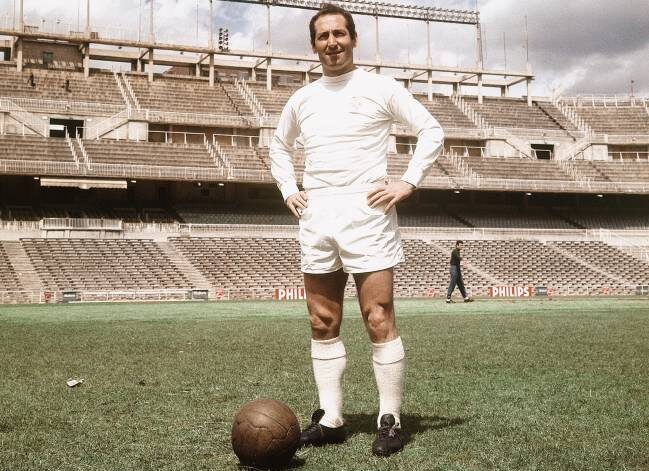

Paco Gento maintained that he was “a dissatisfied player”. Such a suggestion would feel outlandish because Gento won 12 league titles and 6 European Cups and etched himself deeply into the folklore of the game. Still, it is a testament to the yearning that kept Gento constantly outdoing himself. The legendary Madrid left-winger’s dissatisfaction was mainly because he always imagined himself as a more central presence in attack. What will be called an inside left in those days was Gento’s preferred position. But he almost never actually played there.
Looking at the abruptly cut, grainy footage of football matches in the ‘50s and early ‘60s, seeing the interplay of shorter passes that Paco enjoyed with the great Alfredo de Stefano, one starts to understand why Paco Gento was dissatisfied. He did a phenomenal job as a line-hugging winger who had startling pace, fantastic crossing abilities and a remarkable capacity to outplay defenders, making him busy. But he was also brilliant in tight spaces, inventive in his quick decision-making and had a very keen positional awareness. His goal-scoring record, which looks fine at best, would have also gotten significantly better had he operated more centrally.
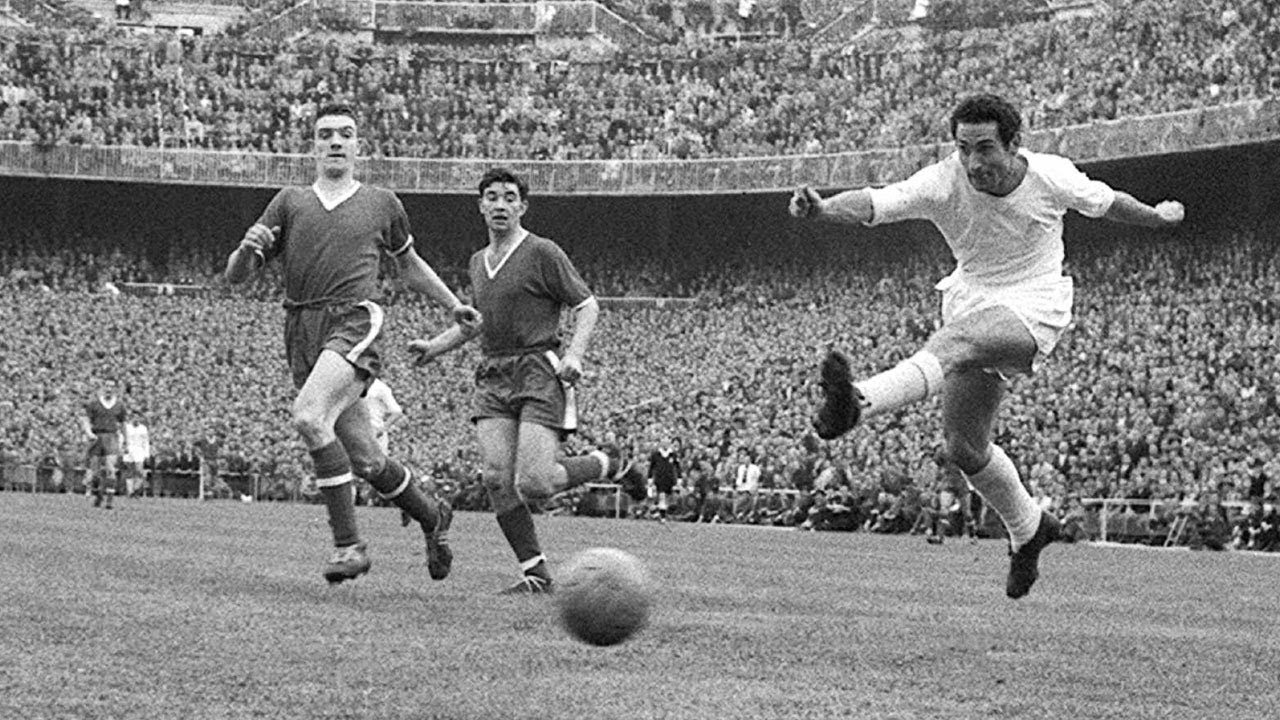
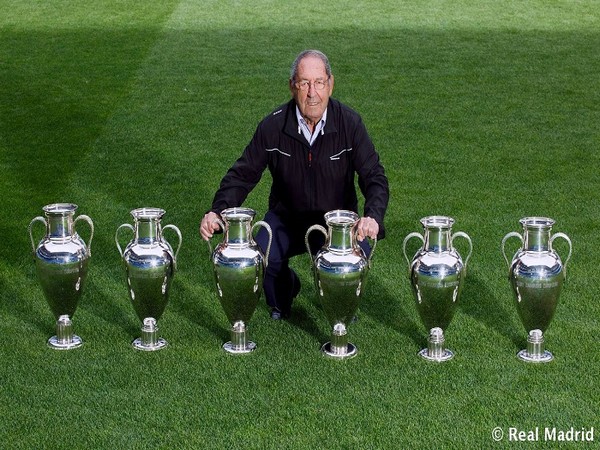
Paco Gento has played a record 8 European Cup finals, level with Paolo Maldini. But unlike the latter, Gento also had the chance to play a ninth final in European competitions, in the 1970/71 Cup Winners’ Cup. This 21st October marks Gento’s 92nd birth anniversary. And so taking a trip to 9 different European final matches with Paco Gento feels quite appropriate.
Gento’s initial years weren’t quite that fascinating. While his potential was well known, as is exemplified by Real Madrid swiftly signing him after he had starred against Madrid for Racing Santander at nineteen in only his tenth ever senior game, Gento didn’t score a single goal in his first season at Madrid. His second was a little better, with 6 goals. When the coaching personnel were less keen on Gento, Alfredo de Stefano, the greatest of his generation and the outright star of the side, kept insisting that Gento had what it takes, and it would only need a little time for him to fine-tune his abilities. If Stefano helped him perfect his passing game, Hector Rial, the inside left of Madrid in the 1950s, helped him understand how to deploy his pace to devastating effects.
By the time the inaugural European Cup finals arrived, Gento was an integral element in Madrid’s super team. He had bagged the first of his 30 European Cup goals in a quarterfinal clash against Partizan from Belgrade. French outfit Reims had raced into a two-goal lead in the final, but Real Madrid soon found a way back with Stefano halving the deficit and Hector Rial equalising by the half-hour mark. In the second half, Reims retook the lead in the 62nd minute only to be thoroughly outplayed for the rest of the match, which Marid won 4-3, with Marquitos drawing his side level before Rial struck a second time to put Madrid in front. Gento had been a menacing presence on the left flank, but this was by no means one of his more memorable performances.
The next European Cup final was held in the home ground of Real Madrid. A resilient Fiorentina did their best to spoil the party, but a controversial decision to award a penalty to Real Madrid, with only around twenty minutes of stipulated time to play, they could not hold on. Stefano converted the penalty. Within the next six minutes, Gento scored one of his most iconic goals for los blancos. Dealing with a persistent defender trying to hold him back, Gento used his pace to run straight at the goal, finishing with a delightful chip just before the onrushing keeper could have claimed the ball.
The 1957/58 final in Brussels saw Real Madrid and AC Milan, the clubs that would go on to become the two most successful teams in the competition, lock horns in their only European Cup final against one another. It was a classic. Milan were the first to draw blood around the hour mark before Stefano expertly controlled a cross and converted from a close range with a sharp finish to equalise around the 75th minute. Two quick goals were exchanged within the next five minutes. Grillo had momentarily put Milan ahead, but Rial swiftly made it 2-2. For the first time ever, extra time was required in a European Cup final.
The first fifteen minutes passed without any change in the scorelines, but early in the second half, it was Paco Gento, who had found the back of the net from a tricky angle right through a packed box with the precision of threading a needle. Madrid were leading for the first time in the match, and they did not relinquish the lead. Gento also scored a goal each at the pre-quarter-final and the quarter-final rounds. He scored more in this tournament than he had scored in the previous two European campaigns combined. At 24, Gento was appearing to be entering his prime, one that would cement his place as one of the all-time legends of the sport.
Discover more from Footy Times
Subscribe to get the latest posts sent to your email.