


After a 12-year-long hiatus due to the Second World War, the FIFA World Cup reconvened in Brazil in 1950 for its fourth staging. Coming after two World Cups using a straight knock-out format, this was the only World Cup that did not have a single knock-out match. The qualification process was marked by withdrawals and last-minute cancellations, and so only 13 teams competed, being split up into four groups of four, four, and two teams each. England finally came out of their snobbish isolation to participate, as the odds-on favourites, only to return home humiliated by back-to-back defeats against an unfancied United States and a decent but unspectacular Spain. The top-ranking team from each of the four groups went into a four-team round-robin tournament that would determine the world champion.
In this series, which will run through all twenty-two fifa.com/tournaments/mens/worldcup” target=”_blank” rel=”noopener noreferrer”>FIFA World Cup tournaments, we will try to tell the story of a player who had an important role to play in the tournament but hardly features among the first few names that jump out once you hear the tournament being mentioned. Today, in the fourth iteration of the series, we will look at Brazil’s Zizinho. Zizinho was one of the central pillars of the Brazil side in 1950. While the Uruguayan stalwarts Varela and Ghiggia drew acclaim and Brazil’s free-scoring Ademir emphatically topped the scoring charts, Zizinho, widely considered to be the greatest Brazilian footballer never to win a World Cup, had been the stand-out performer of a very talented Brazil side and was rightfully applauded as the best player of the tournament.
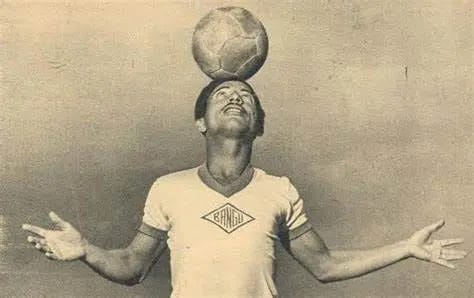
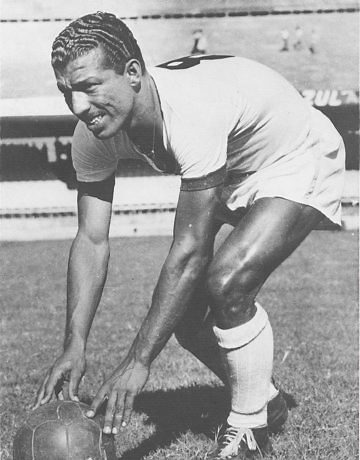
Zizinho was perfecting the role of an attacking midfielder as the role was coming into vogue. He was a superbly capable dribbler and passer of the ball. Despite his position, he was a notably dedicated runner. Rather than being a luxury footballer, he was known for an intense style of play that would often provoke opposition players. He is one of those few players who were serenaded as artists as well as warriors. In a period that bridged the careers of two more famous Brazilian superstars, that is, Leonidas and Pelé, he had been incredibly successful for Flamengo, Bangu and São Paolo. He was as prolific a scorer as an assist provider. He amassed 30 goals and 32 assists in only 54 matches for Brazil between 1942 and 1957. He was called up for the 1954 and 1958 World Cups, but he declined both opportunities because he felt he would be taking up spots that should ideally go to deserving young players.
Owing to an injury, Zizinho did not play the first two games of the 1950 FIFA World Cup. In the third and final game of the first group stage, Brazil faced a strong Yugoslav side. The cherished trident of inside right Zizinho, inside left Jair and centre forward Ademir had finally announced themselves at the grand stage of the World Cup. Yugoslavia had won both their games while Brazil had managed one win and a draw. Yugoslavs needed just a draw to send Brazil out of the tournament, but Ademir poked in an early goal from close range to calm the nerves. It still remained an end-to-end affair. Zizinho had a goal disallowed as Yugoslavs kept asking serious questions of Brazilian defence. The slender and unconvincing one-goal lead was finally doubled with about twenty minutes left to play as Zizinho embarked on a mazy run, creating a move that he himself finished excellently. Brazil held on to reach the final round. Brazil flattened an overmatched Sweden in their first game of the final round, scoring seven goals with Ademir bagging four. The trident of Jair-Zizinho-Ademir kept exchanging the ball between them to create delightful attacking moves again and again. Zizinho didn’t find the net, but he remained the cornerstone of Brazil’s attack.
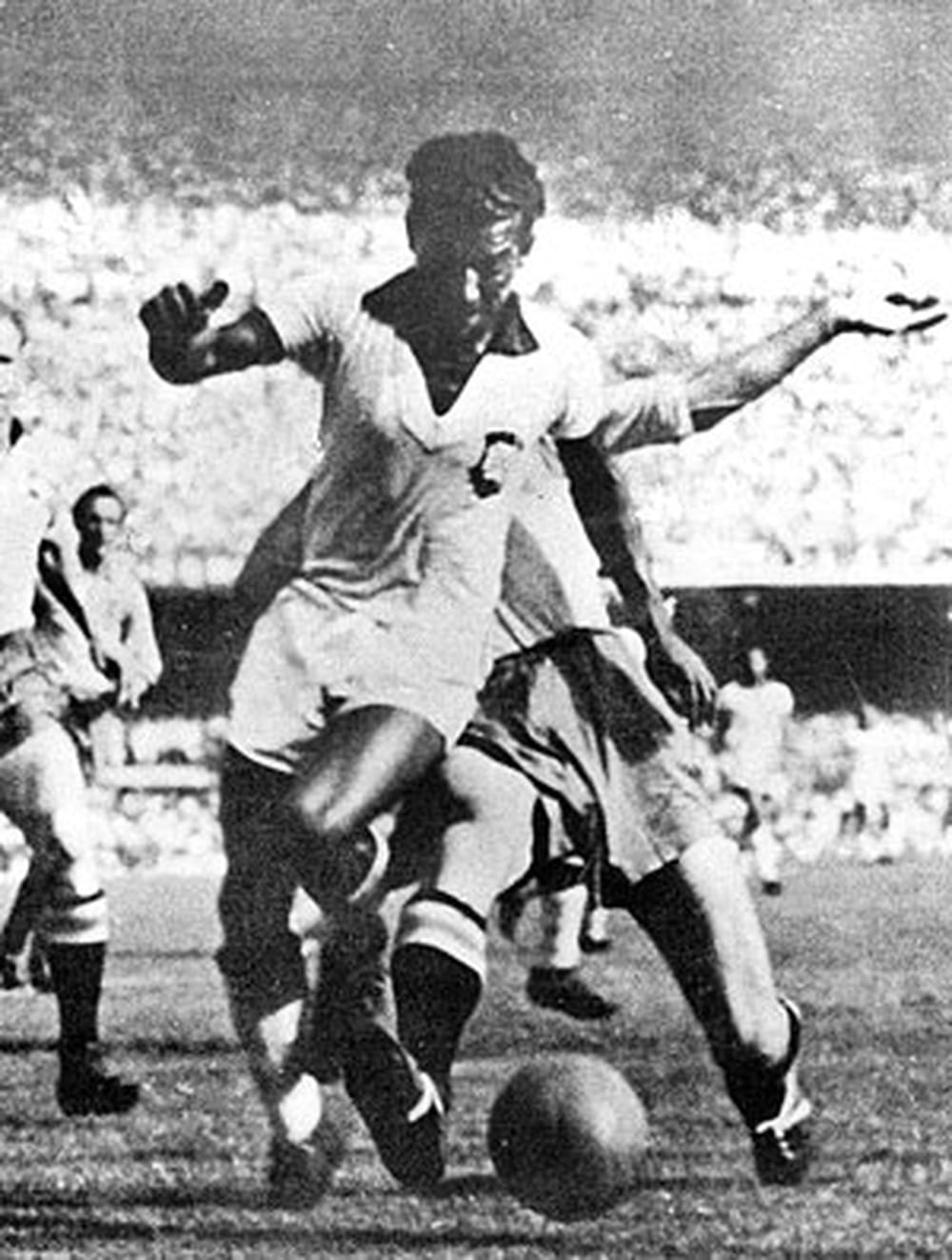
In the following game against Spain, Brazil produced a performance that will be regarded as their greatest yet in a World Cup match. Brazil’s attack, noted for its technical fluency, was widely admired as being ahead of their time. The assistant manager of Spain claimed one had to see Brazil play to believe that such a spectacle of football was even possible. Hungarian commentators noted later that Brazil played in a way that was even more awe-inspiring than the performance of the Hungarian golden generation against England in 1953. Zizinho was the star of the show. An Italian journalist wrote in La Gazzetta dello Sport that watching Zizinho that day was like watching Da Vinci creating masterpieces with his feet on the Maracana. Zizinho constantly tormented the Spanish defence, contributing to multiple goals and scoring one by controlling an awkward Ademir pass with a delightful flick, outwitting an opposition defender in the process, and shooting home. Brazil won the game 6-1 and were convinced that they were winning the World Cup.
The ‘final’ match of the final group stage of the World Cup was between Brazil and Uruguay. By luck or calculation, or more likely a bit of both, the game ended up being equivalent to an actual final. Uruguay hadn’t had the most convincing tournaments, and an overexcited Brazilian press hadn’t paid any attention to the mere possibility of them thwarting the triumph of Brazil, who only needed a draw to claim their maiden World Cup. Uruguay, though, were tactically much more careful. They had observed how Switzerland deployed a centre-back as a sort of sweeper to prevent Brazil from getting into goal-scoring positions easily, and deployed the same blueprint. A relentlessly spirited Uruguayan defence successfully impeded the feared Brazilian trio from working their magic.
Only Zizinho was capable of outsmarting his marker from time to time, but without much support from his teammates. Still, after a goalless first half, it was the hosts who took the lead in a famously packed Maracana early in the second half via a Friaca finish. But Uruguay grew in the match. A goal from Schiaffino equalised the score, and a Ghiggia finish ten minutes from time meant a numbing silence fell upon the grand Maracana. Brazil lost the final match. It is still, by some margin, the most harrowing catastrophe in the history of Brazilian football. The national team was de facto disbanded in the shock, not playing a single game for the next two years. Brazil never played another tournament in the white jersey that the likes of Leonidas, Ademir and Zizinho had proudly sported.
When Zizinho was almost eighty, Alex Bellos, the author of “Futebol: The Brazilian Way of Life” went to meet him in his house where he found his runners-up medal in a dark corner of the trophy cabinet. It had blackened, and the owner stated that he had never once cleaned it. It is a pity that the most devastating defeat of the Brazilian national team overshadowed Zizinho’s fascinating World Cup campaign.
Discover more from Footy Times
Subscribe to get the latest posts sent to your email.