

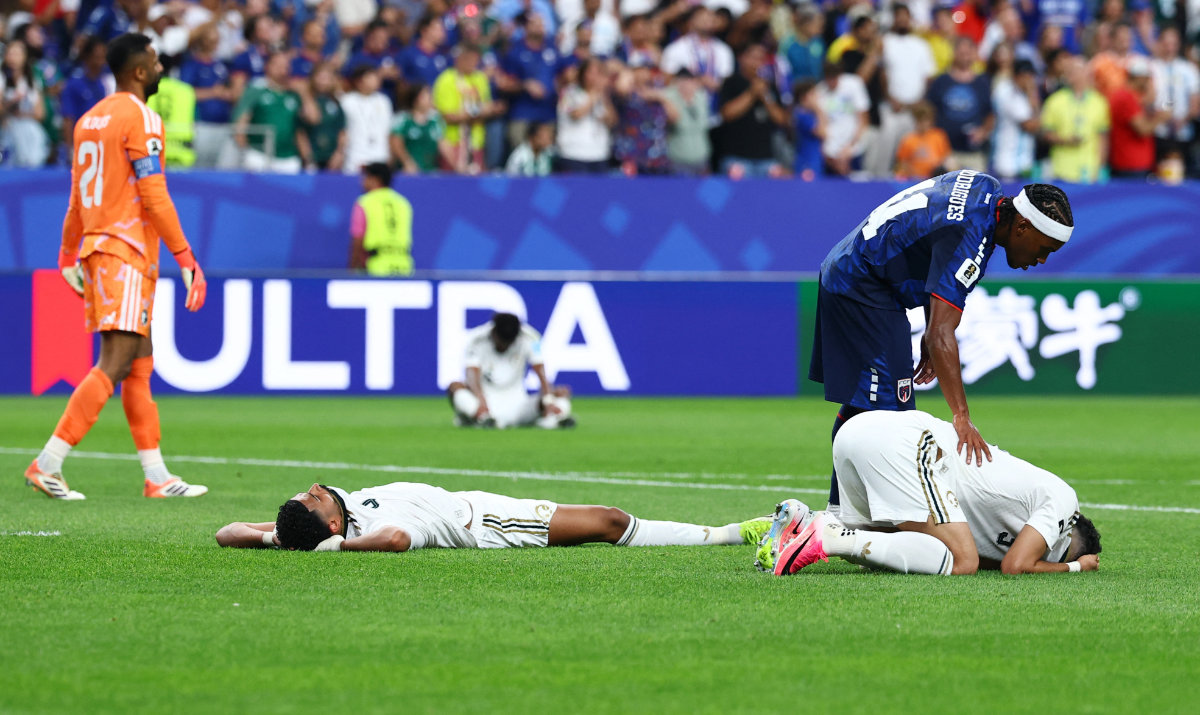

As the clock ticked down on Saudi Arabia’s 0-0 draw with Cape Verde in Houston last Friday, the online backlash was already in full swing. Prince Abdul Rahman bin Musaid, a former Al-Hilal president with 6.7 million followers on X, did not mince his words. “Scoring just once against Uruguay was acceptable, but everything else was very poor,” he wrote. “Against Cape Verde — a team that has been excellent in all of its matches — and in their first World Cup appearance, to fail to create any real threat from an organised chance that reflects a clear tactic or approach used by the team, that is the height of frustration.”
He was describing the elimination of a national team whose domestic league had nearly tripled in market value in two years, whose federation had cycled through three head coaches in less than eighteen months, and whose government had committed billions to making Saudi Arabia a global sporting superpower. They went home without winning a match, without advancing beyond the group stage for the sixth time in seven World Cup appearances, and without scoring against a team from a country of 530,000 people playing in their first ever tournament.
The scale of the disconnect is best illustrated by a single arrangement. Since May 2022, Lionel Messi has served as Saudi Arabia’s paid tourism ambassador, in a deal reportedly worth up to $25 million over three years. The contract obligates him to publish promotional social media posts, take an annual family vacation to the Kingdom, participate in tourism campaigns, and — by a clause written into the agreement — refrain from saying anything that might tarnish the country’s image. On the same weekend Saudi Arabia drew 0-0 with Cape Verde in Houston, Messi was in Kansas City breaking the World Cup’s all-time scoring record. The man paid to love Saudi Arabia was simultaneously dismantling every footballing record in existence, while the Saudi team he promotes could not score against a first-time tournament nation.
Across Group B, Qatar completed a parallel humiliation. They drew once, lost twice — including 6-0 to Canada — and were ranked 99th in the Elo ratings at the tournament’s end, the lowest ever recorded for a World Cup participant. Four years after hosting a tournament in which they spent an estimated $200 billion on infrastructure, they left 2026 as the worst team in the competition’s history by measurable assessment. Ten goals conceded. Seventy-two shots against. One hundred and sixty touches allowed inside their penalty area across three group games.
The gap between the scale of the Gulf’s football investment and the quality of its football at this tournament is not a minor embarrassment. It is a structural indictment — of the theory behind the spending, the decisions that shaped it, and the assumptions that have gone unexamined at the heart of both projects.
The Manager Who Said What Everyone Knew
Roberto Mancini was hired by the Saudi Football Federation in August 2023, weeks after resigning as Italy coach, on a reported four-year deal worth £21 million per year. The appointment was explicitly framed around transformation: doing for the Green Falcons what he had done for the Azzurri when he guided them to Euro 2020 glory. What distinguished his 14-month tenure from ordinary managerial failure was that he publicly identified, while still in the job, the structural contradiction at the heart of Saudi football’s entire project.
“I said this many times — this is the only problem that we have,” he told reporters. “Three years ago all the Saudi players played every game. Today, 50 to 60 per cent don’t play in the games. This is the first problem, the only problem that we have.”
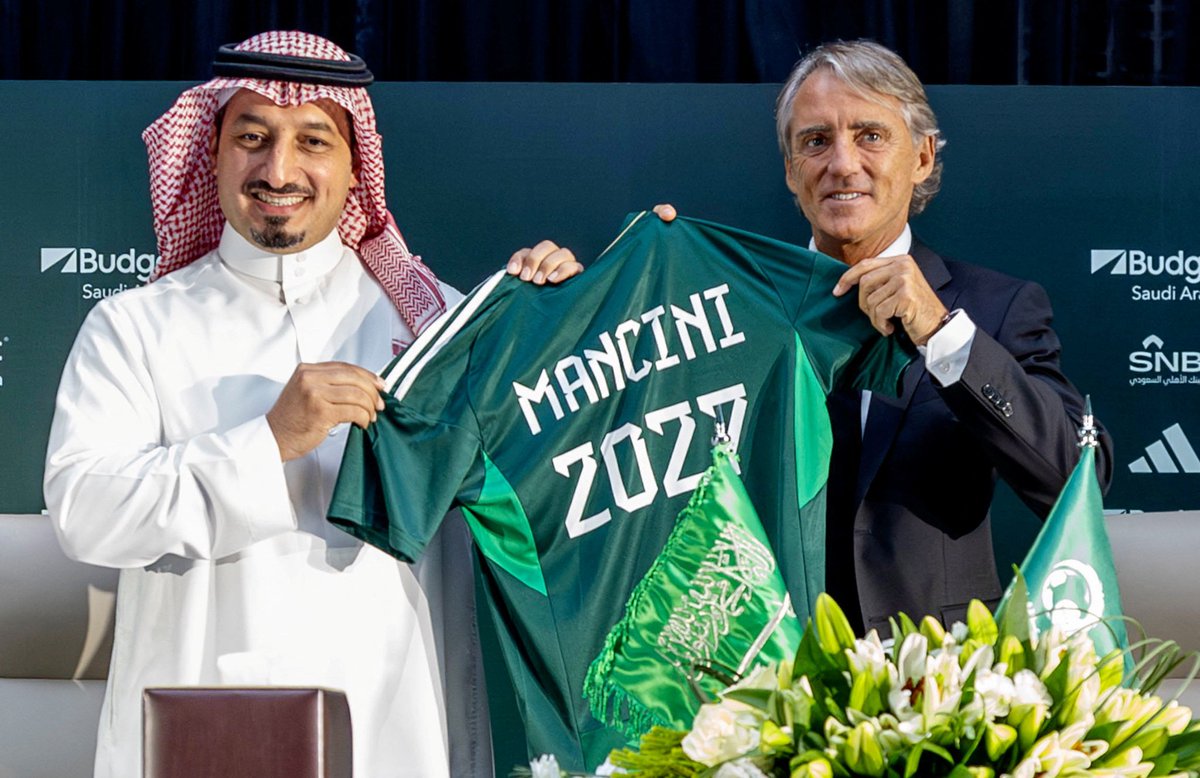
The man hired to fix Saudi football was telling the federation that Saudi football’s biggest investment was directly harming its national team. Foreign stars were crowding Saudi players out of their own domestic league. When the foreign player quota was expanded from five to ten, clubs were required to field just three Saudi players on the pitch at any given time. By the time those players reached international level, they had accumulated neither the minutes nor the competitive hardening a World Cup demands.
The federation had been negotiating to terminate his contract since a qualifying defeat to Japan. When they announced the parting after a home draw with Bahrain — a result that left Mancini jeered off the pitch — the statement described it as a “joint agreement.” He had won seven of 18 matches. His diagnosis was correct. Dismissing the diagnostician did not cure the disease.
What followed illustrated the depth of the crisis rather than resolving it. Hervé Renard — the coach who had guided Saudi Arabia to their famous win over Argentina in 2022 — was recalled to salvage the qualifying campaign. He did enough to get them to the tournament, then was dismissed following a 4-0 loss to Egypt in March 2026. His replacement, Georgios Donis, was appointed in April and given six weeks to prepare a squad for the biggest tournament in football. Three coaches in eighteen months. The federation had moved fast at every stage except the one that mattered: understanding why the national team kept failing, and doing something about the structure that produced the failure.
Buying the Product, Not the Process
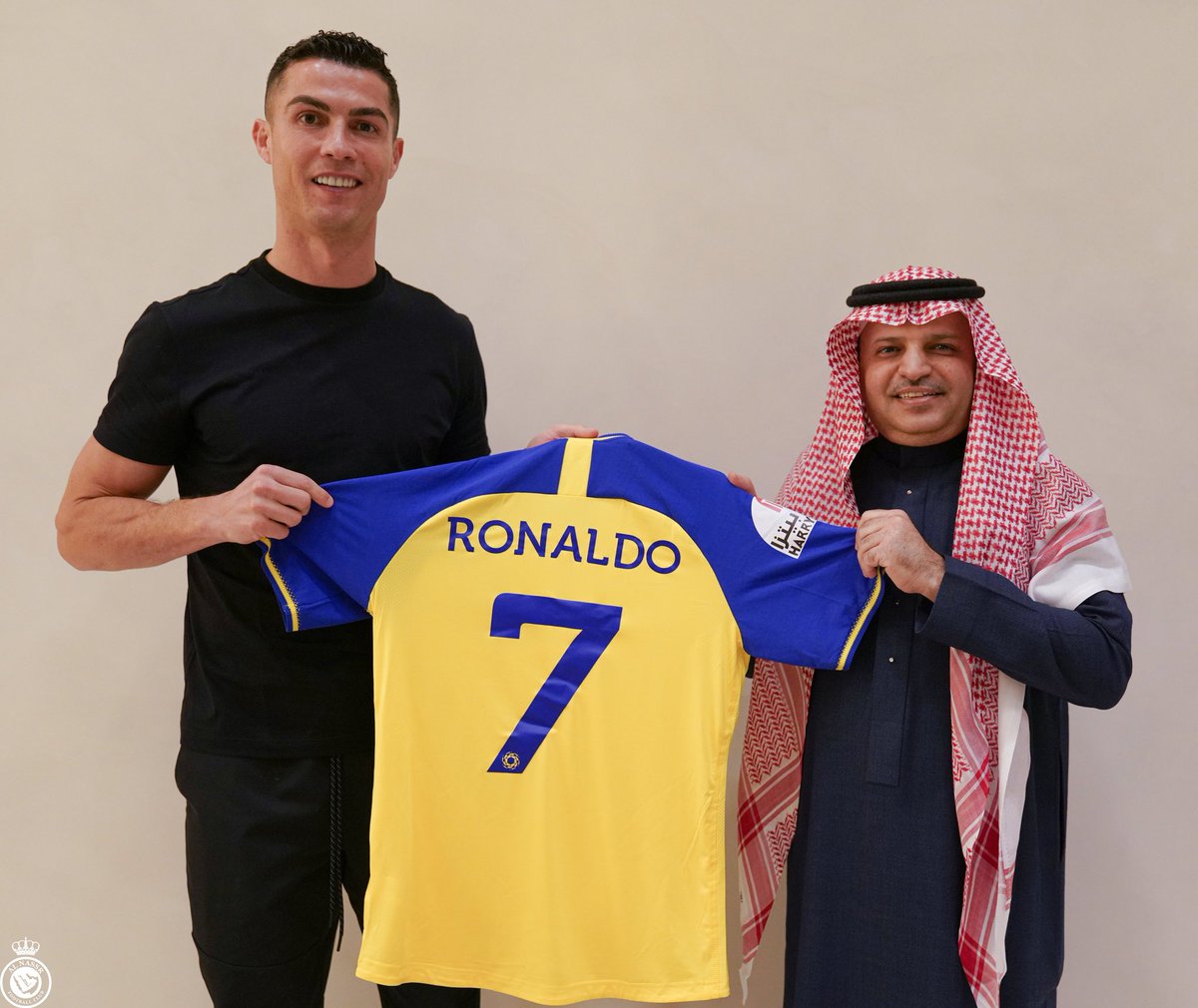
Between 2021 and 2024, the Saudi Professional League’s estimated market value grew from approximately €370 million to €970 million. Cristiano Ronaldo at Al-Nassr on a reported $75 million annual deal, Karim Benzema at Al-Ittihad, Neymar at Al-Hilal, Sad� Mane, N’Golo Kanté, Roberto Firmino. Saudi PIF acquired Newcastle United for £305 million. The SPL became the most discussed transfer destination in world football.
None of it moved the national team. The confusion at the heart of the project is the same one Mancini named: they invested in football as a product rather than football as a process. Football Benchmark’s independent analysis confirmed the consequence: Saudi national team players have less access to playing opportunities at club level than their peers from other top AFC nations, with U23 players in the Saudi Pro League receiving less playing time than their counterparts in Europe’s major leagues. The league supposedly raising the technical level of Saudi football had, at its most expensive, reduced the competitive opportunities available to Saudi players.
This is visible in the most specific and damning detail from the group stage. Saudi Arabia’s last two World Cup wins — against Egypt in 2018 and Argentina in 2022 — were both scored by the same player: Salem Al-Dawsari, now 34, still tasked in 2026 with carrying an attack that had nobody behind him capable of sharing the creative or goalscoring burden. When he was substituted in the 66th minute against Cape Verde, the team produced nothing. Television pundit Ibrahim Al-Angari said the problem “was far bigger than the result”: no clinical striker, weakness in the wide areas, attacking attempts relying on collective effort rather than individual quality.
Saudi Arabia’s grassroots infrastructure is genuinely developing. SAFF now oversees 17 Regional Training Centres, the number of private academies jumped from 88 to 189 in a single year, and the federation oversaw 12,000 matches across 109 competitions last season. For the first time in national history, the under-17, under-20, and senior teams all qualified for their respective World Cups in the same calendar year. These are real achievements. But they are building toward 2034, not arriving at 2026. The squad that went to Houston was shaped by the system that existed before these reforms, and Football Benchmark identifies the structural tension that persists: Saudi players are less incentivised to seek development abroad because domestic wages are so attractive — the “wealthy market syndrome.” Japan built its international competitiveness by sending its best young players through Europe’s second-tier leagues. Saudi Arabia’s most talented players have no structural reason to follow that path. The money is at home. The development it requires is not.
Qatar: The Infrastructure Illusion
Qatar’s situation carries additional weight because it represents the same project at a more advanced and more expensive stage. It hosted a World Cup. It built Aspire Academy — one of the most sophisticated youth development facilities ever constructed, designed specifically to produce elite Qatari footballers. The Qatar Stars League attracted Xavi, Raúl, and a generation of credentialed European players before the Saudi Pro League thought to do the same. Qatar Investment Authority owns Paris Saint-Germain. The 2022 World Cup cost an estimated $200 billion.
The product at 2026 was ranked 99th by Elo — the lowest ever for a World Cup participant. Aspire has produced genuinely capable footballers who have represented Qatar at youth and senior level. That achievement is real. But no academy, however generously funded, can substitute for the competitive depth that a domestic football culture built across generations naturally produces. Qatar’s Stars League was an entertainment product before it was a developmental one — European stars in the autumn of their careers, watched in air-conditioned stadiums rather than by a fanbase whose intensity forces young players to grow or be replaced. The 2022 World Cup exposed Qatar as a host nation that could not compete in its own tournament. 2026 confirmed what that result suggested.
What the Rest of the Arab World Did
The full picture of Arab football at this tournament makes Saudi Arabia and Qatar’s exits not just disappointing but structurally illuminating. Consider what nations with far fewer resources produced.
Morocco finished the group stage unbeaten with seven points — one of the most impressive campaigns of the entire tournament. They drew with Brazil, beat Scotland in 70 seconds through Ismael Saibari’s early strike, and dismantled Haiti 4-2 in a performance of genuine attacking quality. They play the Netherlands tonight in Monterrey in the Round of 32 as one of the tournament’s genuine dark horses, playing the most attractive football of any Arab side in the competition’s history. They have no sovereign wealth fund. Their players were developed through Morocco’s domestic league and the competitive pathways of European football.
Egypt advanced from Group G as runners-up, beating New Zealand 3-1, drawing with Belgium and Iran. Mohamed Salah assisted his country’s opening goal against Belgium on his 34th birthday, then watched Egypt hold on for a point against a technically superior side. They face Australia in Dallas on July 3. Algeria, meanwhile, finished third in Group J with four points — losing to Argentina but beating Jordan and drawing dramatically 3-3 with Austria — and qualified for the Round of 32 to face Switzerland. Jordan, making their debut, scored their first ever World Cup goal through Ali Iyad Olwan against Austria before losing narrowly. Iraq, returning after a 40-year absence, competed against one of the tournament’s toughest groups — France, Norway, Senegal — with Aymen Hussein scoring only Iraq’s second World Cup goal in their history.
And then there is Iran — whose story provides the most pointed counterargument of all.
Iran commuted from Tijuana, Mexico, for every match. Their federation president was denied a US visa. Their captain spent five hours travelling 127 miles to the opening game. They played in a country that had bombed their homeland four months earlier, operating under conditions no other team at this tournament was asked to endure. Despite all of it, they drew all three group matches — 2-2 with New Zealand, 0-0 with Belgium, 1-1 with Egypt. They held a Belgian side ranked considerably higher and operating in normal conditions to a goalless draw. They accumulated three points and a goal difference of zero.
They were eliminated not because they lost a match but because Austria scored a stoppage-time equaliser against Algeria in a completely separate fixture, giving Algeria four points as a third-place team and bumping Iran from the qualifying positions by a single point. Iran’s players found out they were out of the tournament while still processing their own result. They had done everything asked of them. A goal in another city, in another group, in the final minutes of another match, ended it.
This is the comparison that should define how Gulf football reads its 2026 performance. Morocco, Egypt, Algeria, Jordan, Iraq, and Iran — nations with a fraction of Saudi Arabia and Qatar’s investment in football — collectively advanced further, competed more effectively, and in Iran’s case came heartbreakingly close to the knockout rounds despite conditions that would have broken a less resilient team. Saudi Arabia and Qatar, between them, won zero matches and finished bottom of their groups. The investment was not wasted on bad luck. It was wasted on a theory that has now been disproved twice in succession.
2034: The Honest Question
The disconnect between investment in the league and the performance of the national team has drawn comparison to China a decade ago, when the Chinese Super League briefly outspent the Premier League in the transfer market and the national team remained among Asia’s most underwhelming international sides. The structural problem is identical: buying global stars for domestic clubs does not develop local players — it crowds them out. China’s spending eventually collapsed. The national team continued to underperform. The lesson was available. Neither Gulf project appears to have read it closely enough.
Saudi Arabia will host the 2034 World Cup. The stadiums will be extraordinary. The logistics impeccable. Arab News asked this week whether the 2026 failure would usher in a moment of reckoning for Saudi football. It should. But a reckoning only produces change when the structure that caused the failure is examined honestly — not when it is acknowledged briefly and then papered over by the next expensive announcement.
Roberto Mancini told them what the problem was. He was dismissed. The problem remains. Morocco are playing the Netherlands tonight. Saudi Arabia are watching at home. That, in the end, is the only argument this tournament needed to make.
Read more – World Cup Round of 32 Confirmed: Full Knockout Schedule
Also see – Record Breaker, History Maker: There Is Simply Nobody Like Messi
Follow Footy Times on Social Media:
Facebook | Instagram | Twitter | YouTube
Discover more from Footy Times
Subscribe to get the latest posts sent to your email.