

Ernst Kuzorra: Belonging and playing in Nazi Germany | Part II
Very Simple Game #5

Ernst Kuzorra had been associated with Schalke 04 since his boyhood. In the years before the formalisation of players’ wages and transfer fees, most German footballers were essentially one-club men. Kuzorra also spent his whole playing career at Schalke 04. Coming from a family of industrial workers, for Kuzorra, football had been one of the only useful mediums for upward social mobility. He made his debut for the senior club team in 1923. He would go on to play for almost three decades, only retiring five years after the war had concluded.
In his long and successful career, he is reported to have scored more than a thousand goals for Schalke. His goal tally in official matches varies significantly based on the criterion used to differentiate the unofficial matches from official ones in an era when they were much more difficult to distinguish. He had only played 12 international matches, ten of them being played between 1927 and 1932 and only a match each in 1936 and 1938. Kuzorra scored seven international goals that included a hat-trick in a 5-0 victory against Switzerland in 1930.
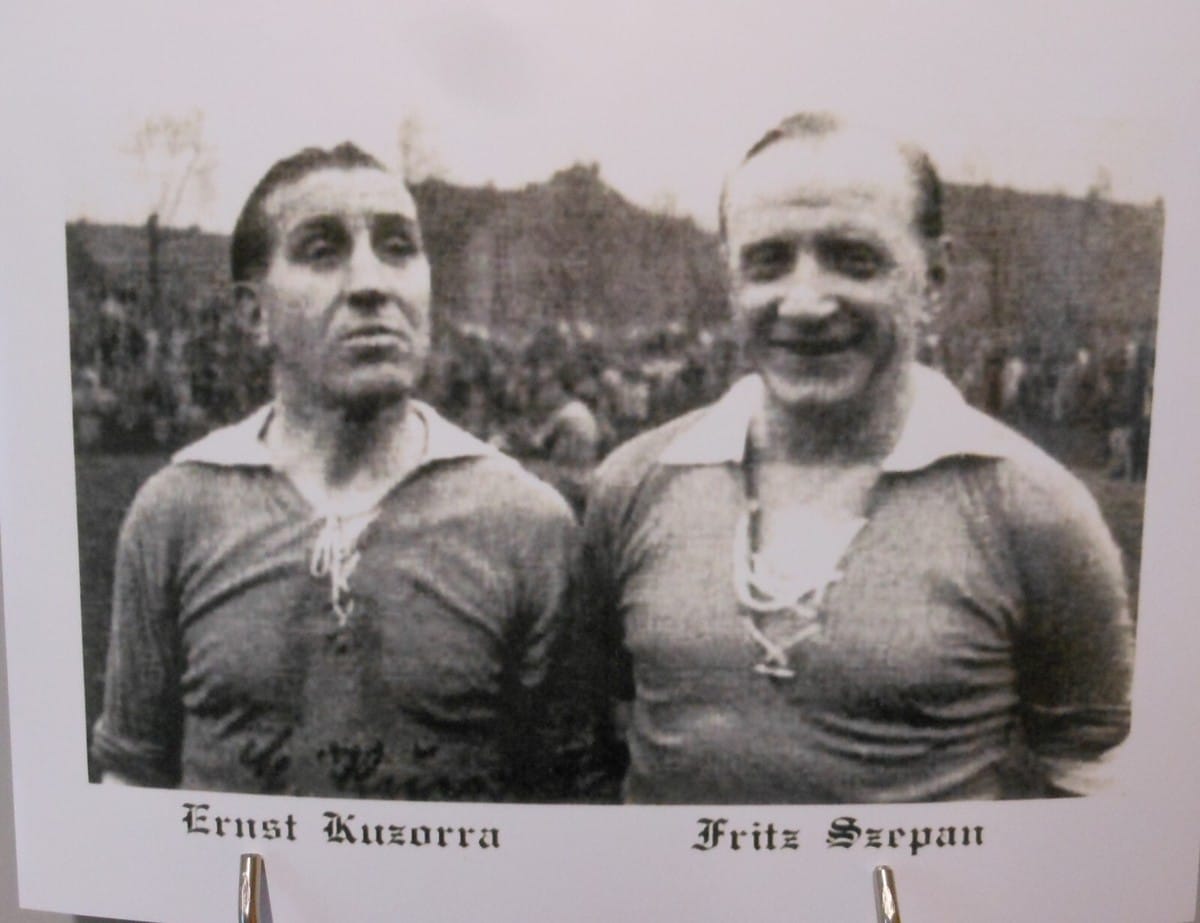
Kuzorra was a wonderful dribbler. He had a keen positional awareness and a sharp eye for goal. It was also his tactical know-how that made him indispensable for Fritz Szepan, also his brother-in-law. Szepan and Kuzorra are often considered the two greatest German footballers from the Nazi years. Their lives and careers overlap greatly. Szepan was predominantly a playmaker occupying deeper positions, while Kuzorra was tasked with more offensive duties. Szepan and Kuzorra were not only cogs in the footballing wheel of Schalke, but they had become the brains behind it.
They were instrumental in developing a way of playing that was starkly at odds with the style of play in vogue in Germany at the time. Evocatively named “Schalke’s spinning top”, the style focused on circulating the ball, in a rapidly dynamic fashion, among the players during an attack. Such an emphasis on passing meant that Kuzorra, despite being predominantly known as a dribbler and shooter, became a creator as much as a scorer of goals. His credentials as a tactician were so well-established that while playing regularly for Schalke, he simultaneously coached the Borussia Dortmund side for a whole season.
Schalke’s unconventional playing style was not only distinctive but also greatly successful. After their maiden title in the 1933/34 season, they repeated the feat in the next year. By 1942, Schalke had won 6 titles, with Kuzorra and Szepan starting each final. They had also won the national cup tournament in 1937, becoming the first German team to complete a championship and cup double. The Nazi regime started promoting the Schalke side as an ideal German football team, which was a role that a grateful Schalke and its players happily played along.
Schalke was also used for propaganda measures by Polish journalists before Poland was subsequently annexed. The Polish background of a number of Schalke players was highlighted, and the club was being made into a symbol of representing Polish causes. While in Nazi Germany, Schalke’s German working-class roots were emphasised. The club itself released a list of all Schalke players, noting that all of them were born in the Westfalen district to counter the claims of an immigrant identity. The history of immigration was completely ignored to create the Nazi retelling of an ethnic German working-class success story. Kuzorra only ever opened up about his family’s roots outside Germany long after he had retired.
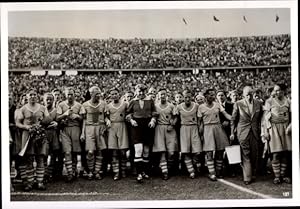
The 1938/39 season was billed by the Nazi regime as the first Greater German Championship because it featured teams from annexed regions of Austria and the Sudetenland. In the final, Schalke faced Sportklub Admira from Vienna, one of the most successful and iconic clubs in pre-annexation Austria. Schalke, having been used by the Nazi regime for propaganda exercises and fielding some well-known Nazi party members, including Szepan and Kuzorra, were heavily unpopular among fans of Viennese clubs. The match was effectively a non-contest as the referee heavily favoured Schalke and sent off as many as three Admira players.
The tension kept mounting as Szepan was punched by Admira’s Klacl in the chin after Szepan had openly mocked his opponents. Klacl would be given a lifelong ban. Admira were a strong side who had squarely beaten Hamburg in the semifinal, but the final match ended in a scarcely believable 9-0 scoreline in favour of Schalke. While the striker Kalwitzki helped himself to as many as five goals, just like the first championship final in the Nazi regime, the first “Greater Germany Championship” final saw Szepan and Kuzorra scoring the penultimate and the last goals.
The result made the propaganda machine happy, but the events had left a sour taste. A “reconciliation match” was announced by the authorities in November 1940. But sending the Schalke team to Vienna two years after the Anschluss was never going to end well. Gerhard Schulz, the referee who had officiated the notorious final match, was also in charge of this match. Admira took a 1-0 lead before they had two clear goals inexplicably disallowed by Schulz. The incensed crowd of 50,000 spectators had stormed the pitch near the end of the match when the scores were tied 1-1. Schulz was attacked, and the team bus of Schalke was destroyed.
A notable Nazi politician in attendance saw his car tyres slashed. Such a turn of events meant that the entire playing squad of Admira were drafted in as soldiers and swiftly sent to the front. Admira would be relegated in 1943, but that had nothing to do with the results on the pitch. Their place was to be taken up by a much more pliant SG Reichsbahn. Known to be disinterested in politics, Kuzorra had once complained about the manipulation of football matches to a Nazi politician, but that only happened when his beloved Schalke side was beaten, quite fairly if unexpectedly, by a Viennese team in a championship final. The ridiculous irony of it all is difficult to overstate.
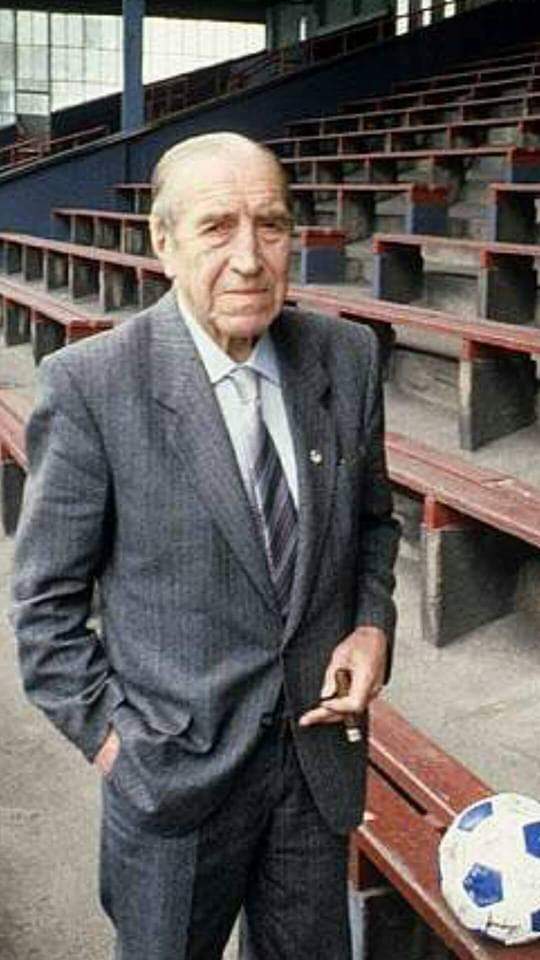
After a decorated playing career, Kuzorra had an unremarkable time as a manager. He owned lottery and tobacco shops while remaining sporadically associated with Schalke 04 in different capacities. Kuzorra died in 1990. He remains one of Schalke’s all-time greats and a fascinating footballer who occupied an interesting position within the polarised world of the Nazi regime. He never showed any notable antisemitic traits, but he was a Nazi party member. He was a beneficiary of the Nazi propaganda despite being ostracised from the national team. These apparent contradictions remind one of the greys between white and black that one needs to navigate in times such as these. Kuzorra’s story ultimately remains a story of the experiences of an excellent footballer who was otherwise just another normal person in Nazi Germany.
Discover more from Footy Times
Subscribe to get the latest posts sent to your email.