


Four months before he led Boca Juniors to the club’s latest Copa Libertadores crown, Angel Miguel Russo was seated alone at a bar in Buenos Aires. Jonathan Wilson, one of the most accomplished football writers of our time, had incidentally visited the very bar that night. Recently, Wilson shared the account of walking up to him and having an impromptu conversation about football. Wilson movingly paints a picture of how Buenos Aires had conserved in its culture a space that indulges football romantics who would not forego any chance of sitting in a bar and talking football.
Wilson was coming from a similarly football-obsessed society, but one that actively de-incentivises such spontaneous engagement as a high-profile football manager. Russo’s side had a match to play the very next day. As Wilson points out, it would be unthinkable for the manager of one of the biggest clubs in England to bother himself with a conversation quite like that. But that came naturally to Russo. And there is one simple justification for such a behaviour, one that is so ludicrously simple that it sounds almost like a cliche. It happened because Russo loved what he was doing. He loved football.
Fans love tactical masterminds and technical perfectionists, but deep down, all we want from our heroes is to echo our love for the game. A feeling that is so simple, yet profound. In the era of hyper-focused professionalism that values effectiveness over belonging, Russo may look like an aberration. The last time his presence in the dug-out was televised to a worldwide audience, his Boca Juniors was competing in the newly inflated version of the club world cup – an unapologetic inconvenience that FIFA’s greed has thrust upon the oversaturated club football calendar.
It feels fitting that in a tournament widely criticised for its lack of organic atmosphere and warmth, matches featuring Russo’s Boca stood out due to an outpouring of passion from the travelling fanbase. Russo’s team played an ineffective brand of football, which was neither pretty nor successful. In so many ways, all of it felt like a poignant reminder of the fact that love for the game is a beautifully irrational phenomenon which hardly needs a justification rooted in aesthetics or pride.
As a player, Russo drew adulations from football romantics as a one-club man who served Estudiantes with great distinction at the base of the midfield for thirteen years. While he was quite regular in the national team in the years leading up to the 1986 World Cup, the Argentine manager Carlos Bilardo, under whose stewardship Russo started his senior career in Estudiantes, left him out from his World Cup squad. Russo never played for his country again. Like the protagonist in a memorable love story, his account feels all the more poignant because it cajoles our minds to wander off into the realms of what could have been.
Russo’s appeal to the lovers of the game is amplified by his track record of bringing back glory days to dormant giants of the game. He drew attention from the top sides through his fantastic work in the second division in the early 1990s. He had won two promotions with Lanus before taking charge of the club he had played for and helped them achieve promotion. He was then hired by the Chilean club Universidad De Chile and took his side to the final four of the Copa Libertadores.
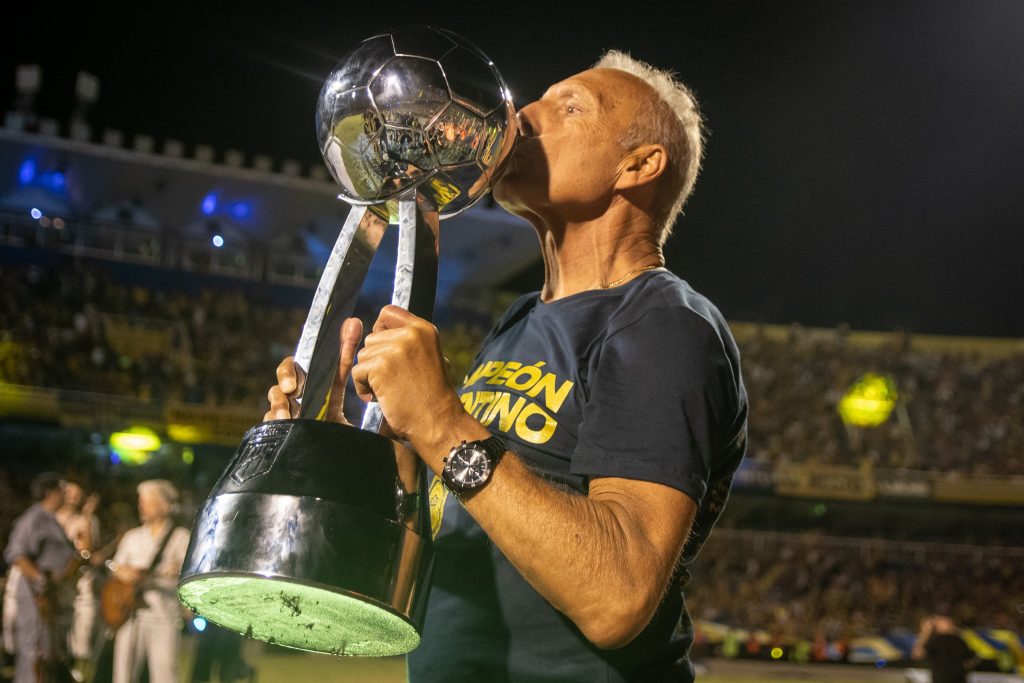
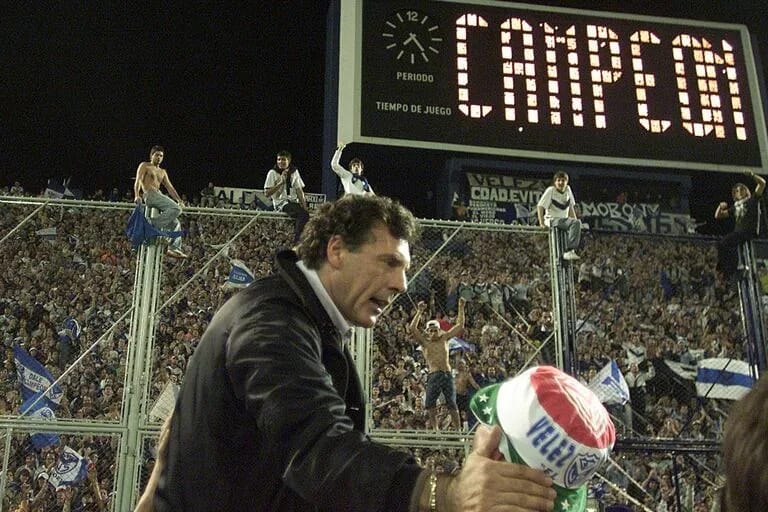
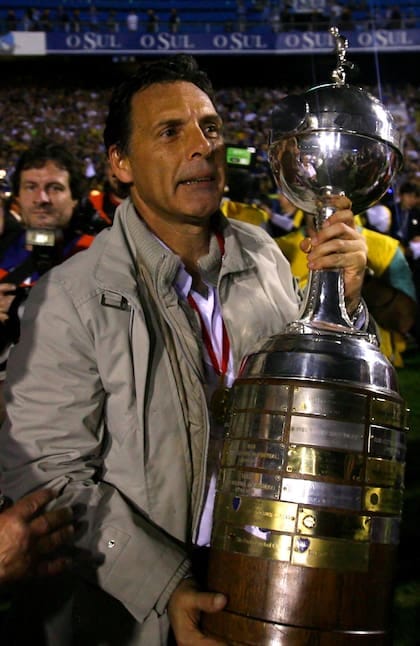
Russo’s maiden top-flight title came at Velez Sarsfield at the Clausura phase in 2005. His next job was his first stint as manager in Boca. Starring Riquelme at the peak of his powers, Russo’s Boca played a dynamic and offensive brand of football on their way to claiming the Copa Libertadores trophy in 2007. Boca demolished Brazilian side Gremio 5-0 over a two-legged final match to claim the title in style. No other team has ever won the Libertadores final by such a commanding margin. While Russo’s side finished second in the league and were defeated by Carlo Ancelotti’s AC Milan in the final of the 2007 club world cup, his era is fondly remembered by a fanbase that is very difficult to please.
In Russo’s next job, he led San Lorenzo to third in the league. He added another promotion to his CV after winning the second-division title for Rosario Central in 2013. In the national Cup competition, Copa Argentina, Rosaria Central were defeated by Huracán in the final in the shootouts after a goalless match. Heartbreaks were always a part of Russo’s story.
Russo was battling cancer for the last eight years of his life. He was managing the Colombian outfit Millonarios, where his side won the top-flight title by winning a thrilling two-legged play-off final, by a 3-2 scoreline, against arch-rivals Independiente Santa Fe. Hours before the decisive second leg of the final, he underwent his first chemotherapy session. He still led his team from the touchline during the match, encapsulating what he would later famously say in an interview: “Everything is healed by love.”
Another classic plot element from love stories – returning- had been a theme of Russo’s managerial career. He had multiple stints with a number of clubs. In his second stint at Boca, he won the national league. He also had a seven-month stint at Al-Nassr, but fittingly, that had been just before Saudi Arabia, sportswashers per excellence, had invested heavily in the club. He had returned to Boca for a third time. As a poetic parting gift, he left the touchline for the final time, days before his death, with Boca claiming the top position in the zonal league table.
Russo had been quite successful both as a player and a manager. But he was even better at winning endearment. Boca can replace him with a better or more successful manager, but it will be very difficult to replace the sense of attachment and passion that he carried with him until the very end. Rest in football, Miguel Angel Russo.
Discover more from Footy Times
Subscribe to get the latest posts sent to your email.