

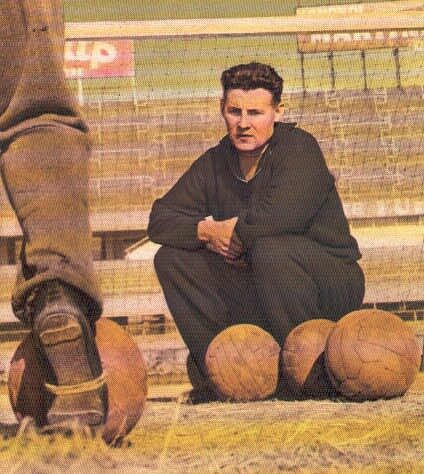
Unsung Heroes in World Cups: Gyorgy Sarosi | 1938 France
Very Simple Game #12

The 1938 FIFA World Cup was staged in France as Europe was driving headlong into a history-defining war without remotely acknowledging the possibility of such. The crisis-riddled backdrop cast a shadow over the proceedings. In a sixteen-team tournament that ended up becoming a 15-team one because Austria was annexed by the Reich, there were only 3 non-European teams. The decision to stage back-to-back World Cups in European soil didn’t bode well with the South Americans. Brazil undertook the cross-Atlantic journey, though and enjoyed their first memorable World Cup.
In this series, which will run through all twenty-two fifa.com/tournaments/mens/worldcup” target=”_blank” rel=”noopener noreferrer”>FIFA World Cup tournaments, we will try to tell the story of a player who had an important role to play in the tournament but hardly features among the first few names that jump out once you hear the tournament being mentioned. Today, in the third iteration of the series, we will look at Hungary’s Gyorgy Sarosi.
Sarosi doesn’t quite fit the “underappreciated” tag. He is the best Hungarian to have laced up a pair of football boots outside the golden generation of the late 1940s and 50s. One can even make the case that no Hungarian footballer other than Puskás can be definitively called greater than him.
Sarosi was an eminently versatile player who started his career at deeper positions, even playing in defence, before moving up to excel in a role akin to a modern attacking midfielder. For most of his career, though, he played as a centre forward, where his playing style and positioning were often quite akin to a second striker in modern parlance. Sarosi was remarkably prolific, netting more than 480 goals just in official matches for Ferencvaros and Hungary. Still, his 1938 World Cup campaign, which I consider to be one of the best individual campaigns in World Cup history, often sails under the radar. Leonidas, the mythical Brazilian forward, was the outright star of the tournament, while the (back-to-back) champions Italy were led by the genius of Meazza and Silvio Piola.
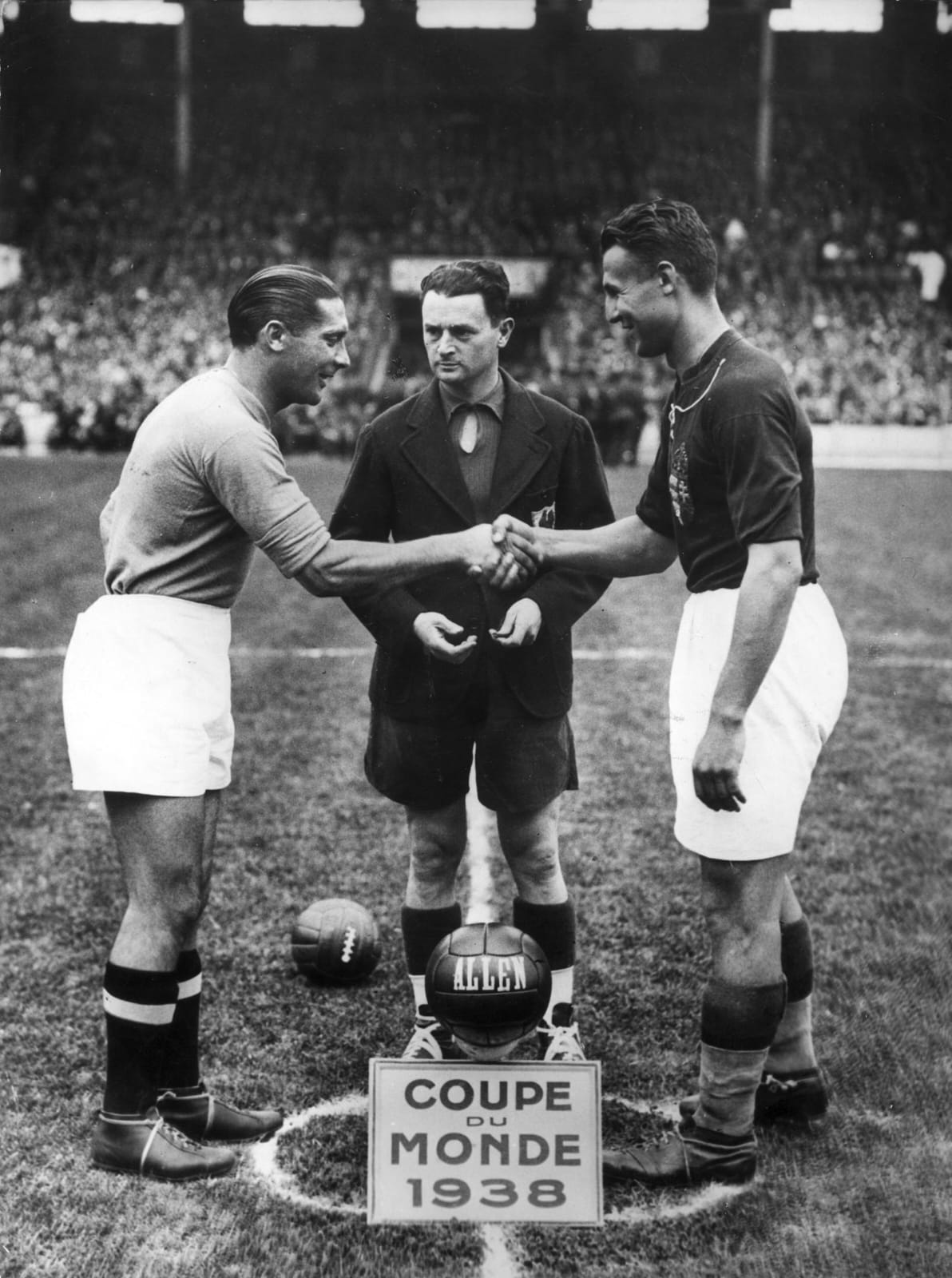
Hungary’s first match in a straight knock-out format came against the minnows Dutch East Indies, who were squarely beaten, by a 6-0 scoreline, without any fuss. Sarosi, captaining his national team, scored twice in the match, netting his team’s third and the final goals in the 28th and 89th minutes. Sarosi had been singled out for criticism for his weak performance in the only match he played in the 1934 FIFA World Cup quarter-finals. He scored a goal from a penalty that day, but the injury that kept him out of the preceding round was still hampering his gameplay. Four years on, nearing his prime at 25, Sarosi was intent on proving his doubters wrong.
The quarter-final round saw Hungary facing off against Switzerland. Unlike Hungary, the Swiss were battered and bruised in their round of sixteen tie against Germany, where the spirited Swiss side lost a couple of their star players to injury. Still, they were able to show their mettle against the Hungarian outfit. The match was closely contested. Sarosi delivered a memorable performance and scored a header as the first half was nearing its end. Despite that, it was anybody’s game right until the closing minutes of the second half when Guyla Zsengeller, Sarosi’s strike partner at the national team and the talisman of Sarosi’s domestic rivals, scored the second to seal a 2-0 victory.
In the semi-final match, Sarosi was the beating heart of a rampant Hungarian attack. Against a Sweden side that had not faced a significant challenge up until the semifinals, Sarosi showed why he was considered one of the greatest European footballers of his generation. The Swedes took an early lead, but it was soon very clear that it would be nearly impossible to hold on to that lead. The match ended 5-1. In his greatest World Cup performance, Sarosi assisted as many as three goals besides scoring once. It was Sarosi’s creative brilliance that saw him occupy a deeper position in attack, spraying inch-perfect passes for inside forwards Toldi and Zsengeller. Hungary reached their first World Cup final against the outstanding favourites, Italy.
Italy, under Pozzo, were masters of thwarting the possessional football which was the vogue in central Europe then, as is exemplified by both of their World Cup final victories in the 1930s. Sarosi was very closely marked, and the Hungarian attack never really got going. The Italians took great care to ensure the defenders intercepted the passes that Sarosi made. Italy’s sharp attacking unit was devastatingly effective on the counterattacks. At the sixth minute, Colaussi opened the scoring for the reigning champions, but Hungarians quickly responded with an equaliser via a thumping close-range finish from Titkos. Italy soon retook the lead, however. Piola and Colaussi scored to put Italy in the driver’s seat by the end of the first half. In the second half, Italy never ceded any control. Sarosi, with his characteristic nimbleness, outsmarted his marker to meet a cross and reduced the deficit in the seventieth minute, but Piola netted his second and Italy’s fourth eight minutes from time to consign Hungary to the agony of a World Cup final defeat by a 4-2 margin.
Sarosi scored in every round of the World Cup, a record that had remained unmatched until Messi’s 2022 heroics. Sarosi scored five goals and assisted thrice in four games in the World Cup. His goal tally in the tournament was only bettered by Leonidas.
In the 1930s, three leading sports magazines from Italy, Germany and France respectively elected Sarosi in their best European elevens. That in itself is a huge testament, but it gets even more impressive given the fact that Italy’s La Gazzetta dello Sport picked him as a centre-back, Germany’s Kicker picked him as a midfield player, while the French L’Auto picked him as the centre-forward. Silvio Piola, the man whose brace helped Italy overcome Hungary in the World Cup final, once famously said that Sarosi was probably the best defender, the best midfield player and the best forward of his time.
Discover more from Footy Times
Subscribe to get the latest posts sent to your email.